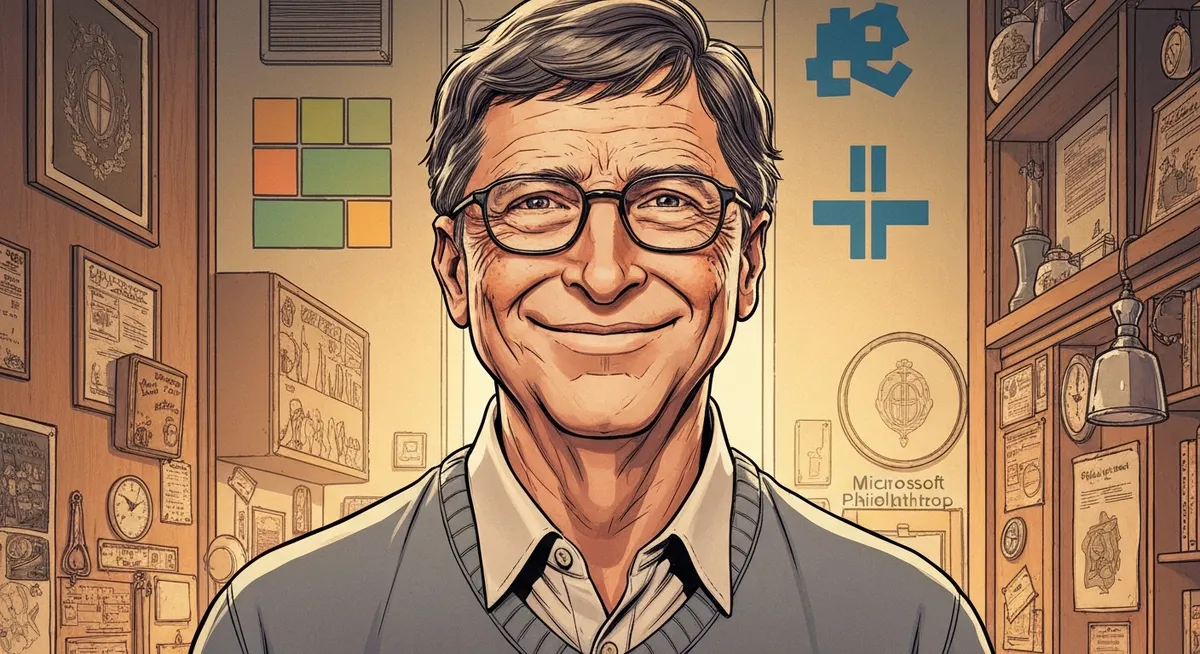
Bill Gates: The Nerd Who Ate the World
He bluffed IBM into the deal of the century, crushed every competitor who dared challenge him, built a monopoly so total the U.S. government tried to break it apart — then walked away from it all to try to eradicate malaria. The most ruthless nerd who ever lived.
View all stories about this mogul
In 1998, a federal judge found that Microsoft had used its monopoly power to illegally crush competitors, and the U.S. Department of Justice moved to break the company in half. The man who built it — a bookish, bespectacled college dropout who rocked back and forth in his chair when he was thinking — had become so dominant that the full weight of the American government was required to slow him down. If you want to understand how a nerd from Seattle became the most powerful businessman of the twentieth century, and then voluntarily walked away from all of it to fight mosquitoes, you need to understand Bill Gates.
This is a guy who could read an entire encyclopedia before middle school, who bluffed IBM into the most lopsided deal in tech history, who built a monopoly so airtight that loading a computer without his software was like buying a car without wheels. He was the richest person on the planet for so long that it became boring. And then, in maybe the most surprising third act in business history, he decided that saving millions of lives was more interesting than making more money.
This is the story of how he did it — the genius, the ruthlessness, and the reinvention.
💒 Chapter 1: The Kid Who Read the Encyclopedia (1955–1968)

William Henry Gates III was born on October 28, 1955, in Seattle, Washington, into a family that was already formidable. His father, Bill Gates Sr., was a prominent attorney who stood six foot seven and would go on to become one of the most respected lawyers in the Pacific Northwest. His mother, Mary Maxwell Gates, served on the boards of First Interstate BancSystem and the United Way, and was one of the first women to hold a directorship at a major national bank. His maternal grandfather was a bank president. This was not a rags-to-riches story. This was a riches-to-staggering-riches story.
From the jump, young Bill — known as “Trey” to his family, a nod to the “III” in his name — was the kind of kid who made adults slightly nervous. He was reading the World Book Encyclopedia cover to cover by the time he was eight or nine. Not browsing. Not flipping through the pictures. Reading the entire thing, start to finish, like it was a novel. When his parents noticed this wasn’t exactly normal behavior, they had him tested. The results confirmed what they already suspected: their kid was operating on a different frequency.
The Troublemaker
But young Bill wasn’t some docile genius who sat quietly in the corner doing long division. He was argumentative, combative, and openly contemptuous of authority he didn’t respect — which was most authority. Dinner at the Gates household reportedly turned into full-contact intellectual debate, with young Bill challenging his parents on everything. His mother, a formidable woman by any measure, once got so fed up that the family went to counseling. The therapist, after evaluating the situation, basically told Bill’s parents: you’re going to lose this one. Stop trying to control him and start channeling that energy somewhere productive.

That advice turned out to be worth more than any therapy bill in history.
Lakeside School
In 1967, Bill’s parents enrolled him at Lakeside School, an elite private prep school in Seattle. Tuition was steep, and the school catered to the children of the city’s professional class. It was the kind of place where expectations were high and eccentricity was tolerated, as long as you backed it up.
Lakeside changed everything. In 1968, the school’s Mothers’ Club held a rummage sale and used the proceeds to do something almost unheard of for a school at the time: they leased a Teletype Model 33 terminal connected to a General Electric Mark II time-sharing computer. Most universities didn’t have this kind of access. A bunch of eighth graders in Seattle did.
Bill Gates was thirteen. He walked into that terminal room and found his entire future.
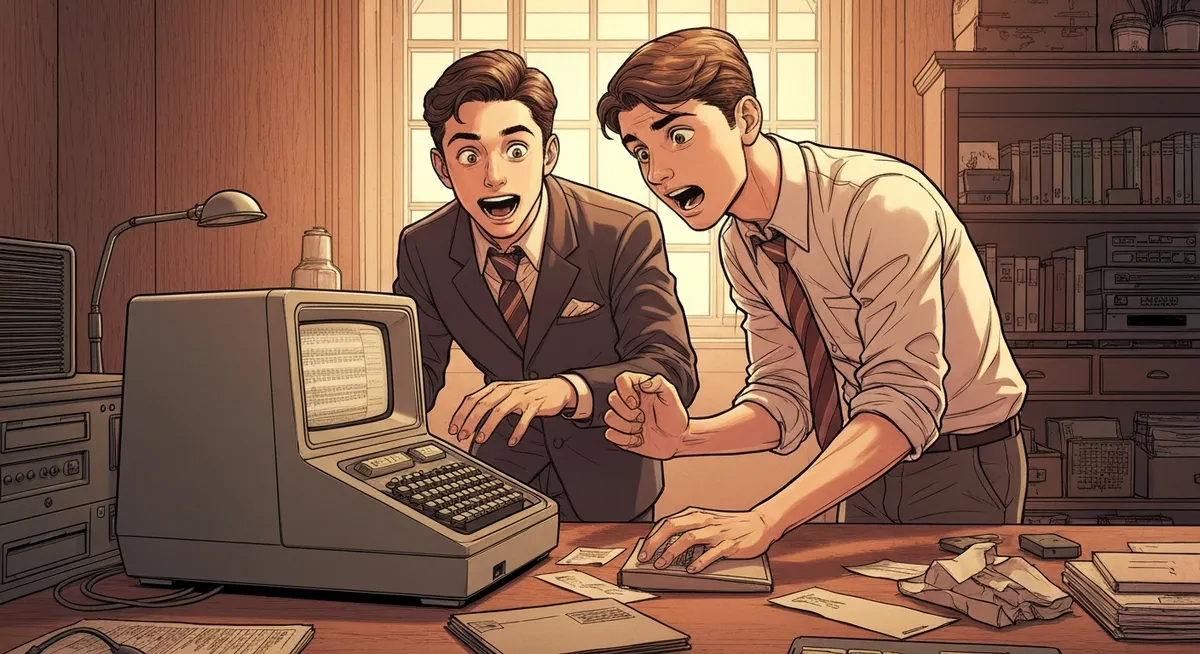
He was instantly, completely, obsessively hooked. While other kids were playing sports or chasing girls, Gates was spending every free hour in the computer room, teaching himself BASIC, writing programs, and burning through the school’s allotted computer time at a rate that alarmed everyone. The Mothers’ Club’s funding ran out in weeks. Gates and his friends — particularly a kid two years older named Paul Allen — were consuming computer time like it was oxygen.
“I was a nerd before the term was coined. I was really into computers. I was really into math. I was trying to understand how the world worked.” — Bill Gates
💻 Chapter 2: Hacking, Hustling, and Paul Allen (1968–1973)
The friendship between Bill Gates and Paul Allen is one of the most consequential partnerships in business history. Allen was two years older, taller, quieter, and more interested in hardware and the big picture of where technology was going. Gates was the relentless coder, the tactician, the one who could see every angle of a deal. Together, they were a complete organism.
Hacking the System
Within months of getting access to the Lakeside terminal, Gates and Allen had figured out how to exploit bugs in the Computer Center Corporation’s (CCC) time-sharing system to get free computer time. The company found out and banned them. Most kids would have slunk away. Gates and Allen made the company a deal: let us find more bugs in your system, and in exchange, give us unlimited computer time.
CCC agreed. A couple of teenagers had essentially negotiated their first consulting contract by leveraging the very skills they’d used to break the rules. If that doesn’t tell you everything about Gates’s approach to life, nothing will.
And then there’s the legendary Lakeside scheduling story. According to multiple accounts, Gates hacked the school’s scheduling program and arranged to place himself in classes with a disproportionate number of girls. When confronted about it later, Gates reportedly didn’t deny it — he just sort of smiled. The nerd was playing every angle, even at fourteen.

Traf-O-Data
In 1972, while Gates was still in high school, he and Allen started their first real business: Traf-O-Data. The concept was straightforward — build a machine that could read the rubber traffic-counting tubes laid across roads and process the data for city traffic departments. They actually built a working device using an Intel 8008 processor, one of the first microprocessors ever made.
The company was, by any honest assessment, a disaster. During a critical demonstration for a potential client from the City of Seattle, the machine refused to work. Just sat there, dead as a brick, while Gates and Allen sweated through their shirts. They managed to bring in about $20,000 in revenue before the whole thing fizzled.
But here’s the thing about Traf-O-Data: it taught Gates and Allen how to work with microprocessors, how to write code at the hardware level, and how to form a business. It was a failure that contained the seeds of everything that came next. Gates himself later said, “Traf-O-Data was a good idea with a flawed business model. It lasted a lot longer than it should have.” The lesson stuck — there’s a difference between a good technology and a good business. You need both.
The Speed Demon
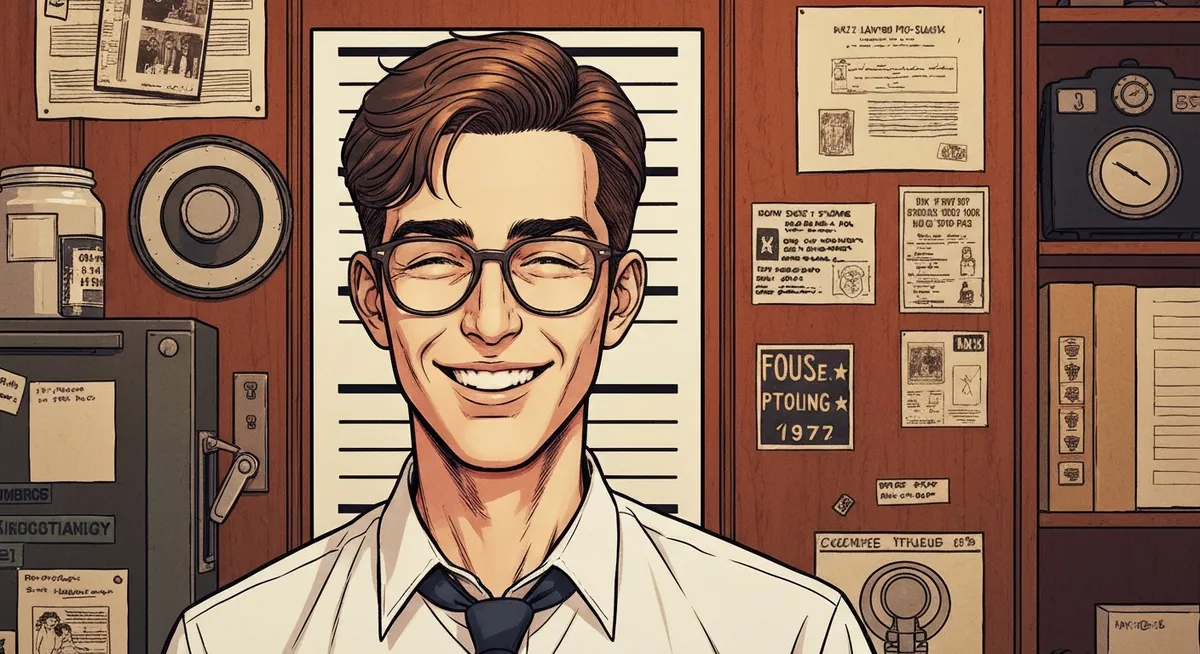
Even as a teenager, Gates’s competitive streak was ferocious. He raced anything that moved. He waterskied aggressively. He drove way too fast. He’d later become famous in Albuquerque for tearing around in a Porsche 911 and racking up speeding tickets so regularly that local cops knew his car on sight. There’s a famous mugshot of him from 1977 — arrested in Albuquerque for running a red light and driving without a license. He looks about fifteen years old, scrawny and grinning, like he thinks the whole thing is hilarious. That photo would later become one of the most iconic images in tech history.
And there was the chair-jumping. Gates was known, well into his adult years, for spontaneously jumping over chairs from a standing position. Not running. Standing still, then springing over a chair. It became such a famous party trick that David Letterman once asked him to do it on national television. Gates declined, probably because by that point he was in his forties and had hundreds of billions of reasons not to risk a broken ankle.
🎓 Chapter 3: Harvard, Altair, and the Dropout (1973–1975)

In the fall of 1973, Gates enrolled at Harvard — not because he was particularly passionate about higher education, but because that’s what kids from his background did. His parents, particularly his father, wanted him to become a lawyer. Gates registered as a pre-law student, which lasted about five minutes. He gravitated immediately to the computer lab and the math department.
At Harvard, Gates met Steve Ballmer, a loud, hyperactive Detroiter who lived down the hall. Ballmer was everything Gates wasn’t — gregarious, backslapping, the kind of guy who filled a room with pure energy. They became fast friends. Ballmer would eventually become CEO of Microsoft, but in 1973, he was just the dude who could out-shout anyone at a poker game.
Gates was a classic Harvard misfit. He played poker obsessively, sometimes for entire nights. He attended classes sporadically — showing up for the ones that interested him, skipping the rest entirely. He wrote a pancake sorting algorithm for a combinatorics class that remained the fastest known solution for over thirty years. Then he mostly stopped going to class.
The Magazine That Changed Everything
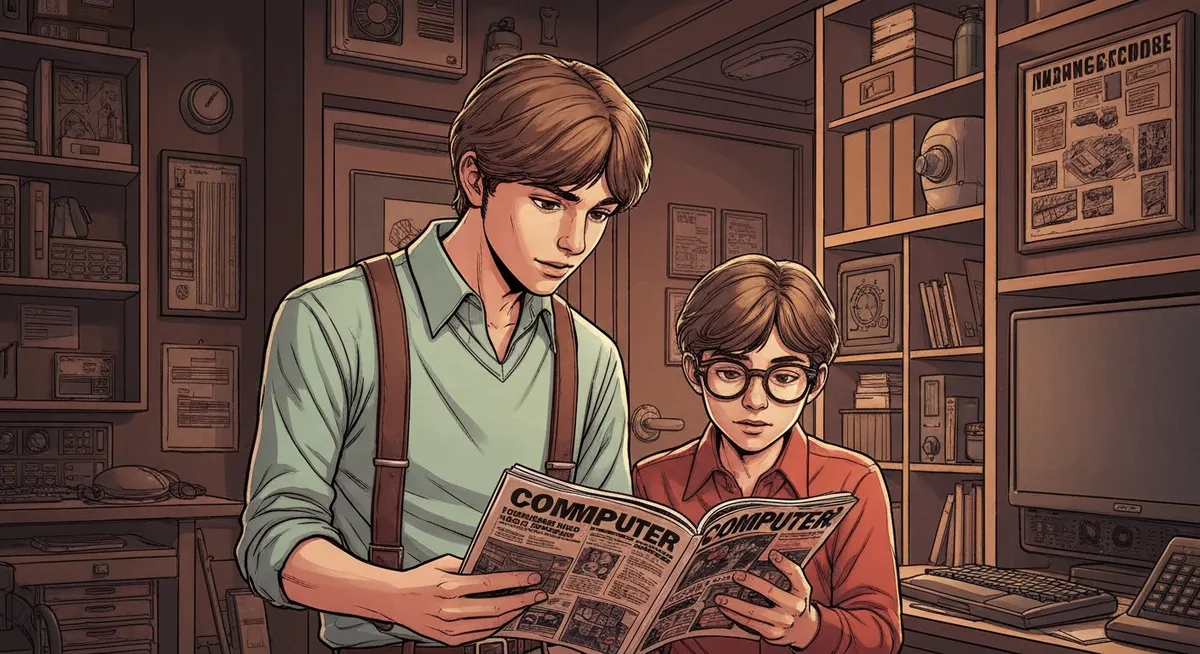
In December 1974, Paul Allen was walking past a newsstand in Harvard Square when he spotted the January 1975 cover of Popular Electronics. On the cover: the MITS Altair 8800, the world’s first commercially successful personal computer kit. It was a metal box with switches on the front and no keyboard, no screen, and no software. But it ran on the Intel 8080 chip, and Allen immediately understood what it meant.

He sprinted to Gates’s dorm room. “This is it,” Allen told him. “It’s happening without us.” The personal computer revolution was starting, and if they didn’t move now, they’d miss it entirely.
Gates and Allen called MITS, the company in Albuquerque that made the Altair, and told them they’d written a BASIC interpreter for the machine. This was a lie. They hadn’t written a single line of code. They didn’t even have an Altair. But Gates had learned something fundamental: in business, sometimes you sell the thing first and build it after.
Eight Weeks of Hell
Over the next eight weeks, Gates and Allen pulled off one of the most remarkable coding feats in the history of software. Working out of Gates’s Harvard dorm room — without access to an actual Altair — they wrote an entire BASIC interpreter for the 8080 chip using a PDP-10 mainframe to simulate the Altair’s hardware. Allen wrote the simulator. Gates wrote the BASIC. They barely slept. Gates would code until he collapsed, sometimes falling asleep at the keyboard mid-line, then waking up and continuing from exactly where he’d stopped.
Allen flew to Albuquerque with the code on a paper tape. He had never actually tested it on a real Altair. When he fed the tape into the machine, it sat there, processing, for an agonizing few minutes. Then the screen flickered. “READY,” it said.
It worked. Their untested code, written on a simulated machine thousands of miles from the actual hardware, ran flawlessly on the first try. Allen later called it the most pivotal moment of his life.
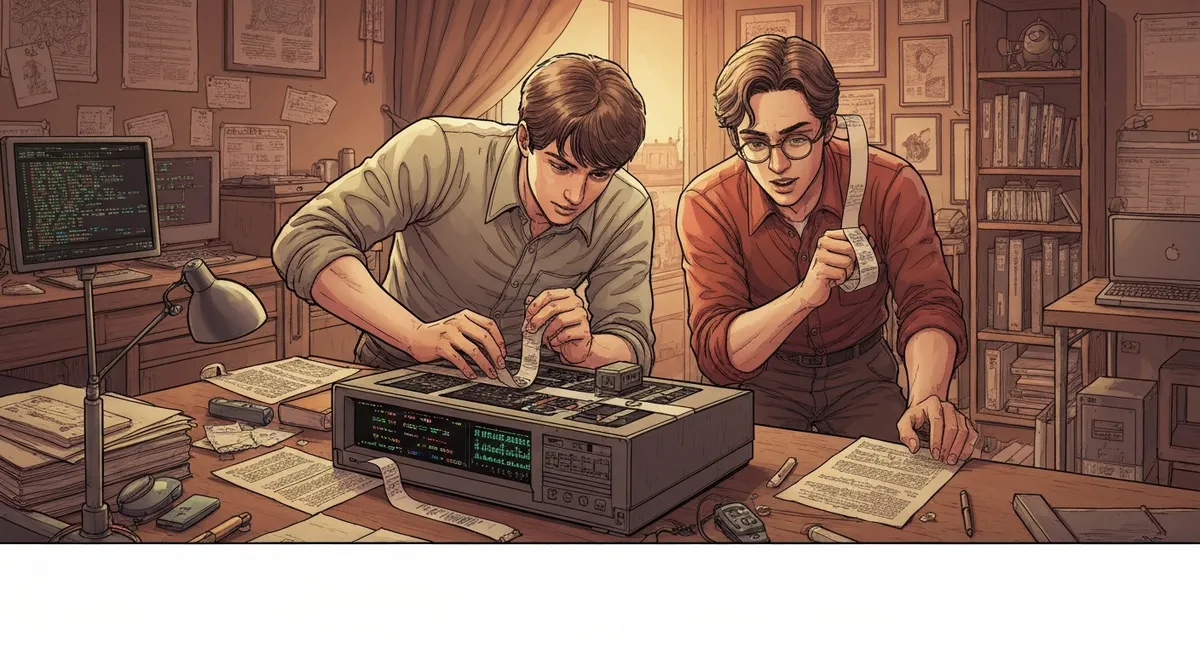
MITS agreed to distribute their BASIC. Microsoft — originally “Micro-Soft,” a mashup of microcomputer and software — was born.
Gates dropped out of Harvard in 1975. His parents were not thrilled. But Gates had made his calculation, and the math was clear: the personal computer industry was exploding, and every day he spent in a classroom was a day he wasn’t building his company. He was nineteen years old.
🏢 Chapter 4: Albuquerque, IBM, and the Deal of the Century (1975–1981)
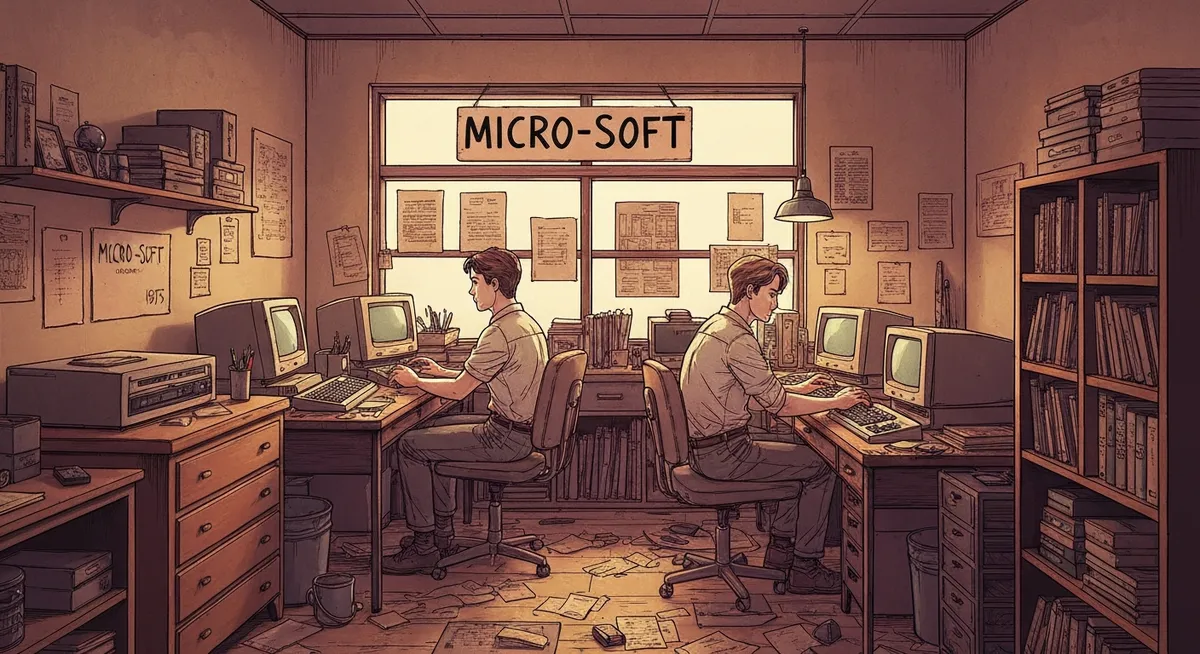
Microsoft’s early years in Albuquerque were scrappy, chaotic, and fueled by marathon coding sessions and fast food. Gates and Allen set up shop near MITS and started licensing their BASIC interpreter to every personal computer manufacturer they could find. The team was tiny — a handful of young programmers, most of them barely old enough to drink.
Gates ran the operation like a drill sergeant with a photographic memory. He reviewed every line of code personally. He berated programmers whose work didn’t meet his standards. “That’s the stupidest thing I’ve ever heard” became his signature management phrase. He was demanding, abrasive, and almost always right, which made the abrasiveness even more infuriating.
The Rocking
Anyone who spent time around Gates in those years — or any years, really — noticed the rocking. When Gates was thinking intensely, he would rock back and forth in his chair, sometimes violently, like a human metronome running at double speed. It wasn’t a nervous tic. It was his processing indicator. The harder the problem, the more intense the rocking. Colleagues learned to read it: if Gates was rocking slowly, he was mildly interested. If he was rocking fast enough to move the chair across the floor, something big was happening in that brain.
The Open Letter
In 1976, Gates wrote a furious open letter to the hobbyist community — “An Open Letter to Hobbyists” — accusing them of stealing his software. Hobbyists had been freely copying Microsoft BASIC and sharing it without paying. Gates was apoplectic. “As the majority of hobbyists must be aware, most of you steal your software,” he wrote. “Who can afford to do professional work for nothing?”
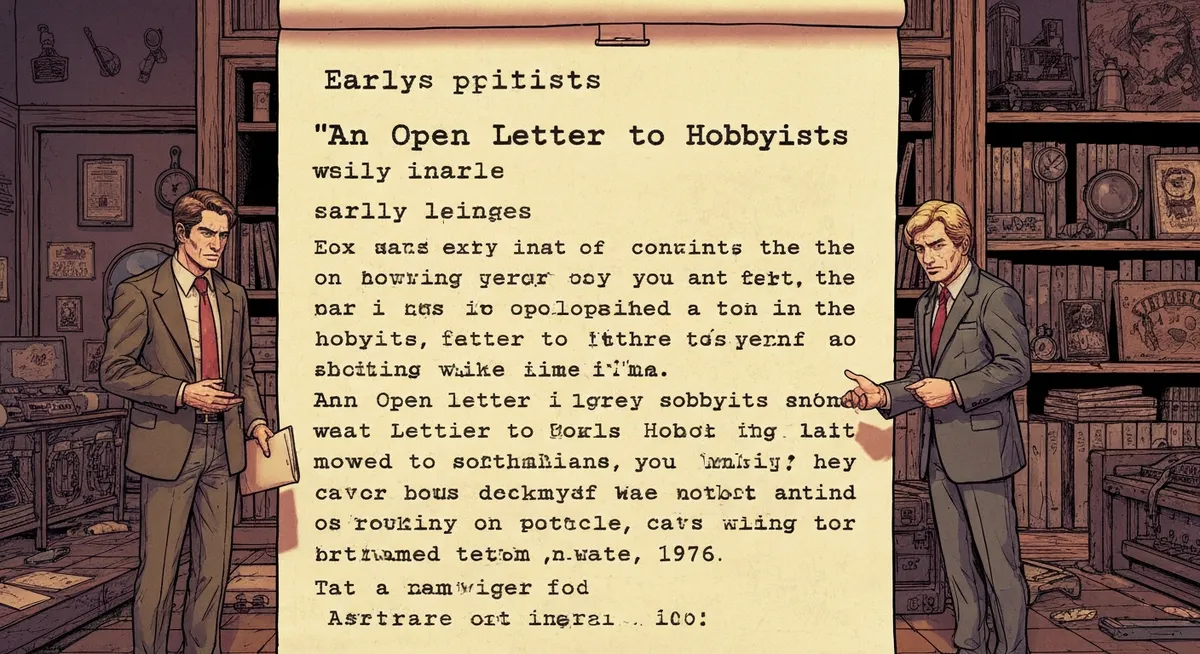
The hobbyist community was outraged. They saw software as something that should be shared freely, like scientific knowledge. Gates saw it as a product that people had worked to create and deserved to be paid for. This philosophical battle — open versus proprietary, free versus commercial — would define the entire software industry for decades. Gates drew the line in the sand at twenty years old, and he never moved from it.
The IBM Call
In 1980, IBM — the most powerful technology company on Earth — came knocking. Big Blue was late to the personal computer revolution and needed to catch up fast. They needed an operating system for their new PC, and they needed it yesterday.
IBM first approached Digital Research, whose CP/M operating system was the industry standard. According to multiple accounts, that meeting went badly — Digital Research’s founder, Gary Kildall, may have gone flying in his airplane instead of meeting the IBM delegation, though the exact details are disputed. Either way, IBM left without a deal.
Then they called Gates.
Here’s where the story gets legendary. IBM asked Microsoft if it could provide an operating system. Gates said yes. This was, once again, a lie. Microsoft did not have an operating system. They had a BASIC interpreter. But Gates understood — with the instinctive cunning of a born dealmaker — that this was the kind of opportunity that comes along once in a lifetime. You don’t tell IBM to come back when you’ve got your act together. You say yes, and then you figure it out.
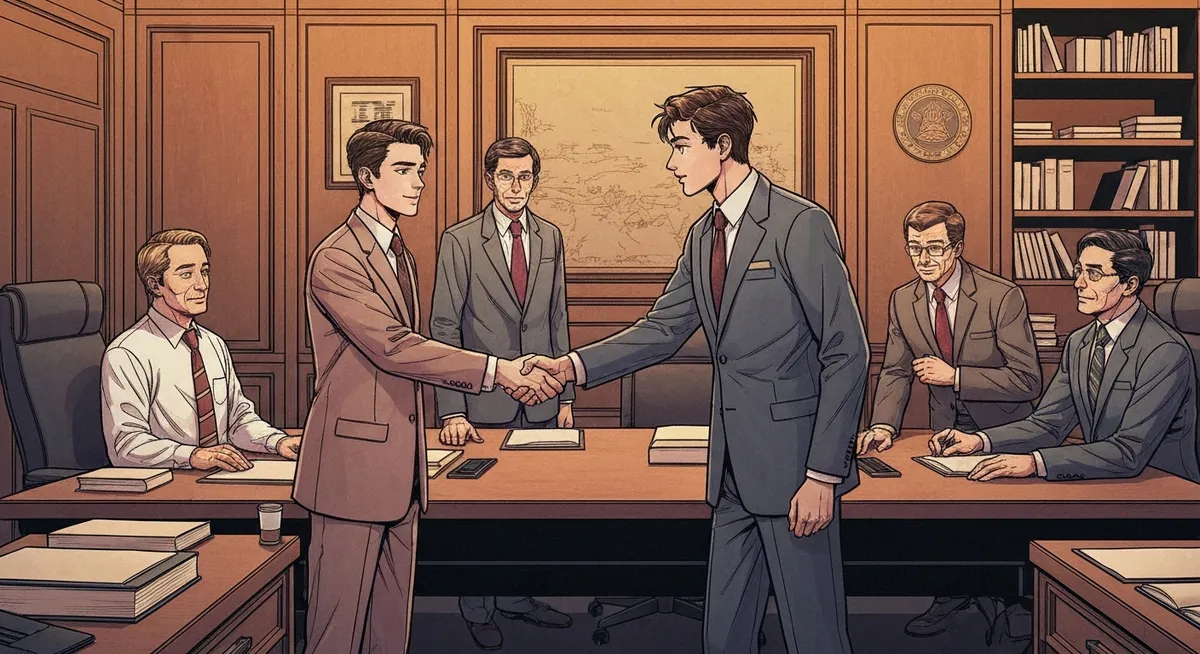
Gates went to a local company called Seattle Computer Products, which had built a rough operating system called QDOS — literally “Quick and Dirty Operating System.” Microsoft bought the rights to QDOS for $50,000. Fifty thousand dollars. Then they cleaned it up, renamed it MS-DOS (Microsoft Disk Operating System), and licensed it to IBM.
The Licensing Masterstroke
And here’s the part that made Gates a billionaire. He didn’t sell MS-DOS to IBM. He licensed it. IBM got the right to use the operating system on their PCs, but Microsoft retained ownership and the right to license it to anyone else.
IBM agreed to this deal because, in 1980, IBM didn’t think the software mattered. IBM was a hardware company. They made their money selling big, expensive machines. The operating system was just a component — like a screw or a circuit board. Why would they care who else used it?
This was, in hindsight, one of the worst business decisions any corporation has ever made. When the IBM PC became the industry standard and dozens of manufacturers started building “IBM-compatible” clones, every single one of them needed MS-DOS. And every single one of them had to license it from Microsoft.
Gates had bought an operating system for $50,000 and turned it into a toll booth that every personal computer on Earth had to pass through. The deal of the century doesn’t even begin to describe it.
“In this business, by the time you realize you’re in trouble, it’s too late to save yourself.” — Bill Gates
🪟 Chapter 5: Windows and World Domination (1981–1995)

By the mid-1980s, MS-DOS was running on the vast majority of personal computers worldwide. Microsoft was printing money. But Gates had seen something at Xerox PARC — and at Apple, which had seen it first — that he knew would change everything: the graphical user interface. Instead of typing cryptic commands into a black screen, users could point and click on icons, windows, and menus.
Apple launched the Macintosh in 1984 with a GUI that was, for the time, stunning. Gates knew Microsoft had to respond or risk irrelevance. The result was Windows.
Windows 1.0: The Ugly Duckling
Windows 1.0 shipped in 1985, and it was… not great. Clunky, slow, buggy, and visually depressing compared to the Mac. Critics savaged it. Apple’s Steve Jobs publicly mocked it. The industry shrugged.
Gates didn’t care. He’d learned from watching the industry that version 1.0 of anything is almost always terrible. What matters is that you’re in the game. You ship, you learn, you iterate, you ship again. The people who wait for perfection ship nothing.
Windows 2.0 was better. Windows 3.0, released in 1990, was a genuine hit — selling 10 million copies in two years. And then Windows 3.1 refined the formula further, becoming the de facto standard for personal computing worldwide.
”You’re Ripping Us Off”
The relationship between Gates and Steve Jobs during this period was one of the most fascinating rivalries in business history. Jobs believed — with religious conviction — that Gates had stolen the Macintosh’s graphical interface ideas. During a heated confrontation at Apple’s headquarters, reportedly in 1985, Jobs accused Gates of theft. Gates’s response, according to multiple accounts, was devastating:
“Well, Steve, I think there’s more than one way of looking at it. I think it’s more like we both had this rich neighbor named Xerox, and I broke into his house to steal the TV set and found out that you had already stolen it.”

Jobs reportedly stared at him, said nothing, and changed the subject. The exchange became one of the most quoted moments in tech history, because it was essentially true. Both Apple and Microsoft had borrowed heavily from the graphical interface work done at Xerox PARC. The difference was that Jobs felt a sense of artistic ownership over the concept, while Gates saw it as a technology that belonged to whoever executed best. Neither was entirely wrong. Both were absolutely certain they were right.
Their relationship oscillated between grudging respect and open contempt for decades. Jobs once told his biographer that Gates “has no taste” and that Microsoft’s products were “third-rate.” Gates, for his part, privately expressed frustration that Jobs got credit for innovation while Microsoft did the harder work of making technology accessible to billions of people. They were frenemies before the word existed — bound together by mutual dependence (Microsoft made software for the Mac) and mutual disdain.
Windows 95: The Supernova
Then came Windows 95, and the world lost its collective mind.
Microsoft launched Windows 95 on August 24, 1995, with a marketing blitz that made Hollywood jealous. They licensed “Start Me Up” by the Rolling Stones for a reported $3 million. They lit up the Empire State Building in Microsoft colors. Jay Leno hosted the launch event. The Tonight Show. For an operating system.
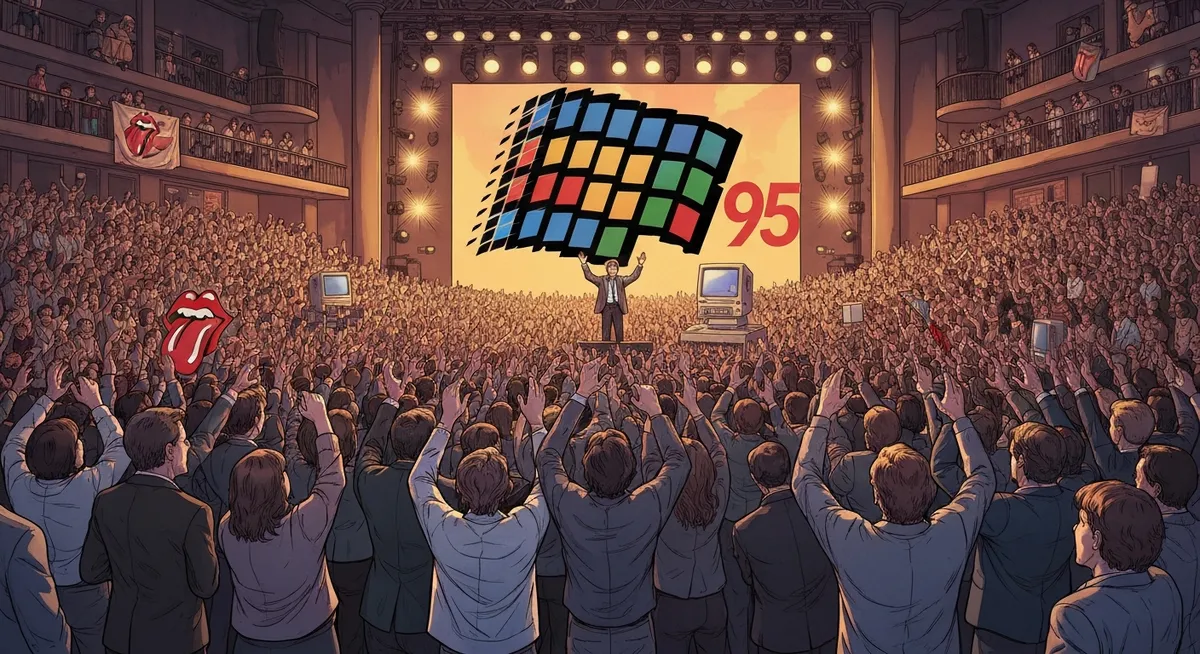
And people showed up. They literally lined up at midnight at electronics stores to buy a piece of software. Seven million copies sold in the first five weeks. Windows 95 was genuinely revolutionary for its time — the Start menu, the taskbar, long file names, plug-and-play hardware support. It made personal computers usable for normal humans in a way that nothing before it had.
With Windows 95, Microsoft completed its conquest. The company didn’t just dominate the PC market — it was the PC market. Over 90% of personal computers ran Windows. Every major software company built for Windows first, everything else second. Gates had built the most complete monopoly in the technology industry since AT&T’s grip on telephones.
Bill Gates, at forty years old, was the richest person in the world. He would hold that title, with brief interruptions, for the next two decades.
“Success is a lousy teacher. It seduces smart people into thinking they can’t lose.” — Bill Gates
🌐 Chapter 6: The Browser Wars — Crushing Netscape (1995–1998)
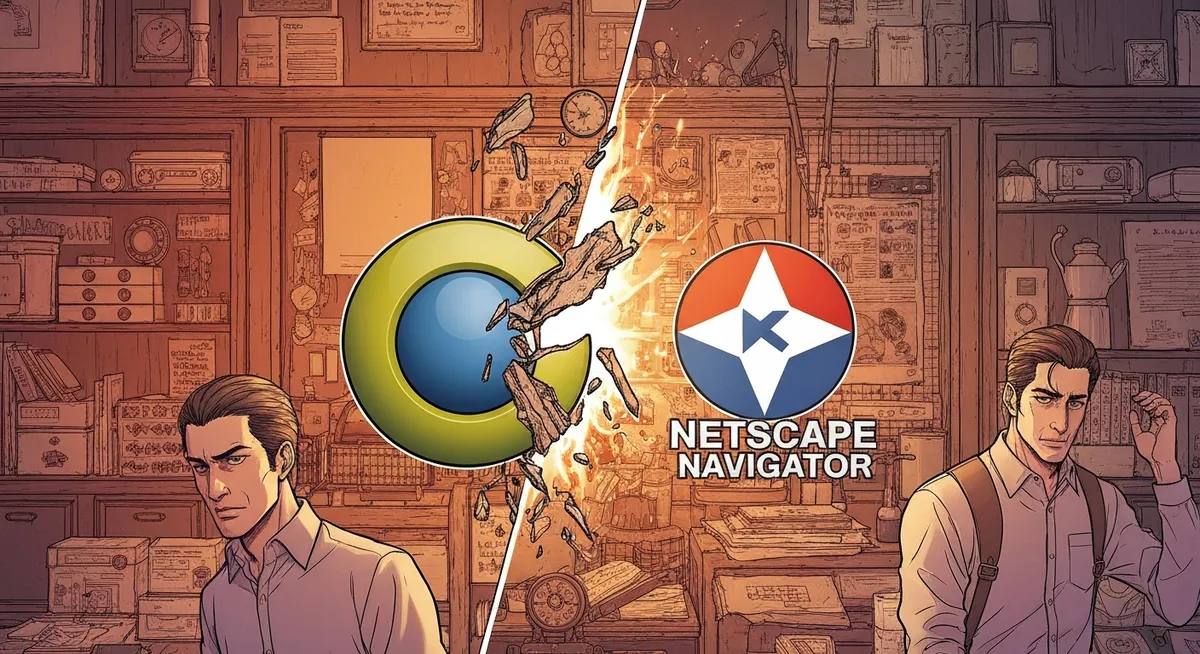
In 1994, a small company called Netscape launched Navigator, the first widely popular web browser. It was fast, intuitive, and free for personal use. Within months, Netscape owned over 80% of the browser market. The internet was exploding, and Netscape was the front door.
Gates was initially slow to grasp the internet’s significance — a rare strategic blind spot. In his 1995 book The Road Ahead, the first edition barely mentioned the internet at all. But when he finally got it, he got it with the force of a religious conversion.
The Internet Tidal Wave Memo
On May 26, 1995, Gates wrote an internal memo titled “The Internet Tidal Wave” — one of the most important documents in business history. In it, he told every Microsoft executive that the internet was now the company’s top priority, above everything else. He compared the internet’s disruptive potential to the IBM PC itself, which was the highest-stakes comparison he could make.
The memo was written during one of Gates’s famous Think Weeks — solitary retreats to a cabin in the Pacific Northwest where he’d hole up for a week with a stack of technical papers and strategic memos, reading and thinking without interruption. No phone calls. No meetings. No visitors. Just Gates, alone with his thoughts, rocking back and forth in a chair, processing the future.

Think Weeks produced some of Microsoft’s most pivotal strategic decisions. The Internet Tidal Wave memo alone essentially reoriented a $150 billion company overnight. Most CEOs can barely get their teams to agree on a new logo. Gates wrote a memo and turned an aircraft carrier on a dime.
The Netscape Killer
Microsoft built Internet Explorer and made a decision that was either brilliantly strategic or viciously anticompetitive, depending on who you ask: they bundled it free with Windows. Every PC that shipped with Windows — which was more than 90% of all PCs — came with Internet Explorer pre-installed. You didn’t have to download it. You didn’t have to want it. It was just there.
Netscape never had a chance. They were trying to sell a browser. Microsoft was giving one away, pre-installed on every computer on the planet. By 1999, Internet Explorer had flipped Netscape’s 80% market share to over 95% for IE. Netscape collapsed and was eventually sold to AOL for $4.2 billion — a fire sale for what had been the hottest company in tech.
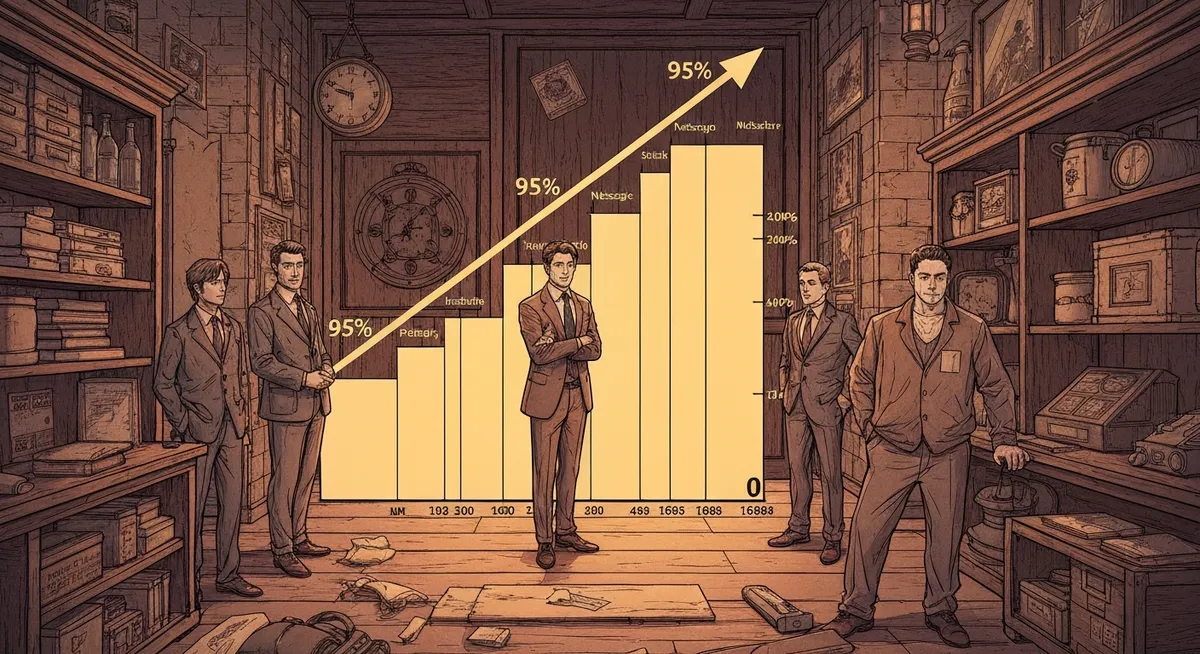
The browser war was a masterclass in what Gates did best: identify a threat, marshal Microsoft’s enormous resources, and crush it with a combination of technological integration and raw market power. It was also, according to the U.S. Department of Justice, illegal.
⚖️ Chapter 7: The Trial — United States v. Microsoft (1998–2001)
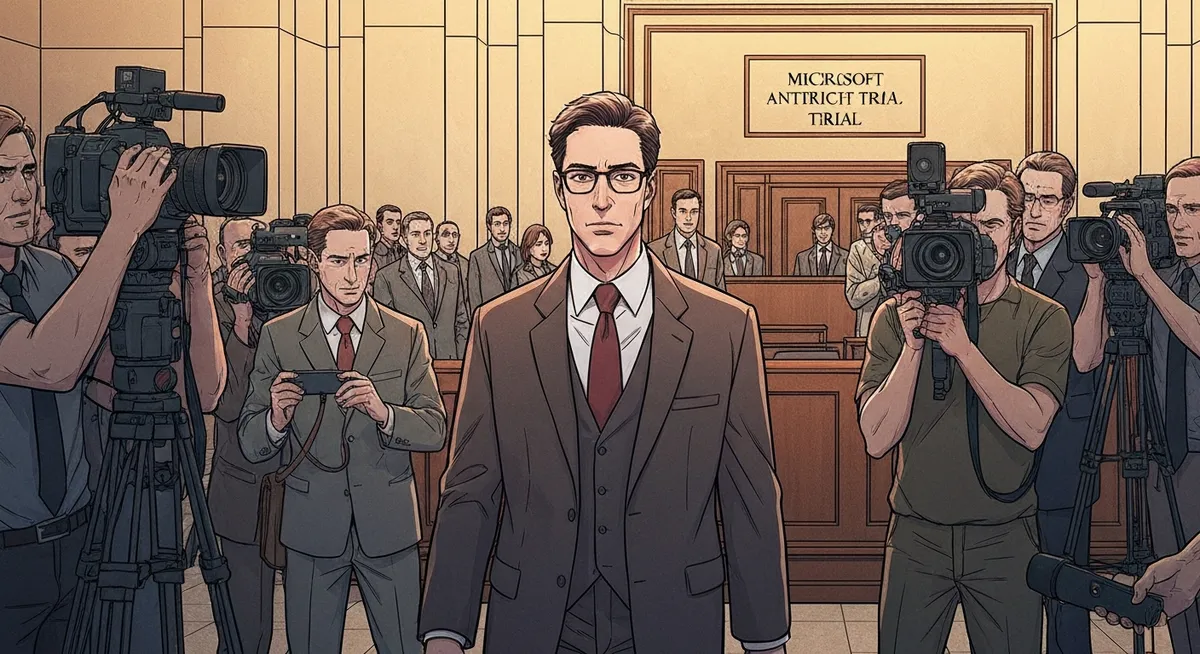
On May 18, 1998, the United States Department of Justice and twenty state attorneys general filed an antitrust lawsuit against Microsoft Corporation. The core allegation: Microsoft had used its Windows monopoly to illegally crush competition in the browser market, primarily by bundling Internet Explorer with Windows and using contractual restrictions to prevent PC manufacturers from installing competing browsers.
The trial became the biggest antitrust case since the breakup of AT&T in 1984, and it put Bill Gates personally under a spotlight so intense it nearly melted him.
The Deposition
Gates’s videotaped deposition became legendary — and not in a good way. Over three days, government lawyers grilled him about Microsoft’s business practices. Gates was evasive, combative, and at times appeared to play dumb about the meaning of basic words. He quibbled over the definition of “concern.” He claimed not to remember emails he had written. He rocked back and forth in his chair so aggressively it was distracting.
When prosecutors played clips of the deposition in court, Judge Thomas Penfield Jackson reportedly laughed out loud at Gates’s evasiveness. The judge. Laughing at the defendant. That’s how badly it went.
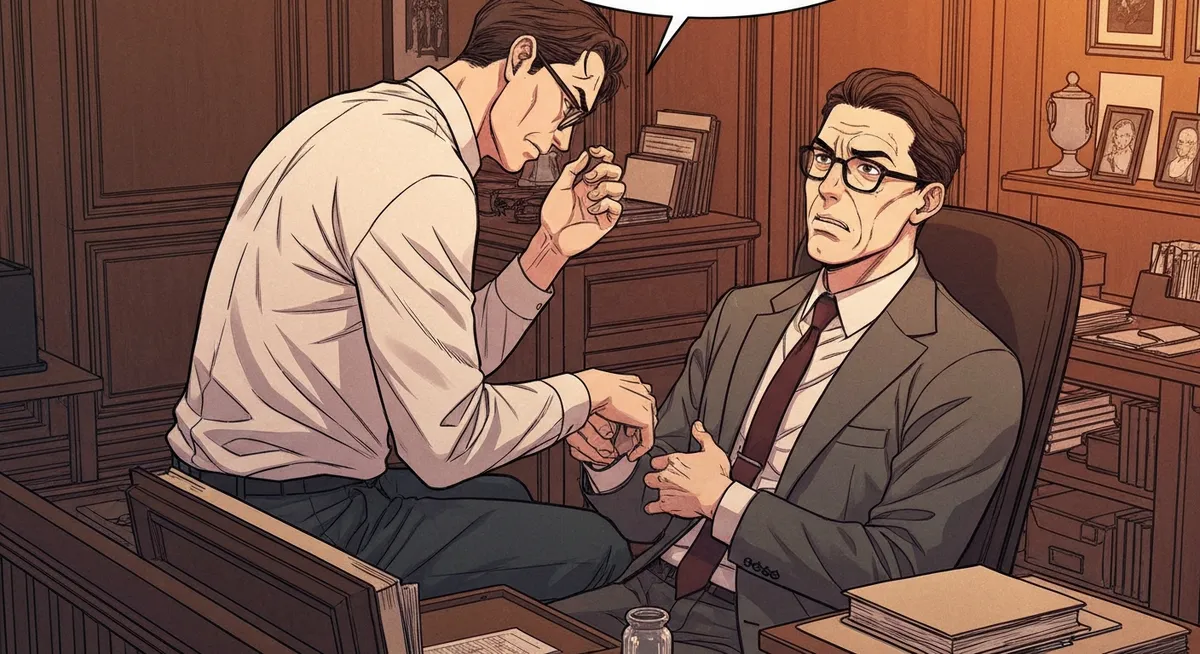
The public perception was devastating. For years, Gates had been seen as a nerdy genius — intense and competitive, sure, but fundamentally a builder. The deposition made him look like a slippery corporate bully who couldn’t give a straight answer to save his life. The image stuck.
The Ruling
On November 5, 1999, Judge Jackson issued his findings of fact: Microsoft was a monopoly that had used its power to harm consumers and competitors. On April 3, 2000, he went further — Microsoft had violated the Sherman Antitrust Act. His remedy? Break Microsoft in two. One company for the operating system, one for everything else.
The tech world was stunned. Breaking up Microsoft would have been an earthquake — like splitting Standard Oil a century earlier.
Microsoft appealed. The appeals court upheld the finding that Microsoft was a monopoly and had engaged in anticompetitive practices, but it overturned the breakup order and removed Judge Jackson from the case for making inappropriate public comments about Microsoft. The case was eventually settled in 2001 under the Bush administration, with Microsoft agreeing to share its programming interfaces with third-party companies and allow PC manufacturers more freedom in configuring Windows.
Critics called the settlement a slap on the wrist. The government had proved Microsoft was a monopoly, proved it had broken the law, and then basically let it walk with a promise to be nicer. But the trial inflicted real damage. It consumed years of management attention, emboldened competitors, and fundamentally shifted public perception of Gates from genius builder to ruthless monopolist.
More importantly, many argue the trial made Microsoft cautious during the critical years when the internet was evolving into its next phase. While Microsoft was lawyering up, a little company called Google was building a search engine in a Stanford dorm room. Microsoft’s legal hangover may have cost it the next era of technology.
“We were so focused on the antitrust suit, we missed a lot of things.” — A former Microsoft executive, quoted in multiple accounts of the era
🤝 Chapter 8: The Rivals — Gates, Jobs, and Everyone Else

No story of Bill Gates is complete without understanding the constellation of rivalries that defined his career. Gates didn’t just compete — he competed the way a chess grandmaster plays blitz: fast, aggressive, and always thinking three moves ahead.
Jobs and Gates: The Frenemies
The Gates-Jobs relationship was the Beatles vs. Stones of technology, except both sides were genuinely hostile and both sides needed each other.
Jobs saw himself as an artist. Gates saw himself as a strategist. Jobs wanted to control every pixel of the user experience. Gates wanted to control the platform that everyone else built on. Jobs sold elegance at a premium. Gates sold ubiquity at a discount. They were both right about almost everything, and they spent three decades telling each other they were wrong.
The relationship had genuine warmth buried under layers of competitive venom. When Jobs was dying of pancreatic cancer in 2011, Gates visited him at his home. According to Walter Isaacson’s biography, they spent an afternoon together talking about their families, their lives, and the early days. Jobs told Gates he envied the family life Gates had built. Gates told Jobs he envied Jobs’s instinct for product design. Two aging warriors, laying down arms at the end.
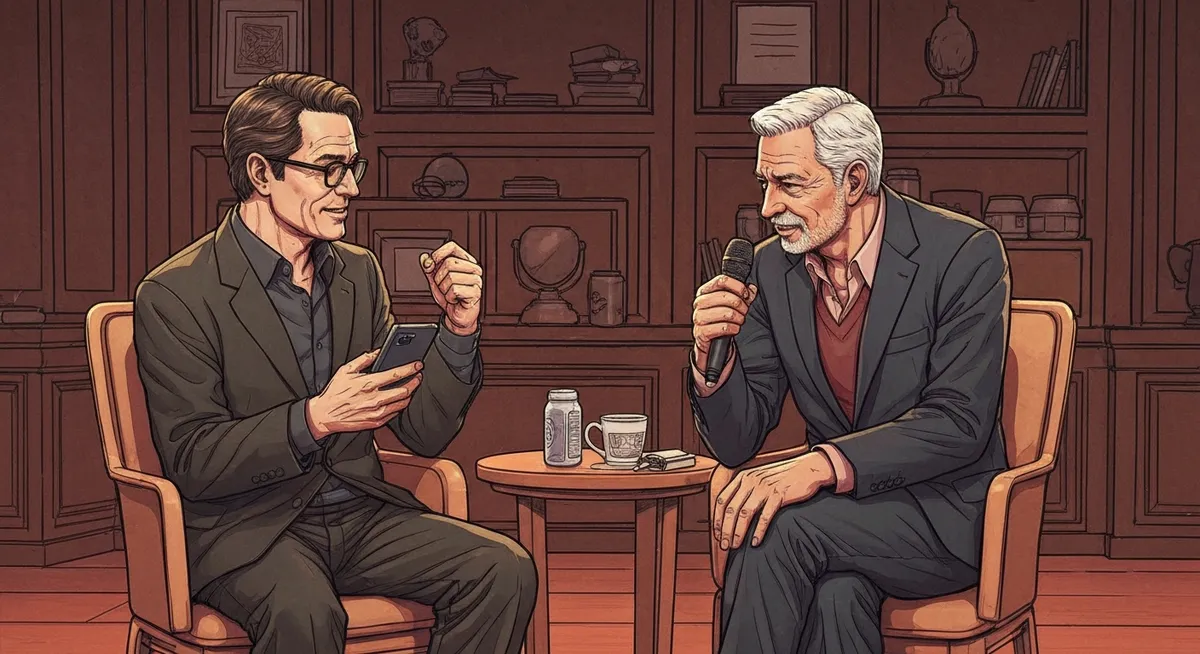
After Jobs died, Gates told an interviewer: “Steve was an amazing genius who had a rare ability to understand what people wanted before they knew it themselves. I will miss him immensely.” It was uncharacteristically emotional from a man who usually communicated in market share percentages.
The “640K” Myth
One quick detour into legend. You’ve probably heard the quote: “640K of memory ought to be enough for anybody.” Supposedly said by Bill Gates in 1981. It’s one of the most famous quotes in tech history, cited endlessly as proof that even geniuses can’t predict the future.
One problem: Gates almost certainly never said it. He’s denied it repeatedly and at length. No one has ever produced a recording, a transcript, or a contemporaneous written source. It appears to be entirely apocryphal — a tech urban legend that became so widely believed that people stopped questioning it. Gates himself has called it the most annoying misquote of his career.
The Diet Coke Obsession
Here’s a humanizing detail: Bill Gates reportedly drinks an enormous amount of Diet Coke. Not coffee — Diet Coke. Multiple people who’ve worked with him have described his offices and meeting rooms as perpetually stocked with cans of Diet Coke. It’s his fuel. While other tech moguls cultivated images around meditation retreats and biohacking protocols, Gates just… drank Diet Coke and read science papers. There’s something almost aggressively normal about it.
🤴 Chapter 9: The Richest Man Alive (1995–2006)
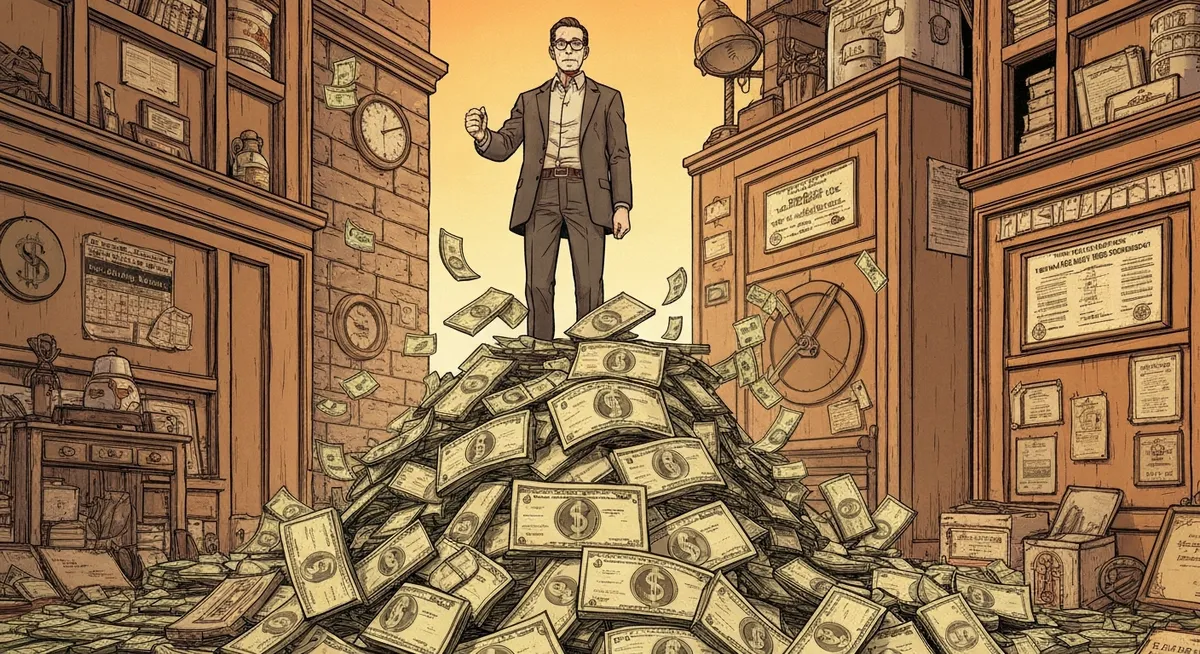
From 1995 to 2007, with only brief interruptions, Bill Gates held the title of the world’s richest person. His net worth peaked at around $100 billion during the dot-com bubble in 1999 — a figure so astronomical that people genuinely struggled to conceptualize it. In today’s dollars, adjusted for inflation, that’s well north of $150 billion.
The numbers were staggering. At his peak, Gates was earning an estimated $4,000 per second just from investment returns. He could have bought every single house in Boston. He could have given every human being on Earth a dollar and still had billions left. The media ran comparison after comparison trying to make the number real, and none of them quite worked because the number wasn’t really a number anymore — it was an abstraction.
The Pie in the Face
Fame at that level attracts weirdness. On February 4, 1998, while visiting Brussels for a meeting with Belgian officials, Gates got a cream pie smashed in his face by a serial “entarteur” (pie attacker) named Noel Godin. The video went viral — this was the late ’90s, so “viral” meant people emailed it to each other and it played on the evening news. Gates, cream dripping down his glasses, looked genuinely stunned. Melinda, walking beside him, looked furious.

Gates later said, somewhat charitably, that he didn’t see what the big deal was. But security was significantly tightened after that.
The Microsoft Campus
By the late 1990s, Microsoft’s Redmond campus had become a small city — dozens of buildings, thousands of employees, and a culture that reflected its founder’s personality: intense, argumentative, data-obsessed, and not particularly concerned with your feelings. Meetings were intellectual combat zones where ideas were tested by fire. If your proposal couldn’t survive being torn apart by the smartest people in the room, it wasn’t ready.
Gates’s personal management style was legendary for its intensity. He would interrupt presentations mid-sentence with “That’s the stupidest thing I’ve ever heard.” He’d grill engineers on the tiniest technical details to test whether they truly understood their own work. Employees described a culture where being smart wasn’t enough — you had to be able to defend your ideas under extreme pressure, with the CEO personally acting as the adversary.
It was brutal. It was effective. It also created a company culture that many people found toxic, and that contributed to Microsoft’s reputation as the Evil Empire of tech for much of the 1990s and 2000s.
The “Lazy Person” Philosophy
Despite — or perhaps because of — his brutal work ethic, Gates developed a management philosophy that sounds counterintuitive:
“I choose a lazy person to do a hard job. Because a lazy person will find an easy way to do it.” — Bill Gates
The quote became one of the most shared pieces of business wisdom of the internet age. Whether Gates meant it literally or as a provocation is debatable, but the underlying insight is real: the most efficient solutions often come from people who are motivated to minimize effort. Brute force is overrated. Elegance beats hustle.
🔄 Chapter 10: The Transition — From CEO to Philanthropist (2000–2008)

In January 2000, Gates stepped down as CEO of Microsoft, handing the role to his old Harvard hallmate Steve Ballmer. Gates took the title of “Chief Software Architect” — a role that let him stay involved in technology strategy without running the day-to-day business. But the real reason for the shift was becoming increasingly obvious: Bill Gates was more interested in giving away his money than in making more of it.
The Trip That Changed Everything
The origin story of Gates’s philanthropic conversion traces back to a 1993 trip to Africa with Melinda. According to multiple accounts, including their own public statements, they were overwhelmed by the scale of poverty and disease they witnessed — children dying of illnesses that were completely preventable with basic medical interventions that cost pennies. Rotavirus. Malaria. Measles. Diseases that had been essentially eliminated in wealthy countries were still killing millions of children in poor ones, simply because the economics of pharmaceutical development meant there was no profit incentive to solve them.
Gates, a man who had spent his entire career thinking about systems and incentives, was struck by a thought that reframed his entire worldview: the market doesn’t work for the poorest people on Earth. If you’re too poor to be a customer, no company will build products to save your life. That was a market failure of genocidal proportions, and it was one that only someone with his resources could begin to address.

The Bill & Melinda Gates Foundation
In 2000, Gates and his wife Melinda formally launched the Bill & Melinda Gates Foundation, merging several earlier charitable entities into a single organization that would become the largest private foundation in the world. As of 2025, the foundation’s endowment stands at over $70 billion, and it has distributed more than $60 billion in grants since its founding.
The foundation operates with the same data-driven, results-obsessed intensity that defined Microsoft. Gates didn’t just write checks to existing charities and hope for the best. He studied the problems with the same ferocity he’d once applied to operating systems, reading voraciously, consulting scientists and economists, and demanding measurable outcomes for every dollar spent.
The foundation’s major focus areas:
- Global health: vaccines, malaria prevention, maternal and child health
- Infectious disease: polio eradication, HIV/AIDS, tuberculosis
- Agricultural development: higher-yield crops for developing nations
- Education: K-12 reform in the United States
- Water and sanitation: reinventing the toilet for communities without sewage systems
Polio and Malaria
The numbers tell the story. When the Gates Foundation entered the fight against polio, the disease was still endemic in dozens of countries and paralyzing hundreds of thousands of children per year. Through funding, logistics support, and relentless advocacy, the foundation helped drive polio cases down to fewer than 100 per year worldwide by the mid-2020s. The disease now survives in only two countries — Pakistan and Afghanistan — and total eradication, while frustratingly elusive, is closer than it has ever been.
On malaria, the foundation has invested billions in bed nets, drugs, vaccines, and research. Deaths from malaria have fallen by more than 50% since 2000, according to the World Health Organization — from over a million per year to under 600,000. Still too many. But the trajectory is remarkable, and the Gates Foundation is the single largest private funder of malaria research and prevention on Earth.

“It’s not fair that the accident of where you’re born determines whether you live or die.” — Bill Gates
The Giving Pledge
In 2010, Gates and Warren Buffett launched The Giving Pledge — an initiative asking billionaires to commit to giving away at least half their wealth during their lifetime or in their wills. Buffett himself had already pledged the bulk of his fortune to the Gates Foundation, in what was the largest charitable gift in history at the time.
As of 2025, over 240 individuals and families from 29 countries have signed the Pledge, representing commitments worth hundreds of billions of dollars. It’s not legally binding — it’s a moral commitment, backed by social pressure from the world’s most famous philanthropists. Whether it actually changes billionaire behavior in the aggregate is debatable. But the sheer scale of the ambition is hard to dismiss.
💔 Chapter 11: The Divorce, Epstein, and the Reckoning (2019–2021)
On May 3, 2021, Bill and Melinda Gates announced they were ending their marriage after twenty-seven years. The statement was measured and cordial: “We no longer believe we can grow together as a couple in this next phase of our lives.”
Behind the public composure, the reality was considerably more complicated.
The Epstein Connection
In the months following the divorce announcement, reporting by The New York Times, The Wall Street Journal, and other outlets revealed that Gates had met with Jeffrey Epstein on multiple occasions between 2011 and 2014 — well after Epstein’s 2008 conviction on prostitution charges in Florida.
According to these reports, Gates reportedly visited Epstein’s Manhattan townhouse multiple times and flew on Epstein’s private jet at least once. Gates reportedly told colleagues that he met with Epstein to discuss philanthropy and potential funding for the Gates Foundation’s global health programs. He has publicly stated that the meetings were a mistake.
Melinda Gates, according to reporting by The Daily Beast and The New York Times, was reportedly deeply troubled by Bill’s association with Epstein and told him so as early as 2013. According to these accounts, the Epstein connection was reportedly a significant factor in the deterioration of their marriage.

Gates has categorically denied any involvement in or knowledge of Epstein’s criminal activities. In a 2023 interview with the BBC, he said: “It was a huge mistake to spend time with him, to give him the benefit of the doubt. I had several dinners with him hoping he’d contribute to global health philanthropic efforts. That didn’t happen. And I made a serious mistake in judgment.”
It’s important to note that Gates has never been accused of any illegal conduct in connection with Epstein. But the association — particularly the fact that it continued after Epstein’s first conviction — damaged Gates’s reputation at a time when it had been soaring due to his philanthropic work. The irony was brutal: the man who’d spent two decades rehabilitating his image from ruthless monopolist to benevolent philanthropist found his credibility undermined by a connection to one of the most reviled criminals of the century.
The Divorce Settlement
The financial details of the divorce were handled with remarkable discretion for a couple worth over $130 billion. Melinda received an estimated $6.3 billion in stocks and other assets on the day the divorce was announced, according to SEC filings. The total settlement was not publicly disclosed but was reportedly considerably larger.
Melinda initially continued as co-chair of the Gates Foundation before stepping down in 2024, receiving $12.5 billion from Gates to fund her own philanthropic efforts through Pivotal Ventures. The divorce effectively ended one of the most consequential philanthropic partnerships in history.
🦠 Chapter 12: COVID, Conspiracies, and the Strange New World (2020–2023)
If the divorce and Epstein controversy were painful, what happened during the COVID-19 pandemic was something else entirely: Bill Gates became the target of a global conspiracy theory movement so vast and bizarre that it defied rational analysis.
The Pandemic Prophet
Here’s the maddening part: Gates had been warning about a pandemic for years. In a 2015 TED Talk viewed over 40 million times, he stood on stage and said, with eerie precision, that the greatest threat to humanity wasn’t nuclear war — it was an infectious virus. He showed a simulation. He laid out exactly what would go wrong. He practically gave the world a blueprint for preparing.
Nobody listened. Then COVID-19 arrived in early 2020, and suddenly Gates’s prescience became, in the minds of conspiracy theorists, evidence of complicity. If he predicted it, the thinking went, maybe he caused it.
The Conspiracy Theories
The theories were wild, mutually contradictory, and spread at the speed of social media:
- Gates created the virus to sell vaccines
- Gates wanted to implant microchips in people through the vaccines
- Gates was using the pandemic to depopulate the Earth
- 5G towers, which Gates supposedly controlled, were spreading the virus
None of this had any basis in fact. But by mid-2020, according to a Yahoo News/YouGov poll, 28% of Americans believed Gates was involved in a plot to use vaccines to implant microchips. Twenty-eight percent. For a guy whose actual crime was… giving a TED Talk and funding vaccine research.

Gates handled it with a mixture of bemusement and frustration. “I’m kind of flattered that people think I have that kind of power,” he joked in one interview. But privately, by multiple accounts, he found it deeply disturbing that his efforts to improve global health had made him a villain to millions of people.
The conspiracy theories haven’t fully dissipated. They’ve metastasized into a broader anti-establishment, anti-vaccine movement that targets Gates as a symbol of elite overreach. For a man who has spent over $10 billion on global health — funding vaccines that have saved millions of lives by any objective measure — the irony is cruel.
🌍 Chapter 13: Climate, Energy, and the Next Act (2020–Present)

In 2021, Gates published How to Avoid a Climate Disaster, a book that applied his characteristically analytical mind to the problem of getting global greenhouse gas emissions from 51 billion tons per year to zero. It was classic Gates — dense with data, structured like a systems engineer’s approach to the problem, and relentlessly focused on practical solutions rather than ideological posturing.
The book argued that climate change isn’t going to be solved by individual lifestyle changes or by any single technology. It requires innovation across every sector of the economy — electricity, manufacturing, agriculture, transportation, and heating/cooling — and it requires governments to create markets for green technologies that don’t yet exist at scale.
Breakthrough Energy
Gates put his money where his book was. Breakthrough Energy, which he founded in 2015, is a network of investment funds, philanthropic programs, and policy advocacy organizations focused on developing and scaling clean energy technologies. Breakthrough Energy Ventures, the fund’s investment arm, has backed over 100 companies working on everything from next-generation nuclear reactors to carbon capture to geothermal energy to green steel.
The thesis is pure Gates: climate change is an engineering problem, and the technologies we need either don’t exist yet or aren’t cheap enough to deploy at scale. So fund the R&D, scale the winners, and use policy to create demand. It’s the same pattern he applied to global health — identify the market failure, fill the gap with philanthropic capital, and measure the results obsessively.

Gates has invested over $2 billion of his own money in clean energy ventures. Whether this makes him a climate hero or a billionaire trying to profit from the energy transition depends on your level of cynicism. Probably it’s both.
TerraPower
Of all Gates’s climate bets, the most ambitious — and most controversial — is TerraPower, a nuclear energy company he co-founded in 2008. TerraPower is developing a next-generation sodium-cooled reactor called Natrium, designed to be safer, cheaper, and more flexible than conventional nuclear plants. The first Natrium plant is under construction in Kemmerer, Wyoming, on the site of a retired coal plant.
Gates believes nuclear energy is indispensable to any serious climate strategy — that you can’t power a modern civilization on solar and wind alone because they’re intermittent, and batteries aren’t good enough yet for grid-scale storage. It’s a stance that puts him at odds with much of the environmental movement, which has spent decades opposing nuclear power. Gates doesn’t care. He looks at the math, and the math says nuclear.
📚 Chapter 14: The Man Behind the Myth
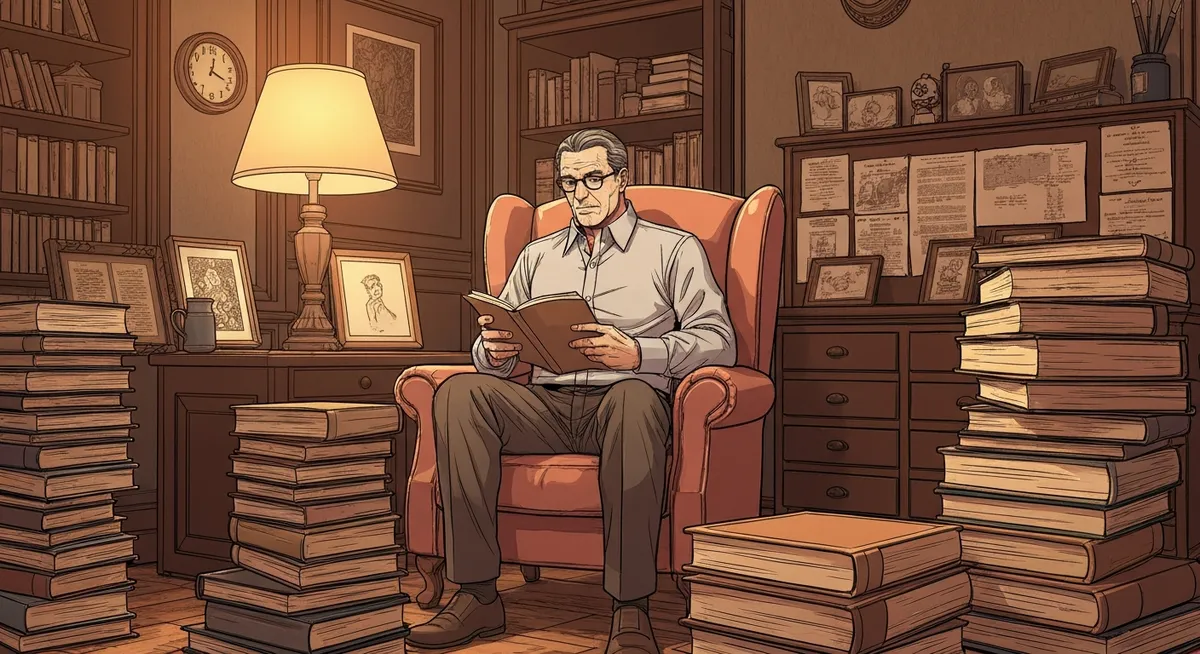
Strip away the business strategy and the philanthropy, and Bill Gates is, at his core, a reader. He reads about 50 books a year — an almost absurd volume for someone with his schedule — and reviews many of them on his blog, GatesNotes, which has become one of the internet’s most influential book recommendation platforms.
His reading taste is eclectic and serious: science, history, global health, energy, economics, fiction, biography. He reads with a pen in hand, annotating furiously. He’s said that reading is the primary way he learns, and that he retains information better from physical books than from screens — a confession that is charming coming from the man who built the world’s biggest software company.
Think Weeks, Continued
Even decades after leaving Microsoft, Gates still takes Think Weeks — solitary retreats where he reads, writes, and processes information without interruption. The format has evolved (the cabin now reportedly has better WiFi), but the principle is the same: unstructured time to think deeply is not a luxury. It’s a necessity for making decisions that matter.
The Daily Life
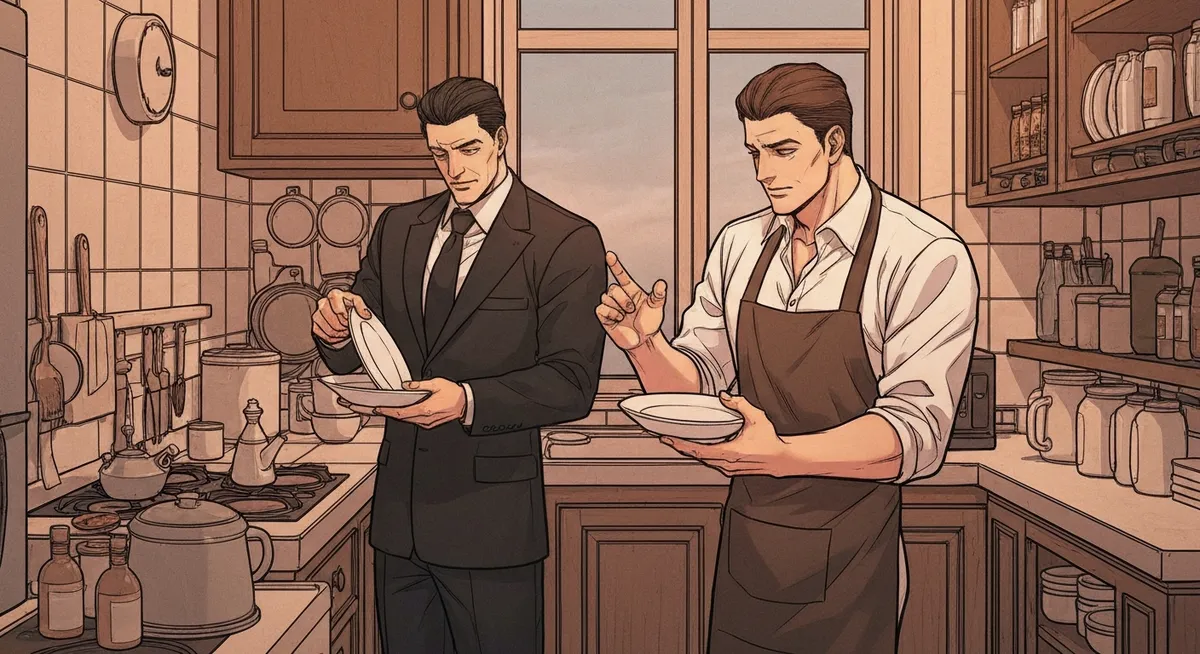
Gates’s current daily life, as described in various interviews, is a mixture of the extraordinary and the mundane. He reportedly wakes up early, exercises on a treadmill while watching educational videos, reads for several hours, takes meetings related to the foundation and Breakthrough Energy, and drinks a truly staggering amount of Diet Coke. He does the dishes every night — by his own admission, one of his few contributions to domestic life. He plays bridge and tennis. He reads bedtime stories, or used to when his three children were younger.
He is, by all accounts, significantly more relaxed and self-aware than the ferociously combative young CEO who once told an employee their work was the stupidest thing he’d ever seen. Age, divorce, conspiracy theories, and two decades of watching children die of preventable diseases in developing countries have a way of filing down the sharper edges.
The Kids
Gates and Melinda have three children: Jennifer (born 1996), Rory (born 1999), and Phoebe (born 2002). Gates has said publicly that each child will inherit about $10 million — a tiny fraction of his fortune — and that the rest will go to philanthropy. “Leaving kids massive amounts of money is not a favor to them,” he’s said.
Jennifer, the eldest, is an accomplished equestrian who married Egyptian equestrian Nayel Nassar in 2021. She’s been largely private but has occasionally spoken about the surreal experience of growing up as the daughter of the world’s richest man — a life of extraordinary privilege that she has, by most accounts, navigated with considerable grace.
🏛️ Chapter 15: Legacy — The Measure of the Nerd

So what do you do with Bill Gates?
He’s a man who built a monopoly so complete that the U.S. government had to step in to break it up. He crushed competitors with the kind of strategic violence that would make a military general nod appreciatively. He created a company culture that was, by many accounts, brilliant but bruising. He was the avatar of corporate ruthlessness for an entire generation of tech workers and regulators.
And then he stopped.
He looked at the money — the incomprehensible, reality-distorting pile of money — and decided that the most interesting thing he could do with it was try to prevent children from dying of diseases that cost two dollars to cure. He applied the same intensity, the same strategic thinking, the same obsessive data analysis that had built Microsoft to the problem of global health. And by any objective measure, it has worked. Millions of people are alive today because Bill Gates decided that eradicating polio was a better use of his time than shipping another version of Windows.
Does the philanthropy redeem the monopoly? Does saving lives in Africa erase the anticompetitive practices that crushed Netscape, harmed consumers, and drew the full weight of the DOJ? Reasonable people disagree. The Catholic Church has a concept called “moral complexity” — the idea that a single human life can contain both genuine virtue and genuine sin, and that trying to reduce a person to one or the other is a failure of understanding. Bill Gates is a case study in moral complexity.
He got pied in the face in Brussels and handled it with grace. He got dragged through the most public divorce of the decade and handled it with privacy. He got accused of implanting microchips in billions of people and handled it with bemusement. He built the most dominant software company in history and then, quietly, began the work of giving it all away.
The kid who read the encyclopedia, hacked his school schedule, bluffed IBM, crushed Netscape, fought the DOJ, and married a woman who may have been the best thing that ever happened to him — that kid changed the world at least twice. Once by connecting every desk and every home to a computer running his software. And once by connecting his fortune to the survival of the world’s poorest people.
Whether the second act redeems the first is a question only history can answer. But here’s what’s undeniable: a nerdy kid from Seattle who rocked back and forth in his chair and drank too much Diet Coke bent the arc of both technology and global health more than almost anyone else who has ever lived.
Not bad for a college dropout.
📅 Timeline

| Year | Age | Event |
|---|---|---|
| 1955 | 0 | Born William Henry Gates III in Seattle, Washington |
| 1967 | 12 | Enrolls at Lakeside School; encounters computers for the first time |
| 1968 | 13 | Writes first computer program on a GE Mark II time-sharing terminal |
| 1970 | 15 | Forms first business partnership with Paul Allen; hacks Lakeside scheduling system |
| 1972 | 17 | Co-founds Traf-O-Data with Paul Allen; builds traffic data processing device |
| 1973 | 18 | Enrolls at Harvard University; meets Steve Ballmer |
| 1975 | 19 | Writes Altair BASIC with Allen; drops out of Harvard; co-founds Microsoft |
| 1977 | 22 | Famous Albuquerque mugshot after traffic violation |
| 1980 | 25 | Licenses MS-DOS to IBM — retains ownership; the deal of the century |
| 1985 | 30 | Launches Windows 1.0; Microsoft goes public in 1986 at $21/share |
| 1987 | 31 | Becomes world’s youngest self-made billionaire at age 31 |
| 1990 | 35 | Windows 3.0 launches; sells 10 million copies in two years |
| 1994 | 38 | Marries Melinda French on January 1 in Lanai, Hawaii |
| 1995 | 39 | Writes “Internet Tidal Wave” memo; launches Windows 95; becomes world’s richest person |
| 1998 | 42 | Gets pie in the face in Brussels; DOJ files antitrust suit; browser wars at peak |
| 1999 | 43 | Net worth peaks at ~$100 billion during dot-com bubble |
| 2000 | 44 | Steps down as Microsoft CEO; Steve Ballmer takes over; launches Bill & Melinda Gates Foundation |
| 2001 | 45 | Antitrust case settled; Microsoft avoids breakup |
| 2005 | 49 | Named Time Person of the Year (with Melinda and Bono) for philanthropic work |
| 2006 | 50 | Warren Buffett pledges bulk of fortune to Gates Foundation |
| 2008 | 52 | Steps down from full-time Microsoft role; founds TerraPower |
| 2010 | 54 | Launches The Giving Pledge with Warren Buffett |
| 2014 | 58 | Steps down as Microsoft chairman; becomes “technology advisor” |
| 2015 | 59 | TED Talk warning about pandemic preparedness goes viral (40M+ views); founds Breakthrough Energy |
| 2020 | 64 | COVID-19 pandemic validates his warnings; becomes target of conspiracy theories |
| 2021 | 65 | Announces divorce from Melinda after 27 years; publishes How to Avoid a Climate Disaster |
| 2024 | 68 | Melinda exits Gates Foundation; receives $12.5B for independent philanthropy |
| 2025 | 69 | Net worth exceeds $100B; foundation endowment tops $70B; TerraPower Natrium plant under construction |
💡 Key Insights
- ▸ Gates didn't win by building the best software — he won by controlling the licensing. When IBM came knocking for an operating system, Gates didn't sell them DOS outright. He licensed it, retaining the right to sell it to every other PC manufacturer on Earth. That single contractual decision — keeping ownership of the OS while letting hardware makers compete — created the entire Microsoft monopoly. The lesson: in technology, whoever controls the platform standard captures most of the value.
- ▸ The antitrust trial revealed that Gates's greatest weapon wasn't code — it was strategic bundling. By packaging Internet Explorer free with Windows, he made it economically irrational for PC makers to ship Netscape. The browser was technically inferior, but it didn't matter. Distribution trumps product quality when you control the pipe. This playbook has been repeated by every dominant platform company since.
- ▸ Gates's transition from CEO to philanthropist wasn't a sudden conversion — it was triggered by a 1993 trip to Africa where he and Melinda witnessed poverty and disease at a scale that reframed his entire worldview. He realized that the same obsessive, data-driven approach he used to dominate software could be applied to global health. The Gates Foundation now operates like a venture fund for human survival, placing big bets on vaccines, sanitation, and agricultural innovation with the same ruthlessness he once applied to crushing Netscape.
- ▸ Think Weeks — Gates's practice of isolating himself in a cabin twice a year to read technical papers and think without interruption — produced some of Microsoft's most important strategic pivots, including the famous 1995 'Internet Tidal Wave' memo. The insight: unstructured thinking time isn't a luxury. For leaders making high-stakes decisions, it's a competitive weapon. Most executives fill every hour with meetings. Gates deliberately emptied his calendar to think.
- ▸ Gates spent a decade as the world's most hated tech mogul — vilified by regulators, competitors, and open-source advocates alike. Then he spent the next two decades giving away over $60 billion and becoming one of the most admired people on the planet. His arc proves that legacy isn't fixed at the moment of your greatest controversy. It's written by what you do after.
Sources
- James Wallace & Jim Erickson — Hard Drive: Bill Gates and the Making of the Microsoft Empire ↗
- Stephen Manes & Paul Andrews — Gates: How Microsoft's Mogul Reinvented an Industry and Made Himself the Richest Man in America ↗
- United States v. Microsoft Corp. — Antitrust Case Documents ↗
- Bill Gates — How to Avoid a Climate Disaster ↗
- Walter Isaacson — The Innovators ↗
- Bill & Melinda Gates Foundation — Annual Reports and Letters ↗
- Bloomberg Billionaires Index — Bill Gates ↗