Yvon Chouinard Gave Away Patagonia and Kept Its Purpose Under Guard
Yvon Chouinard’s family transferred Patagonia’s shares in 2022, separating voting control from economic ownership to fund environmental work without a sale.
View all stories about this mogul
On September 14, 2022, Patagonia announced that Yvon Chouinard and his family had transferred all their ownership of the outdoor clothing business to two entities. One received 98% of the shares without voting rights. The other received the remaining 2% and every vote. The family surrendered its personal ownership while retaining a defined role in guarding the business’s direction. Patagonia’s announcement made that distinction explicit.
The arrangement addressed a succession problem that a conventional sale could not settle to Chouinard’s satisfaction: who would receive the money Patagonia generated, and who would decide what the business was allowed to become? His answer assigned those functions to separate owners. Understanding that division requires going back to a climbing equipment business that once asked customers to abandon its leading product.
The product that damaged its own market
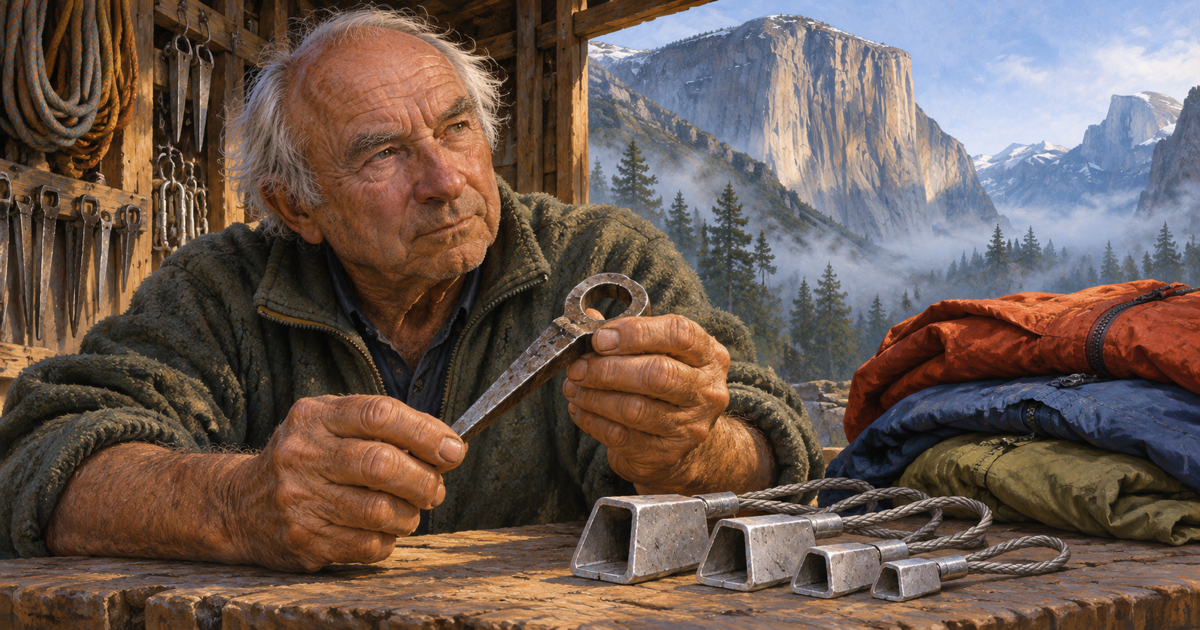
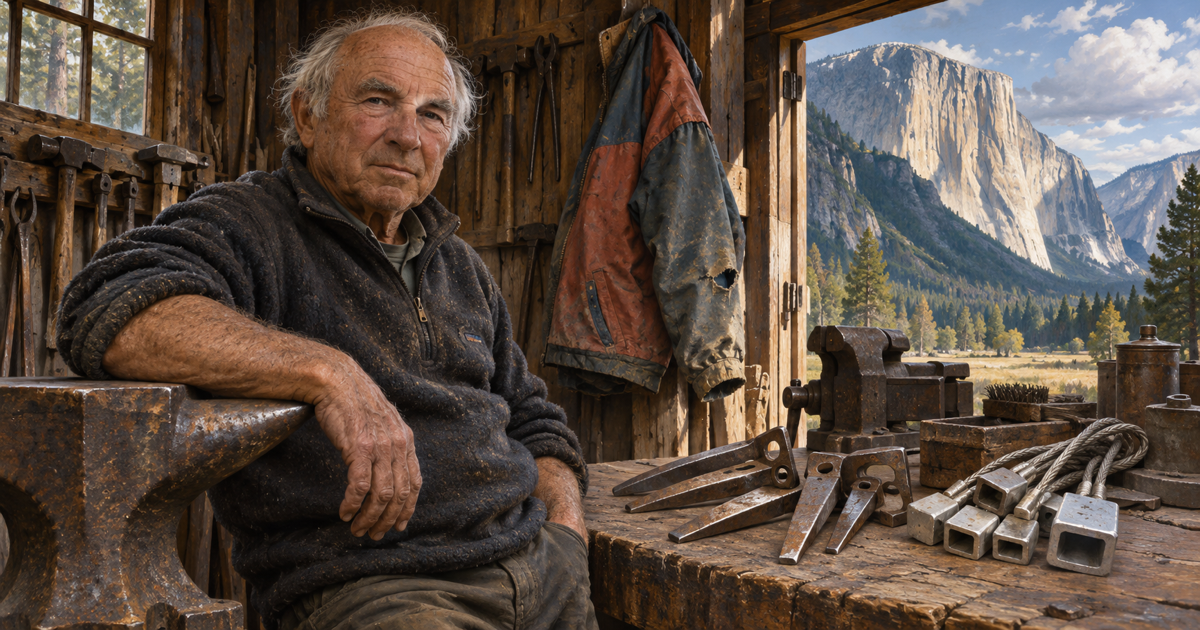
Chouinard’s early business served climbers who needed reliable equipment on difficult routes. Its steel pitons could be driven into cracks, removed and used again. Reusability solved a practical problem for people carrying equipment up long climbs. It also made the tool commercially attractive: strength and durability were qualities customers could test against rock.
The trouble appeared through repeated use. Hammering protection into a crack and extracting it altered the surface. As more climbers followed established routes, the damage accumulated. A tool that helped individual climbers pursue their sport was degrading the places on which that sport depended.
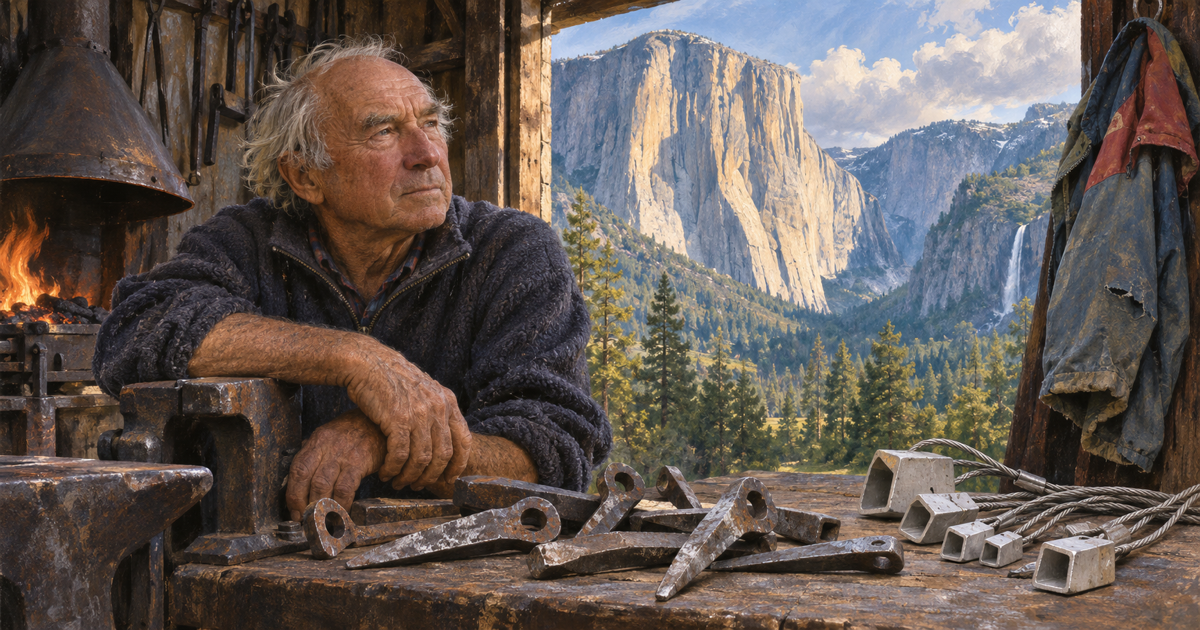
Patagonia’s historical account places Chouinard Equipment at the top of the American climbing hardware market by 1970. Chouinard and his partner, Tom Frost, then decided to reduce their reliance on pitons. Their alternative was aluminum chocks, which could be placed in suitable cracks by hand. The commercial question was whether customers would accept a different method of protection. Patagonia’s history records the transition.
There was a particular difficulty in making that argument. A manufacturer normally explains why its own product is superior to competing products. Chouinard and Frost had to explain why customers should change a practice associated with their own reputation. Their credibility as equipment makers gave the message weight, while their dependence on the existing product made it costly to deliver.
The distinction matters when assessing Chouinard’s later decisions. The piton episode involved a specific, observable conflict between a product and its setting. The damage was in the cracks climbers used. Addressing it meant changing equipment and technique, with consequences for what the business manufactured and sold.
A catalog taught customers to buy differently
The 1972 Chouinard Equipment catalog carried an essay by climber Doug Robinson explaining clean climbing. It combined an environmental argument with instruction. Customers were being asked to learn how removable protection worked, rather than simply accept a manufacturer’s assurance that a replacement product was preferable. Patagonia preserves that connection between equipment and technique in its clean climbing archive.
That instructional element was essential. A customer who understood the damage caused by pitons still needed confidence in an alternative. Explaining the shape of cracks, the placement of chocks and the judgment involved in their use helped bridge the distance between agreement and purchase. The catalog supplied a reason to change and information needed to act.
Black Diamond, the successor to Chouinard Equipment, says pitons accounted for 70% of sales when Chouinard and Frost urged climbers to move away from them. Its heritage account also records the employee takeover in 1989 that established Black Diamond under Peter Metcalf, Maria Cranor and their colleagues. The hardware business and Patagonia’s later ownership story should therefore be kept distinct.
The catalog episode offers a useful business lesson with a narrow scope. A supplier can help change customer behavior when it understands the activity well enough to teach a credible alternative. That does not establish that every environmental restriction will increase sales. It shows why information, trust and a usable substitute belonged together in this particular transition.
It also complicates the familiar image of a founder acting alone. Frost’s design work and Robinson’s instruction were part of the change. Customers still had to place the equipment on actual climbs. Chouinard’s decision mattered, but its execution depended on other people translating an intention into products and practice.
The same distinction would become central to succession. A founder can express a preference in a letter or a speech. Preserving that preference after ownership changes requires people with authority, a process for choosing them and a way to resolve decisions. Patagonia’s eventual transfer would address those institutional questions directly.
Growth exposed the limits of intention
Clothing eventually became the much larger business associated with Chouinard’s name. In a 2021 Yale Insights interview, longtime Patagonia executive Vincent Stanley described apparel as an undertaking originally intended to support the labor-intensive climbing equipment operation. He also recalled a later period when rapid expansion forced Patagonia to confront the consequences of its own expectations. Stanley’s account is an insider’s explanation of that development.
According to Stanley, a recession interrupted years of very fast growth. The business still grew, but it failed to meet the expectations around which it had organized. Patagonia laid off 120 employees. For a founder concerned with preserving a particular workplace, the episode exposed a weakness: continued growth could coexist with damaging decisions when plans assumed an even faster increase.
The lesson is more precise than a general warning against expansion. Hiring, inventory and other commitments are made before the eventual sales result is known. A business can report a positive growth rate and still face pressure because its obligations reflect a more ambitious forecast. Employees experience the resulting adjustment regardless of the founder’s stated values.
That history gives context to Chouinard’s later concern about ownership. A promise to treat employees well operates within budgets, forecasts and decisions about acceptable returns. Whoever controls those decisions can influence whether a promise survives an uncomfortable trading period. Succession therefore concerns more than choosing a sympathetic individual to occupy the founder’s office.
There is a limit to what the available accounts establish. Stanley’s interview explains how a senior participant understood Patagonia’s development; it is not an independent audit of every consequence. Likewise, a company history selects events that explain the organization’s preferred account of itself. These sources are useful for tracing stated decisions, provided their perspective remains visible.
Chouinard rejected a sale and a stock-market listing
In his September 2022 explanation, Chouinard described considering a sale followed by a donation of the proceeds. He worried that a purchaser might change Patagonia’s values or threaten employment. He also rejected taking the business public, arguing that pressure for short-term returns could compromise its longer-term responsibilities. These were his stated reasons, set out in his ownership letter.
Selling and donating would have separated the charitable money from the operating business. The proceeds could have supported environmental work, but the purchaser would have acquired the authority attached to ownership. A sale agreement might impose conditions, yet Chouinard’s objection was that he could not be certain the business would continue as he intended.
Keeping Patagonia within ordinary family ownership would have left a different question unresolved. A founder’s children and later successors can inherit shares, but personal agreement in one generation does not itself determine what future owners will do. Shares carry rights that can outlast the circumstances and relationships under which a business developed.
The 2022 arrangement approached that problem by defining two recipients with different functions. The Patagonia Purpose Trust received the voting stock. The Holdfast Collective received the nonvoting stock. The business could continue operating and generating earnings, while its ownership documents assigned control and the principal economic interest to institutions with stated environmental purposes.
The underlying tradeoff is visible without accepting every claim made for the arrangement. Selling could have produced money immediately while transferring authority to a buyer. Retaining the operating business left future distributions dependent on its performance. Chouinard’s chosen structure tied environmental funding to Patagonia’s continued ability to make money.
That dependence is important. A clothing business faces decisions about products, costs, suppliers, demand and investment under any ownership structure. Changing the recipient of its dividends does not remove those decisions. It changes whom the business ultimately serves through those distributions and places a different owner above its board.
Two percent carried the voting authority
Under the announced structure, the Patagonia Purpose Trust held all the voting shares, representing 2% of total stock. The Holdfast Collective held all the nonvoting shares, representing 98%. Patagonia’s announcement said the family would guide the trust and the Collective’s philanthropic work. Family members would also continue serving on Patagonia’s board. The original release described continuity alongside the transfer.
Ownership percentages can obscure this arrangement if they are read without reference to share rights. The holder of 98% of the stock did not thereby receive 98% of the votes. The separation was deliberate: the large economic interest went to one recipient, while the authority associated with voting stock went to the trust.
The family’s continuing role is equally necessary to an accurate account. Giving up personal ownership did not mean withdrawing from influence. Patagonia’s published explanation assigns the trust authority over key matters, including board composition and changes to the corporate charter. The family’s role in guiding that institution formed part of the succession plan.
This makes the transfer different from handing management over to an unrelated purchaser. It also differs from distributing the business’s shares among employees. Each arrangement answers a different ownership question. Patagonia’s transfer placed shares in two designated entities and preserved a channel through which the founder’s family could influence stewardship.
The design concentrates responsibility as well as authority. If preserving the mission depends on the trust’s decisions, the people guiding that trust matter. Their judgment about directors and institutional priorities becomes part of the protection the arrangement is intended to provide. Legal structure can assign that work; people still have to perform it.
A careful reading therefore distinguishes the declared purpose from the mechanism supporting it. The environmental purpose explains why the family made the transfer. Voting rights, board oversight and the allocation of shares explain how the arrangement was intended to operate. The mechanism is the part a reader can examine without treating the founder’s intentions as proof of future results.
Environmental funding still depends on the business
Patagonia’s 2022 release projected annual dividends of roughly $100 million, depending on the health of the business. It specified that profits retained for reinvestment would remain inside Patagonia. That figure was a forecast made at the announcement, rather than a guaranteed yearly payment or evidence of what had been distributed by November 2026. The release’s qualification is essential to interpreting the number.
The distinction between sales, profit and distributable money prevents several misleading readings. A customer’s payment first contributes to revenue. The business has expenses and obligations. It may also need to retain earnings to finance operations or prepare for disruption. Only after those decisions can the amount available for a dividend be established.
Reinvestment creates a recurring judgment call. Retaining more money can support the business that produces future funding; distributing more can support environmental work sooner. Neither objective supplies an automatic answer to the appropriate balance in a particular year. The structure establishes the destination of excess profits while leaving managers and stewards to assess what the business needs.
Patagonia also said its existing commitment to donate 1% of annual sales would continue. A sales-based commitment and a dividend perform different functions. The former is calculated against revenue; the latter depends on earnings and retention decisions. Treating both as one undifferentiated promise would conceal the different business conditions under which money is allocated.
The business continued as a for-profit enterprise. Its ownership explanation identifies the Holdfast Collective as a 501(c)(4) organization able to support advocacy and political candidates as well as environmental grants and investments. That institutional choice helps explain why describing the transfer merely as a gift to a conventional charitable foundation misses part of the design. Patagonia’s ownership explanation sets out those distinctions.
The environmental claims must also be assessed separately from the ownership transfer. Redirecting profits does not, by itself, establish that manufacturing a garment causes less harm. Product impacts require evidence about materials and production. Funding outcomes require evidence about distributions and the activities they support. The transfer is a documented change in ownership, not a substitute for either kind of measurement.
Chouinard’s most consequential succession decision was to make those future earnings serve a designated purpose while arranging oversight intended to preserve it. The family relinquished the shares as personal property and maintained a formal role in stewardship. Whether that balance delivers its stated aims depends on decisions and results beyond the announcement. What the documents establish is concrete: Patagonia’s next owners received different rights, and the founder made that division the center of his departure from personal ownership.
Frequently asked questions
Who owns Patagonia?
The Patagonia Purpose Trust owns all voting shares, representing 2% of stock; the Holdfast Collective owns the remaining 98%, all nonvoting.
Did Chouinard’s family give up all influence?
No. The announced arrangement retained family roles in guiding the trust and philanthropic work, alongside continued board participation.
Does every Patagonia sale go to environmental causes?
No. Patagonia pays operating costs and retains funds for business needs; excess profits support dividends, alongside its separate 1%-of-sales commitment.
💡 Key Insights
- ▸ Voting rights and economic ownership can be assigned to different institutions.
- ▸ The Chouinard family surrendered personal ownership while retaining stewardship roles.
- ▸ Environmental dividends depend on profits remaining after business reinvestment.
- ▸ The 1972 climbing catalog paired a product change with practical customer instruction.