José Neves: The Farfetch Dream That Turned Luxury Hype Into a Hard Landing
José Neves built Farfetch into the most ambitious marketplace in luxury fashion. For a moment, it looked like the software layer for the entire industry. Then capital markets, execution strain, and luxury's own contradictions caught up.
View all stories about this mogul
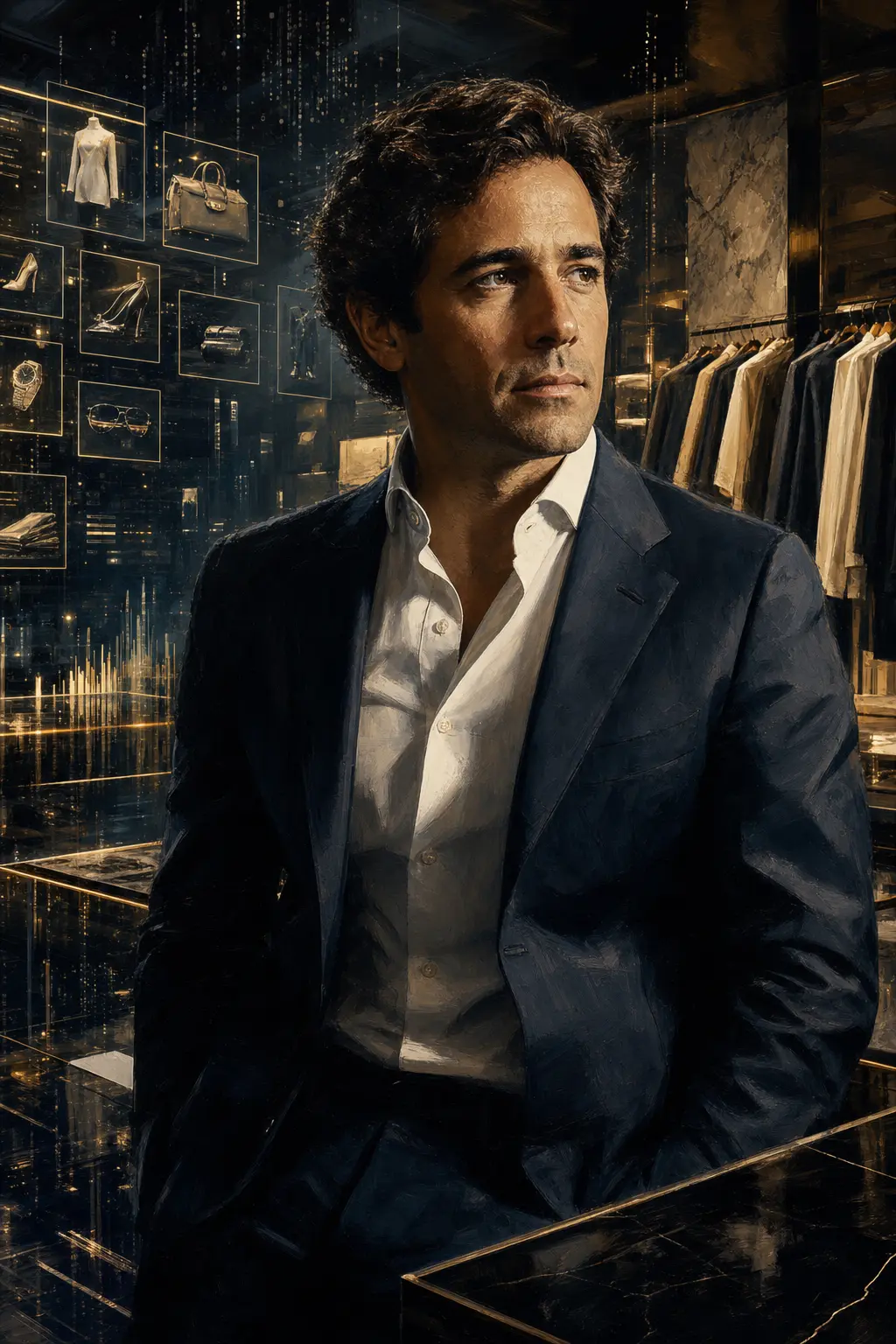
José Neves did not just try to sell luxury online. He tried to become the wiring behind luxury commerce itself. That was the real Farfetch ambition. Not another elegant storefront. Not merely a nicer digital boutique. A global platform connecting independent fashion stores, brands, logistics, software, and high-spending customers into one machine.
For years, that looked brilliant.
Farfetch seemed to capture a very modern fantasy: that technology could do for luxury retail what platforms had done for everything else — aggregate supply, smooth distribution, expand margins, and turn fragmentation into network power. Investors loved the size of the dream. The fashion world loved the access. José Neves, with his mix of product obsession and calm confidence, looked like the rare founder who could speak both code and couture.
Then the story bent the other way.
This is not a simple failure tale. Farfetch became real, important, and globally influential. But the company’s eventual distress and sale showed how dangerous it is when a platform business confuses strategic centrality with financial invincibility.
José Neves belongs in Fall because he built something genuinely important — and still could not keep gravity from collecting its debt.
Chapter 1: He Came Out of Fashion and Software at the Same Time

One reason José Neves felt unusual from the beginning is that he never fit neatly into one founder archetype. He was neither a pure engineer entering fashion from outside nor a pure fashion merchant reluctantly learning digital tools. His career sat in the overlap.
Accounts of his early life consistently describe someone drawn to computing young and to fashion retail early. Before Farfetch, he had already worked through footwear, boutique retail, and software-oriented thinking. That mix mattered. It gave him a sharper instinct than many luxury executives for how ugly the backend of fashion commerce really was.
Independent boutiques had taste but limited reach. Brands had identity but inconsistent digital execution. Customers wanted global access but ran into geography, inventory fragmentation, and clumsy online experiences. Neves did not see those as isolated annoyances. He saw a systems problem.
That is the key founder trait. Noticing that a glamorous industry often runs on broken plumbing.
Chapter 2: Farfetch Solved a Real Problem the Industry Underestimated

Farfetch’s original logic was powerful because it did not begin with a generic marketplace cliché. It began with a very specific mismatch: luxury fashion inventory existed all over the world, but discovery and distribution were still trapped inside local boutiques and traditional retail structures.
Neves saw that a shopper in New York might want something sitting quietly in a boutique in Milan or Tokyo. The boutique had taste. The customer had intent. The internet should have been the obvious bridge. In practice, it wasn’t. The systems were too fragmented, the merchants too small, and the customer experience too inconsistent.
Farfetch entered as translator and connector. It let boutiques keep their identity while plugging into a larger digital shop window. That was a genuinely elegant proposition. It flattered the romance of fashion while giving the trade a scalable commercial layer.
This is why Neves attracted so much admiration. He did not try to destroy the boutiques. He tried to network them.
Chapter 3: The Marketplace Was Only the Opening Move

Many founders would have stopped after proving the marketplace worked. Neves kept widening the thesis.
Farfetch increasingly presented itself not simply as a place to buy luxury goods, but as a technology platform for the entire luxury ecosystem. Marketplace services, logistics, brand enablement, white-label capabilities, and broader infrastructure ambitions all started clustering around the company. In its own corporate language, Farfetch was becoming a global platform for luxury.
This was seductive for a reason. Platform businesses earn higher multiples because they promise centrality. If you become the layer that brands, boutiques, and consumers all depend on, your future looks much bigger than ordinary retail.
But centrality is an expensive dream. Every step beyond the original marketplace required more integration, more trust, more capital, and more execution across a famously image-sensitive industry.
Neves was no longer building a clever bridge. He was trying to become the operating system.
Chapter 4: Fashion Loved the Story Because It Needed the Story
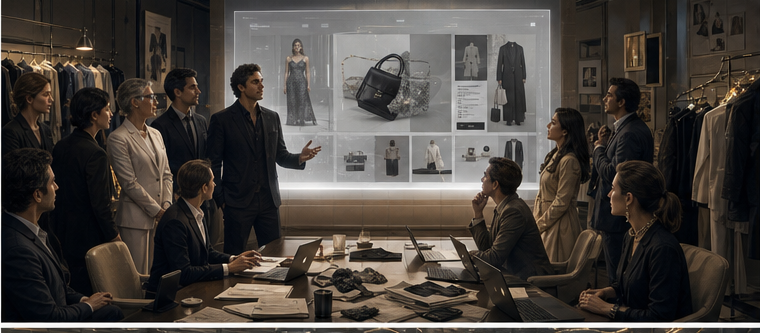
Luxury has always had an awkward relationship with e-commerce. The products are expensive, tactile, status-driven, and wrapped in aura. That makes the internet feel both necessary and vaguely contaminating. Brands want reach without vulgarity. They want scale without loss of control.
Farfetch looked like an answer to that contradiction.
It offered global demand without asking every boutique or brand to become a world-class software company. It gave the industry a language for digitization that sounded elegant rather than crude. Neves himself helped make that credible. He did not talk like a pure growth hacker. He spoke the cultural language of fashion while still pushing platform logic underneath.
That was his strategic charisma. He reassured luxury that technology did not have to flatten taste.
For a while, everyone could project their ideal future onto Farfetch: boutiques saw salvation, brands saw expansion, investors saw a category-defining marketplace, and fashion media saw modernization without total desecration.
Chapter 5: The IPO Turned Belief Into a Public Price

When Farfetch went public in 2018 at a valuation above its targeted range, the market was making a loud statement. Investors were not paying for a narrow retailer. They were paying for a luxury-commerce architecture story.
That distinction matters.
Public markets are generous when they think a company can own a category, and brutal when they realize the category is messier than the slide deck suggested. After the IPO, Farfetch was no longer being judged only by whether people liked the service. It was being judged by whether this sprawling platform vision could convert admiration into durable economics.
That is where the founder’s burden changed. In private markets, you can be rewarded for narrative expansion. In public markets, the narrative has to survive quarters, margins, capital intensity, and changing risk appetite.
José Neves had built something investors wanted to believe in. That was a triumph. It also meant belief itself became a liability once performance started wobbling.
Chapter 6: Success Made the Company More Complicated, Not Safer

One of the most common mistakes in platform history is assuming that strategic importance automatically becomes financial durability. Farfetch became more important over time, but importance can come with extra fragility.
The business kept layering ambition on top of ambition. More partners. More services. More complexity. More expectations that Farfetch would not only mediate transactions but shape how luxury brands approached digital commerce altogether.
That is difficult terrain even in a forgiving market. In a harsher market, it can become lethal. Luxury demand is cyclical. Consumer confidence matters. Brand relationships matter. Execution matters. So does trust. If any of those start slipping at the wrong time, the platform story stops compounding and starts absorbing pressure from every side at once.
Farfetch was not a simple software company. It touched inventory, partners, shipping, merchandising, brand politics, and capital markets. Each connection made it more impressive. Each connection also made it more exposed.
Chapter 7: The Public Narrative Started to Fray Before the Final Shock

By the time reports surfaced in late 2023 that Neves was exploring a take-private path after a troubled New York Stock Exchange run, the shift in mood was already obvious. The glamour of the original thesis had given way to a more suspicious question: if Farfetch was really the indispensable future of luxury e-commerce, why did it look so financially vulnerable?
That question is cruel, but fair.
Founders often survive for a long time on strategic prestige. Neves had plenty of it. He was widely treated as one of the most sophisticated minds in fashion technology. But prestige does not refinance a balance sheet by itself. Once the market begins to doubt durability, every prior claim gets re-read with harsher eyes.
Was Farfetch scaling a platform, or merely accumulating obligations faster than it could convert them into stable power?
The company had spent years being admired for its ambition. Suddenly ambition was being priced as overreach.
Chapter 8: Coupang’s Rescue Was Also a Verdict

When Coupang moved to buy Farfetch in a deal that provided fresh capital and kept the operation alive, the transaction was framed as rescue. That was true. It was also an unmistakable judgment.
A company once sold as the digital nervous system of global luxury had ended up needing a white knight.
This is the brutal thing about modern platform stories. They can look dominant right up until the week they look unfinished. Farfetch had brand recognition, industry relationships, and real technological relevance. But relevance is not sovereignty. If the funding window narrows and the market loses patience, the future can get sold on emergency terms.
For Neves, that is the sting in the ending. He did not build a trivial company that no one wanted. He built a meaningful company that still could not defend itself on its own balance-sheet terms.
That hurts more because it means the dream was partly right.
Chapter 9: José Neves Wasn’t Wrong About Luxury Going Digital

This is where lazy retellings miss the point.
Neves was not fundamentally wrong that luxury had to modernize, that boutiques needed global digital distribution, or that software and logistics would become central to high-end fashion. Those calls were real. In that sense, he was early and materially correct.
The problem was that being right about direction does not guarantee the company carrying the flag will capture the economics cleanly enough to survive the journey. Industries can change in your direction and still punish you if your execution stack grows too heavy, your financing assumptions get too optimistic, or your public valuation outruns what the business can sustain.
That is why the Farfetch story is such a sharp case study. It is not about delusion from the very start. It is about partial truth stretched into a capital-markets myth.
Neves saw the future more clearly than many incumbents did. He just could not make that clarity immune to cash burn, complexity, and a changing market mood.
Chapter 10: The Hard Landing Was Built Into the Dream

José Neves’ mogul story is compelling because it captures the seduction of platform ambition in a prestige industry. He built Farfetch into a name people in fashion, finance, and technology all had to take seriously. That alone is a significant achievement. Very few founders ever persuade three different elite worlds to care at the same time.
But that same achievement carried a hidden tax.
Once Farfetch was no longer just a marketplace but a symbol of luxury’s digital future, every stumble carried symbolic weight. Missing expectations was not just missing expectations. It became evidence that the whole elegant theory might be too expensive, too complex, or too fragile in public form.
That is the real fall. Not embarrassment. Not obscurity. A demotion from architect of the future to founder of an unfinished empire that someone else had to stabilize.
José Neves should still be remembered as one of the boldest builders in fashion-tech history. He spotted a real structural gap and built a globally resonant company around it. But MogulFeed is interested in the second sentence too: ambition that large does not fail softly.
Farfetch promised to make luxury borderless, networked, and software-native.
It achieved part of that vision.
And then it reminded everyone that in markets, even beautiful platforms eventually have to answer the ugliest question of all: who pays for the dream when the dream stops paying for itself?
💡 Key Insights
- ▸ José Neves saw earlier than most that luxury e-commerce was not just about selling products online. It was about building the infrastructure that let fragmented boutiques access global demand.
- ▸ Farfetch's ambition kept widening from marketplace to platform to operating system for luxury, but each new layer also added capital needs, execution risk, and narrative pressure.
- ▸ The hard landing was not proof that Neves lacked vision. It was proof that platform dreams in luxury are brutally exposed when growth, trust, and financing stop moving in the same direction.