John D. Rockefeller: How a Bookkeeper Built the Most Powerful Monopoly in History
From a $1,000 loan to controlling 90% of America's oil — the ruthless strategy behind Standard Oil, the breakup that made him even richer, and the philanthropy that reshaped the world.
View all stories about this mogul
John D. Rockefeller’s father was a bigamist con man who sold fake cancer cures to dying people, bragged about cheating his own children, and was once indicted for rape. His mother was a devout Baptist who taught him that wasting a single penny was a sin against God. The most ruthless monopolist in American history was raised by a literal devil and a saint — and somehow absorbed lessons from both.
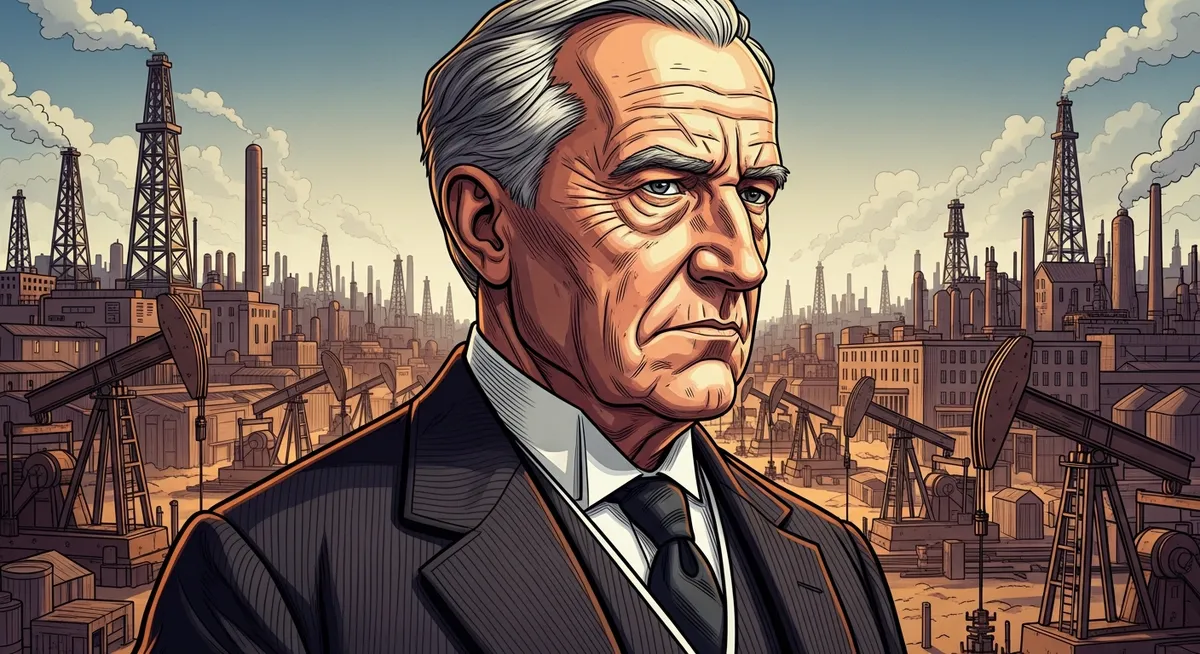
Rockefeller didn’t discover oil. He didn’t drill for it. He didn’t even particularly like getting his hands dirty. What he figured out was something far more devastating: the person who controls how oil moves from the ground to your lamp controls everything. And then he executed that insight so methodically, so mercilessly, that the United States government had to invent new laws just to stop him.
The punchline? When they finally broke up his monopoly, it made him even richer. You can’t write this stuff.
🏚️ Chapter 1: The Con Man’s Son (1839–1855)

John Davison Rockefeller was born on July 8, 1839, in Richford, New York — a nowhere farming town in the Finger Lakes region. Second of six kids. And from day one, his life was shaped by two parents who could not have been more different if they’d been cast by a screenwriter.
The Devil and the Saint
His mother, Eliza, was a devout Baptist who ran the household like a monastery with chores. Strict. Frugal. Morally inflexible. She drilled into young John that waste was a sin, debt was shameful, and every single penny must be accounted for. She also taught him to tithe — give ten percent of everything you earn to the church, no exceptions. Rockefeller did this from his very first paycheck until the day he died. The woman’s influence was absolute.
His father, William Avery Rockefeller — known locally as “Devil Bill” — was a completely different animal. Devil Bill was a traveling con man who called himself a “botanic physician” and sold bottles of useless snake oil to desperate, sick people in rural towns. He’d vanish for months at a time, then roll back into town with a fat wad of cash and wild stories. Father of the year material, clearly.
But it gets worse. Way worse. In 1849, according to Ron Chernow’s biography Titan, Devil Bill was indicted for the rape of a household worker. His response? He just left town. Problem solved. Years later, it came out that he’d been living an entire double life — secretly married to a second woman under the fake name “Dr. William Levingston,” raising a whole second family in another state while still legally married to Eliza. The man was a bigamist, a con artist, an accused rapist, and — against all odds — the father of the most methodical businessman who ever lived.
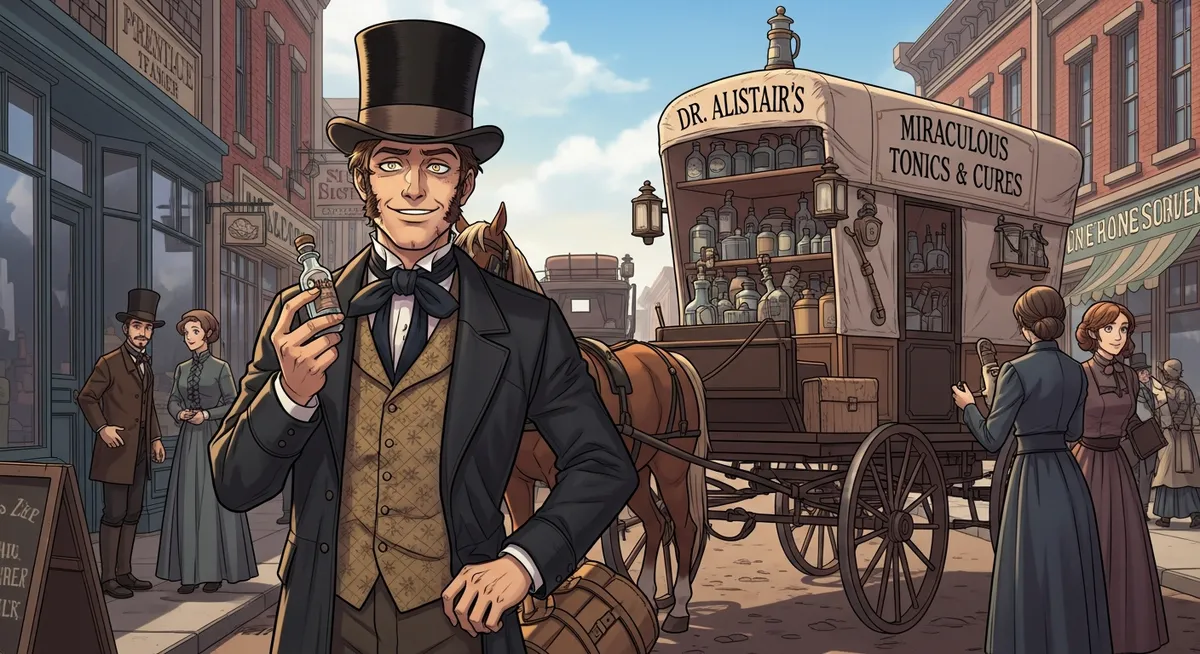
Devil Bill was actually proud of being terrible. He once bragged: “I cheat my boys every chance I get. I want to make ‘em sharp.” He’d lend his own kids money at interest, con them in petty trades, and laugh about it afterward. Young John absorbed every lesson — but drew the opposite conclusion. Where Devil Bill saw the world as a con game, John decided the world was a place where you needed to be so disciplined, so precise, and so controlled that absolutely nobody could ever screw you over. His father taught him to trust no one. His mother taught him to count everything. Mix those two together and you get the most dangerous businessman in history.
A Boy Who Counted Everything
The family moved constantly, eventually landing near Cleveland, Ohio. Money came and went with Devil Bill’s appearances and disappearances. That instability scarred young Rockefeller in a very specific way: he became obsessed — borderline compulsive — with financial control.
He wasn’t like other kids. He didn’t play. He was quiet, serious, and watchful. He bought candy in bulk and resold individual pieces to his siblings at a markup. When he was seven years old, he raised turkeys, sold them, and lent the profits to a neighboring farmer at 7% interest. Seven. Years. Old. Most kids that age are eating crayons. Rockefeller was running a micro-lending operation.
He later described this as the moment he understood money: “The impression was gaining ground with me that it was a good thing to let the money be my slave and not make myself a slave to money.” He was seven, and he already sounded like a Fortune 500 keynote speaker.
📒 Chapter 2: Ledger A and the Education of a Bookkeeper (1855–1863)
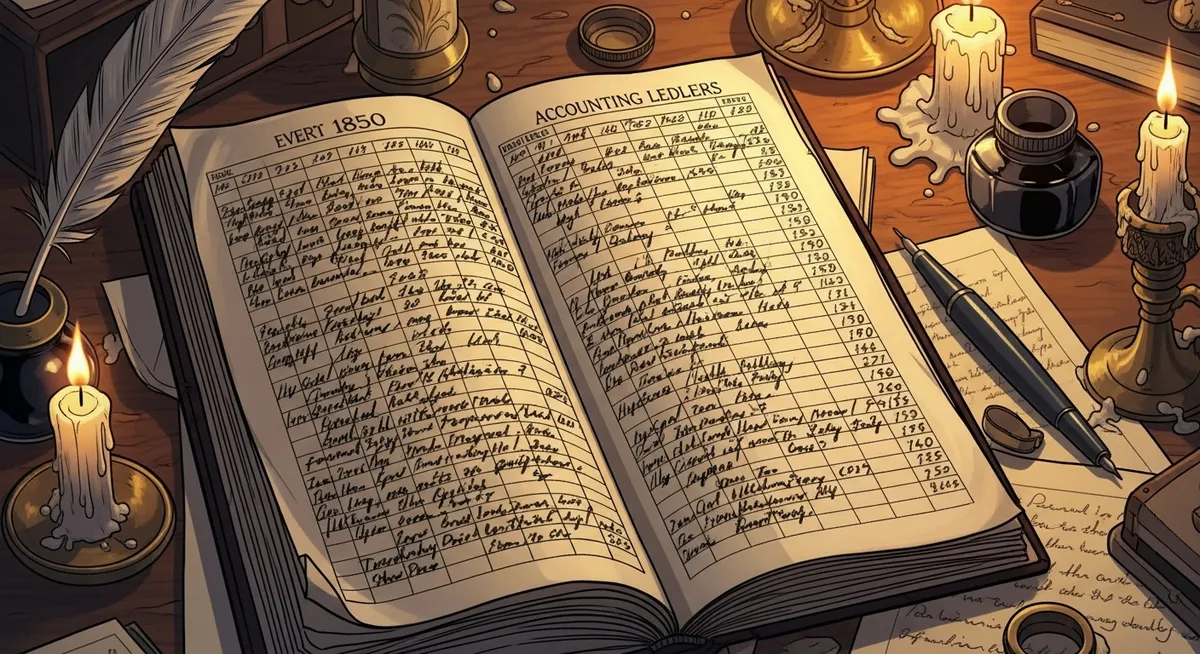
On September 26, 1855, sixteen-year-old John D. Rockefeller got his first real job: assistant bookkeeper at Hewitt & Tuttle, a small commission firm in Cleveland. He celebrated this date — “Job Day” — as a personal holiday for the rest of his life. Not his birthday. Not Christmas. The day he started working. That tells you everything.
The Sacred Ledger
From day one, Rockefeller began recording every single financial transaction in a small notebook he called “Ledger A.” Every penny earned. Every penny spent. Every donation to the church. Every loan made or received. He kept this up with religious devotion for the rest of his life.
Ledger A still exists — it’s sitting in the Rockefeller Archive Center, and historians have pored over it like it’s a Dead Sea Scroll. What it reveals is a mind of almost unsettling precision. Even when Rockefeller was making $3.50 a week, the entries are immaculate. He recorded donations to the Baptist church, to a poor man on the street, to a Sunday school. He was tithing when he could barely afford lunch.
Here’s the kicker: even as a teenage bookkeeper making basically nothing, he was already lending money at interest to other people. He was functioning as a one-man bank before he could legally vote.
The Commission Business
By 1859, at nineteen, Rockefeller had saved enough to go into business for himself. He partnered with a fellow bookkeeper named Maurice Clark to form Clark & Rockefeller, a commission firm dealing in grain, hay, meats, and other commodities. Their combined investment was $4,000 — of which Rockefeller borrowed $1,000 from his father. At 10% interest, naturally. Devil Bill was going to make money off his own son’s ambition. Consistency, if nothing else.
The timing was accidentally perfect. The Civil War kicked off in 1861, and the Union Army needed staggering quantities of food and supplies. Clark & Rockefeller cashed in as wartime contractors. By the end of the war, Rockefeller had built a modest fortune and, more importantly, a reputation for absolute reliability. He paid debts on time. He kept flawless records. He never overpromised. He was boring in the most profitable way possible.
But commodities weren’t where the real action was. Something much bigger was happening a hundred miles to the east — and it smelled terrible.
🛢️ Chapter 3: The Oil Rush and the Refining Insight (1863–1870)
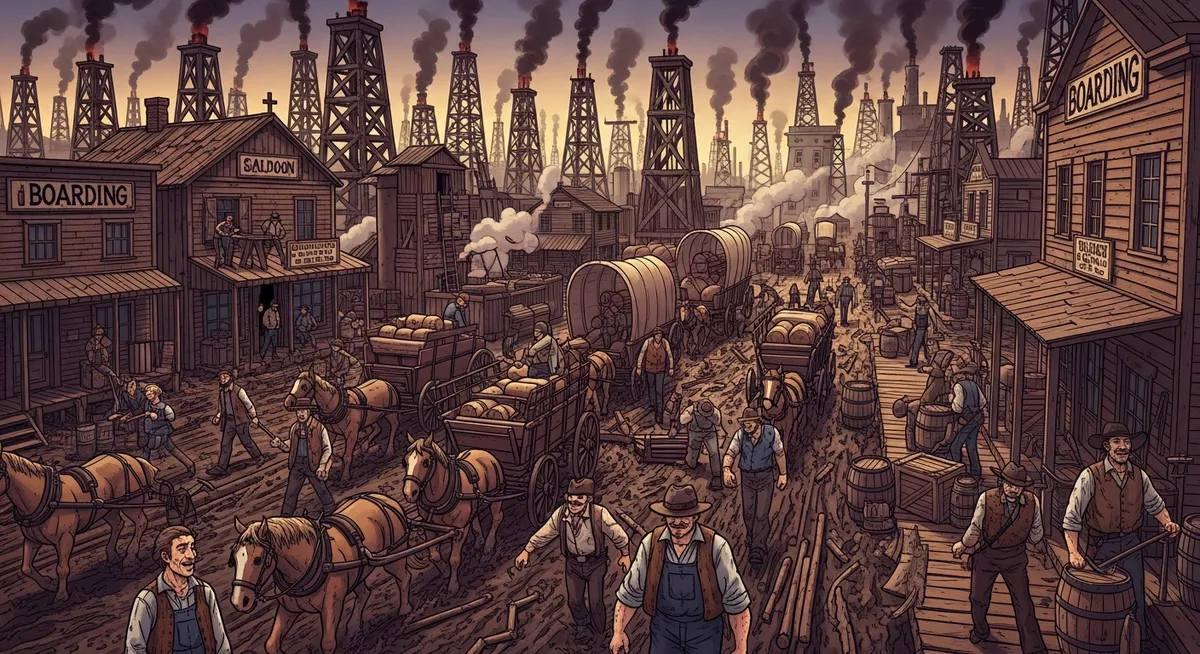
In 1859, a guy named Edwin Drake drilled the first successful commercial oil well near Titusville, Pennsylvania, and the entire region went absolutely feral. It was the Gold Rush with more explosions. Speculators, dreamers, con men, and fortune seekers descended like locusts.
Towns popped up in weeks and collapsed in days. Oil would gush from a well, making its owner rich, then run dry the next month. Prices swung from $10 a barrel to 10 cents and back again like a drunk pendulum. The Oil Creek region was a hellscape of mud, wooden derricks, open waste pits, and frequent fires. It was chaos. Pure, flammable chaos.
The Insight That Changed Everything
Rockefeller visited the oil regions in 1863 and was revolted. Not by the mud and the stench — by the business model. Drilling was gambling. You sank money into a hole and either hit it big or lost your shirt. There was no way to control it, no way to systematize it, no way to apply the meticulous discipline that Rockefeller’s entire nervous system demanded.
But refining — now that was a different story. Refining was manufacturing. You took crude oil, heated it, and separated it into products people actually needed: kerosene for lamps, lubricants for machinery, paraffin for candles. It could be optimized. Standardized. Scaled. The margins could be controlled.
Rockefeller made what might be the single most consequential business decision in American history: he would not drill for oil. He would refine it. Let the wildcatters roll the dice. He’d take their crude, process it, and sell the finished product. The house always wins.
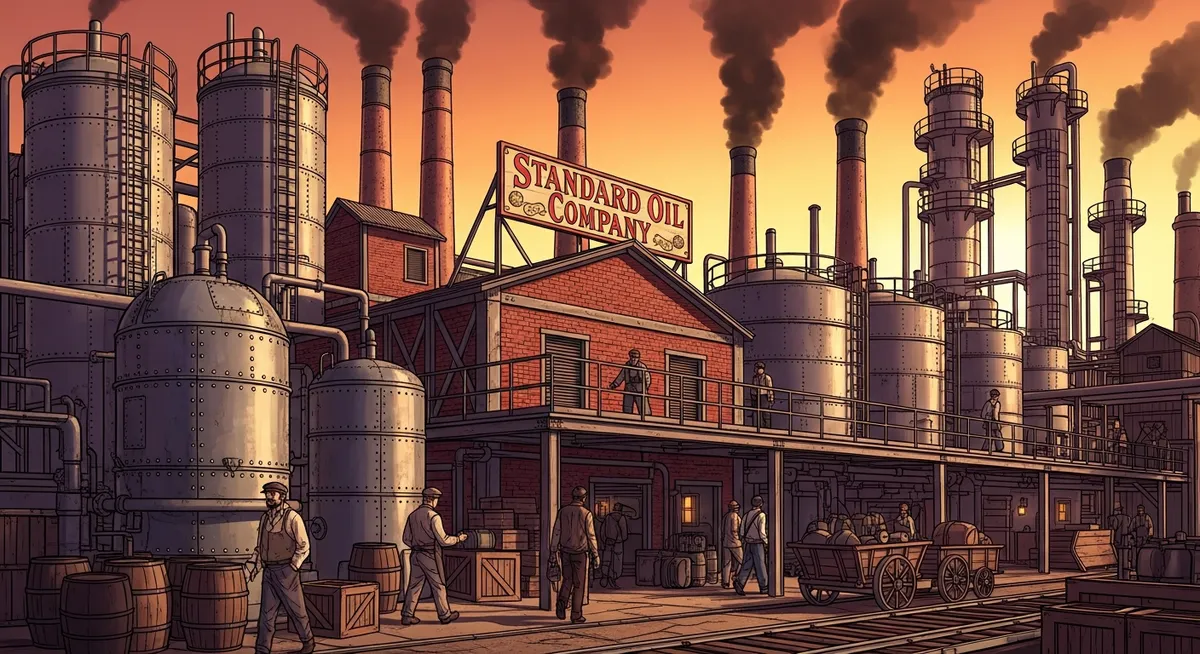
In 1863, he and his partners invested in a Cleveland refinery run by Samuel Andrews, a chemist with superior refining techniques. Cleveland was perfectly positioned — connected to the Pennsylvania oil fields by rail and to eastern markets by both rail and the Great Lakes.
By 1865, Rockefeller wanted full control. He bought out his partner Clark in a heated auction, paying $72,500 — way more than the business was probably worth. But Rockefeller didn’t care about overpaying. He cared about total control. When the bidding was done, he later recalled, “it was the day that determined my career.” He wasn’t being dramatic. He was being accurate.
Building the Machine
Over the next five years, Rockefeller expanded like a man possessed. New refineries. Acquisitions. Relentless investment in efficiency. While his competitors literally dumped gasoline — then considered a useless waste product — into rivers, Rockefeller found uses for everything. Standard Oil eventually produced over 300 byproducts from crude oil: tar, paint, lubricants, paraffin wax, petroleum jelly (hello, Vaseline), and even chewing gum base. Other refiners were throwing money into rivers. Rockefeller was fishing it out.
His obsession with waste elimination was almost pathological. He had employees count the drops of solder used to seal tin cans of kerosene. One factory used 40 drops per can. Another used 39. Rockefeller ordered experiments to find the absolute minimum. The answer: 39. Every factory was adjusted. One drop of solder. Across millions of cans. That’s the kind of psychotic attention to detail that builds empires.
And on January 10, 1870, he put a name on the machine.
Standard Oil Company.
🏭 Chapter 4: The Cleveland Massacre (1870–1872)
The founding of Standard Oil wasn’t just the birth of a company. It was the opening shot of a military campaign — a systematic, ruthless, and breathtakingly efficient consolidation of an entire industry. Nothing like it had ever been attempted in American business.
Rockefeller started in Cleveland, which had about 26 competing refineries at the time. Within six weeks, he would own nearly all of them. The episode became known as “The Cleveland Massacre,” and if that name sounds violent, good. It should.
The South Improvement Company
The weapon was a secret backroom deal called the South Improvement Company. In early 1872, Rockefeller and a handful of large refiners cut a deal with the three major railroads — the Pennsylvania, the New York Central, and the Erie. Under this arrangement, members got massive rebates on shipping costs. But here’s where it gets truly diabolical: members also received “drawbacks” — kickbacks on the shipping fees paid by their own competitors. Every time a rival shipped oil by rail, a portion of that rival’s shipping cost went directly into Rockefeller’s pocket.
Read that again. He wasn’t just getting a discount. He was getting paid every time his competitors did business. It was the most audacious rigging of a market anyone had ever seen.
When word leaked, the oil regions erupted. Producers organized boycotts, burned Rockefeller in effigy, and stormed the Pennsylvania legislature. The South Improvement Company was quickly revoked and never officially took effect.
But the damage was already done — not to Rockefeller, but to everyone else.
The Offer They Couldn’t Refuse
During the brief window before the scheme was exposed, Rockefeller moved with terrifying speed. He went to Cleveland’s other refinery owners, one by one, with a pitch that was less an offer and more a threat wrapped in arithmetic.
He’d open Standard Oil’s books. He’d show the competitor exactly how much his efficiency advantages and railroad deals reduced his costs. He’d demonstrate, with cold, precise math, that the competitor could not survive a price war against Standard Oil. And then he’d make an offer — sometimes generous, sometimes in Standard Oil stock that would later prove incredibly valuable.
It was the corporate equivalent of a mob boss showing you the gun and then politely suggesting you sell. Most sold. The smart ones took stock.
Those who refused got destroyed. Rockefeller would slash prices in the holdout’s market — selling kerosene below cost for as long as it took — until the competitor bled to death financially. Then he’d buy the wreckage at a discount. This wasn’t competition. It was extermination.
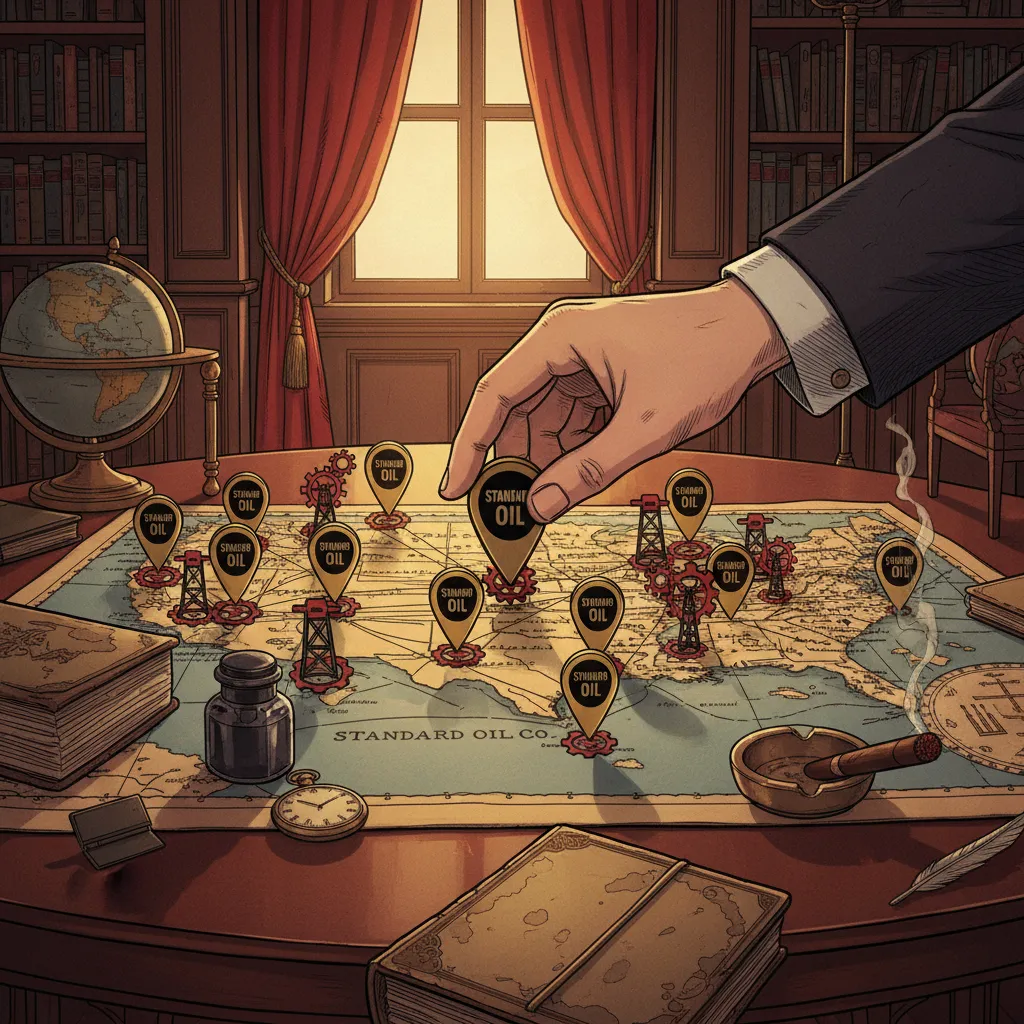
In roughly six weeks in early 1872, Rockefeller swallowed 22 of Cleveland’s 26 refineries. He did it so quickly and so quietly that nobody understood the full scope until later. Some sellers regretted it immediately. Others, who took Standard Oil stock, ended up rich beyond their wildest dreams.
The Cleveland Massacre became the template: approach, demonstrate inevitability, offer fair terms, crush anyone who says no. Rockefeller would repeat this playbook across Pennsylvania, New York, New Jersey, and eventually the entire country. It was as mechanical as it was merciless.
🕸️ Chapter 5: The Octopus — Building the Monopoly (1872–1882)
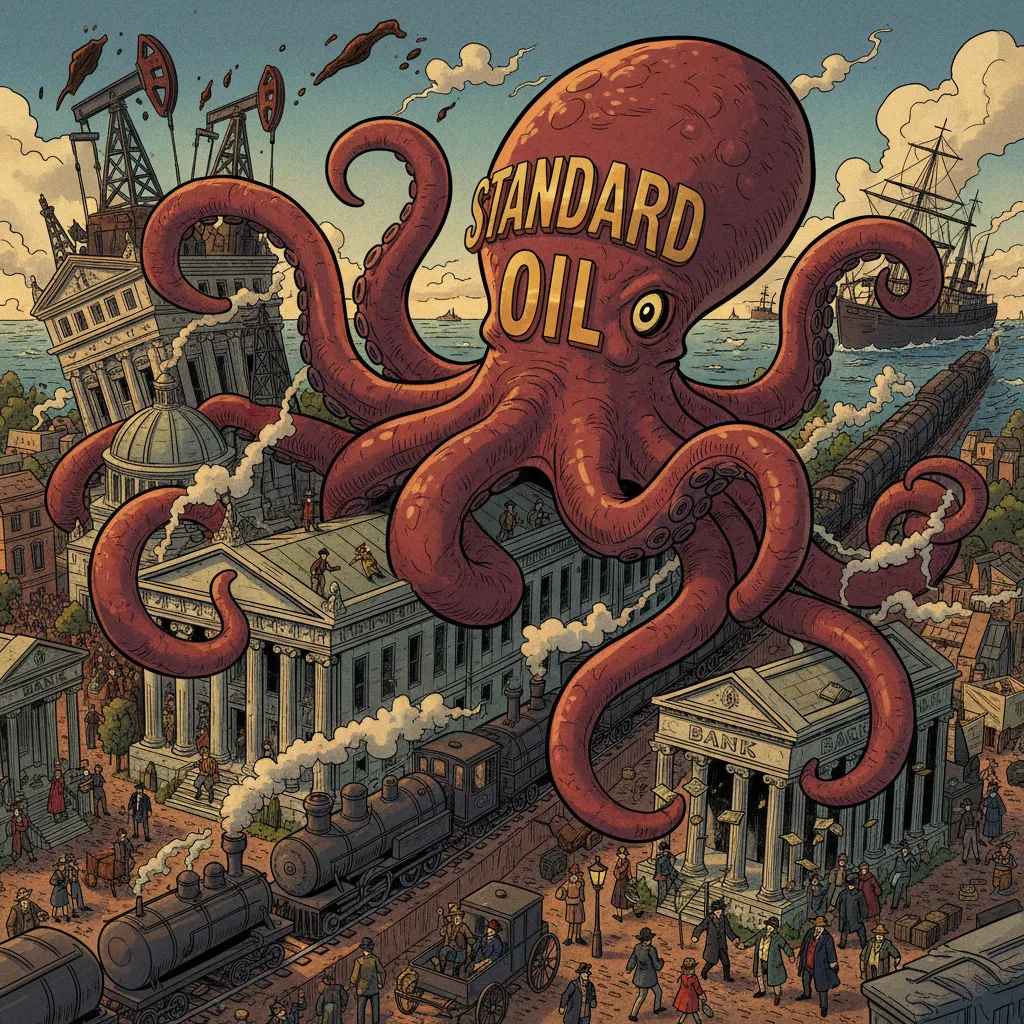
After Cleveland was conquered, Rockefeller aimed at everything else. Over the next decade, Standard Oil mutated from a regional powerhouse into something the world had literally never seen before: a complete monopoly over an essential commodity. Political cartoonists drew it as a giant octopus strangling the nation. They weren’t far off.
The Trust
The legal structure was as devious as the business strategy. In 1882, Rockefeller’s lawyer Samuel Dodd invented a new kind of corporate animal: the Standard Oil Trust. Stockholders of multiple companies transferred their shares to a board of nine trustees — guess who ran it — in exchange for trust certificates. The trustees then managed all the companies as a single coordinated machine.
This was, functionally, a way to build a mega-corporation across state lines when no legal framework existed for doing so. It was brilliant. It was ethically horrifying. And it worked perfectly.
By the mid-1880s, the Standard Oil Trust controlled:
- 90% of all oil refining in the United States
- The majority of oil pipelines
- Massive railroad shipping networks
- Thousands of miles of pipeline
- Barrel-making factories, warehouses, and distribution networks
- Its own fleet of tank cars and ships
Ninety percent. Of an entire industry. One man.
Vertical Integration
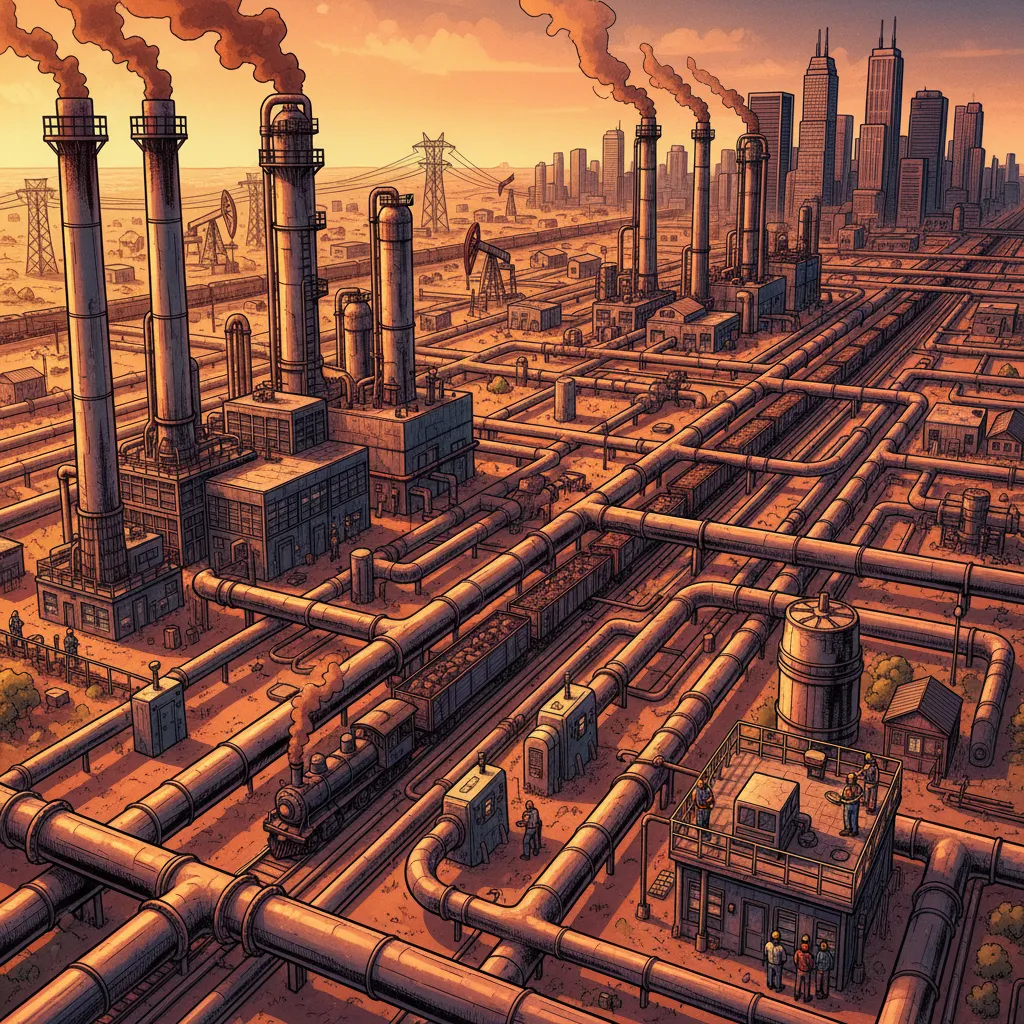
Rockefeller’s real genius — the thing that separated him from every other robber baron — was understanding that controlling one part of the supply chain was not enough. You had to control all of it. Standard Oil didn’t just refine oil. It built its own pipelines so it didn’t depend on railroads. It manufactured its own barrels. It owned its own warehouses. It built its own fleet of tank cars. Every link in the chain — from crude oil in the ground to kerosene in your lamp — ran through Rockefeller.
When independent pipeline companies tried to compete, he’d buy them, build parallel pipelines to undercut them, or use his railroad leverage to strangle them. When independent refiners tried to ship oil, they discovered that Standard Oil owned or controlled every viable route. A Pennsylvania oil producer once put it perfectly: “There is no room for an independent man in the oil business.” That wasn’t hyperbole. It was a factual description of reality.
The Kerosene Empire
Here’s the thing people forget: in the 1870s and 1880s, oil wasn’t about cars. Cars didn’t exist yet. Oil meant one thing: kerosene. And kerosene meant the ability to see after dark. Every home, farm, and business in America — and increasingly in Europe and Asia — relied on kerosene lamps. Rockefeller was selling people the ability to not sit in darkness. That’s a pretty strong value proposition.
Standard Oil kerosene went global. Sold in China, Japan, India, across Europe. The company’s blue barrels became one of the most recognizable brands on Earth. In remote Chinese villages, Standard Oil tin cans were repurposed as roofing material, cooking vessels, and building supplies — accidental marketing that spread the brand to every corner of the planet. Coca-Cola gets credit for global brand domination, but Rockefeller did it first. With lamp fuel.
The Man Behind the Curtain
Through all of this, Rockefeller himself stayed eerily invisible. No public speeches. No interviews. No hot takes. He went to church every Sunday, taught Sunday school, and maintained an outward appearance of quiet Baptist respectability while systematically devouring an industry.
The invisibility was strategic. While competitors raged publicly against Standard Oil, Rockefeller worked behind layers of subordinates, subsidiary companies, and legal structures designed to hide the true scope of his control. Many of his competitors didn’t even realize they were competing against Rockefeller until they were already dead. It was like being eaten by a shark you never saw coming.
💰 Chapter 6: The Richest American Who Ever Lived (1882–1911)
Time for some numbers that will break your brain.
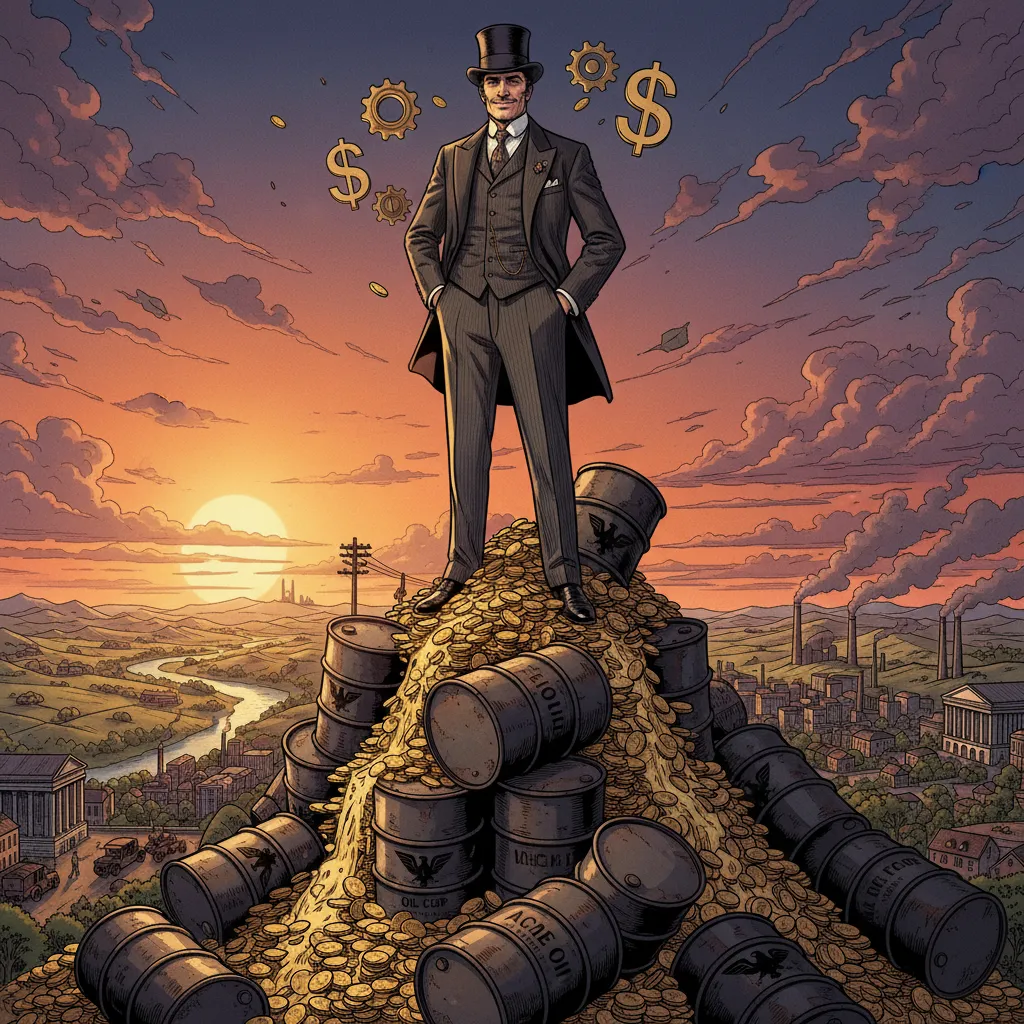
By the early 1900s, Rockefeller’s personal fortune hit approximately $900 million. That might not sound insane until you realize the entire federal budget of the United States at the time was less than $500 million. One guy had more money than the U.S. government. His wealth represented roughly 1.5% to 2% of the entire American GDP.
In today’s dollars? Somewhere between $350 billion and $420 billion. That makes Rockefeller, by most credible estimates, the richest private citizen in modern history. Richer than Bezos at his peak. Richer than Musk. Richer than anyone alive today. Not close.
The Daily Life of a Monopolist
Despite having more money than God, Rockefeller lived like a monk who happened to own the monastery, the town, and the county. He rose early. Ate simple meals. Followed strict routines. Kept meticulous records of every expenditure. Didn’t drink. Didn’t smoke. Played golf obsessively — not for fun, but because his doctor said it would help him live longer. He optimized his health the way he optimized his refineries: systematically, joylessly, and effectively.
And then there was the dime thing. For decades — decades — Rockefeller carried shiny dimes in his pocket and handed them out to strangers, children, bellhops, and basically anyone he encountered. The richest man in the history of the world, walking around distributing ten-cent coins like a broken gumball machine of generosity. His fortune was measured in hundreds of millions, and he was tipping people a dime.
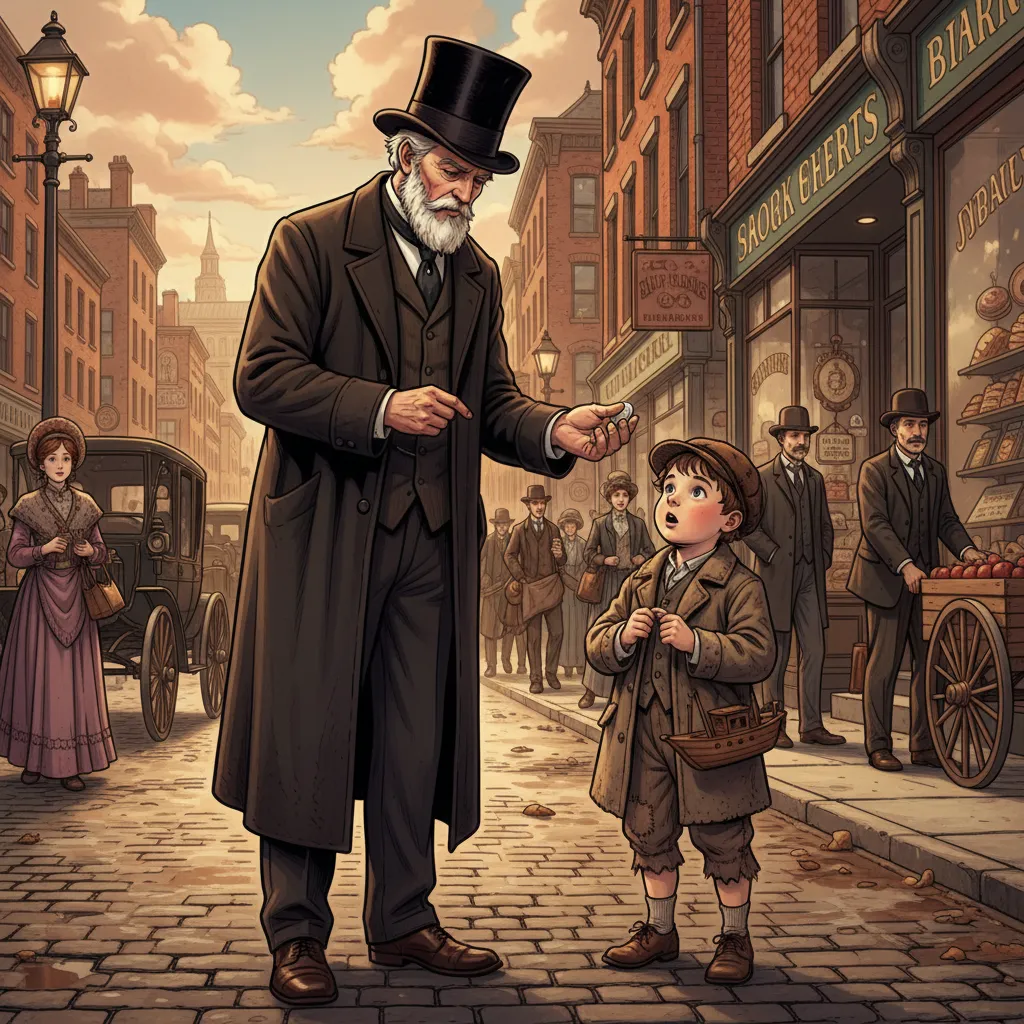
Was it genuine kindness? Pathological cheapness? A weird power move? Some kind of obsessive-compulsive tic dressed up as charity? Historians have argued about it for a century. Rockefeller seemed to think it was a way to connect with ordinary people. Which is exactly the kind of thing you’d believe if you had so much money you’d lost all frame of reference for what money actually meant to normal humans.
The Rivalry with Carnegie
Rockefeller and Andrew Carnegie were the two heavyweight champions of Gilded Age capitalism, and they circled each other for decades like two apex predators who’d grudgingly agreed not to fight. Carnegie — the Scottish-born steel magnate — was everything Rockefeller wasn’t: loud, public, opinionated, and desperate for attention. He wrote essays, gave interviews, built libraries with his name on them, and generally acted like he was running for mayor of the world.
Rockefeller thought Carnegie was vulgar. Carnegie thought Rockefeller’s methods were dirty. They were both right.
Their rivalry turned philanthropic in the most aggressively competitive way possible. When Carnegie started giving away his fortune — eventually donating over $350 million to build 2,509 public libraries, universities, and foundations — Rockefeller felt the pressure to match or beat him. The result was a philanthropic arms race that reshaped American institutions. Carnegie built libraries. Rockefeller founded the University of Chicago, Rockefeller University, and the General Education Board. Each man drove the other to give more, faster, and with more strategic ambition. Competitive generosity. Only billionaires.
When Carnegie sold his steel company to J.P. Morgan in 1901 for $480 million, Morgan reportedly told him: “Congratulations, Mr. Carnegie. You are now the richest man in the world.” Carnegie couldn’t resist. He sent Rockefeller a note: “I got ahead of you.” Rockefeller, characteristically, said nothing. Because that’s what you do when you know the math says otherwise.
📰 Chapter 7: Ida Tarbell and the Reckoning (1902–1911)
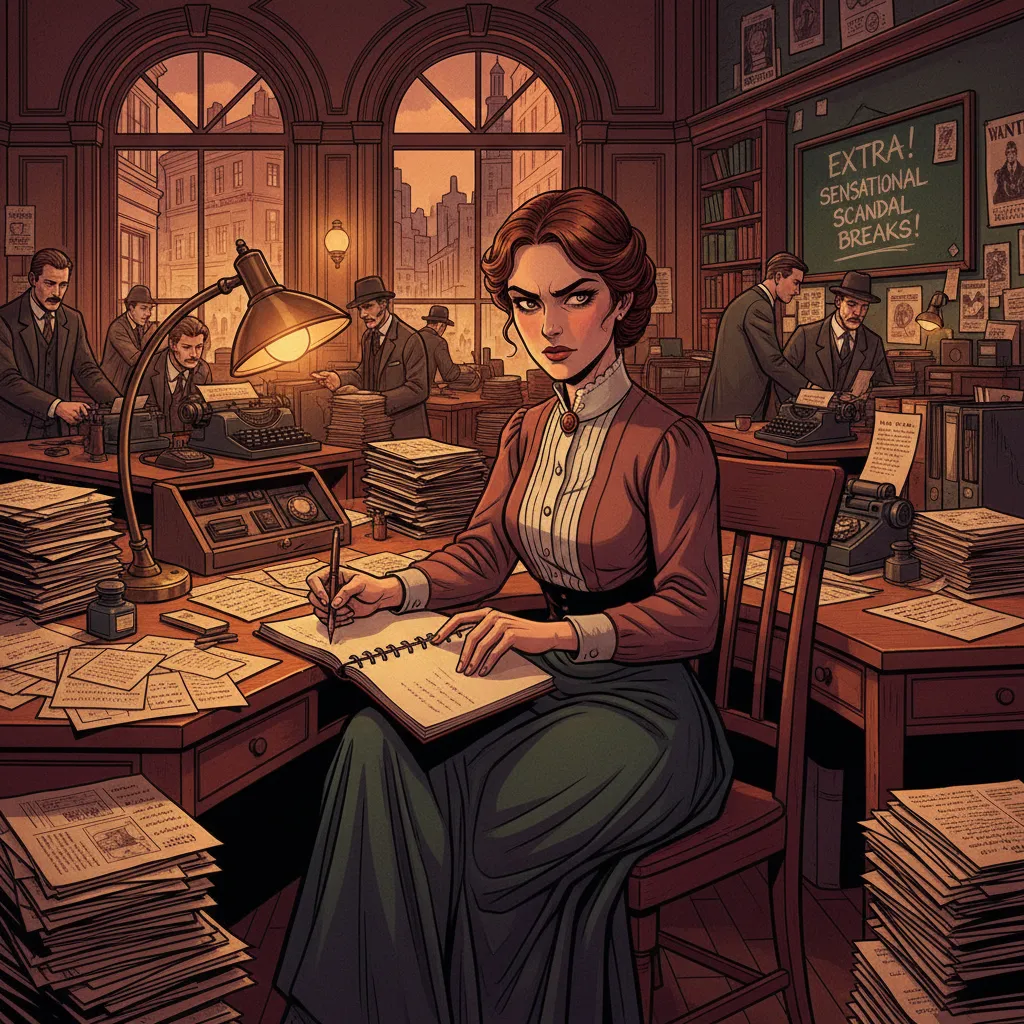
For thirty years, Rockefeller had operated in the shadows, shielded by silence and an army of lawyers. He thought he was untouchable. Then a journalist named Ida Minerva Tarbell published the most devastating piece of investigative reporting in American history, and Rockefeller’s carefully constructed invisibility shattered like a kerosene lamp dropped on a marble floor.
The Woman Who Took On Standard Oil
Tarbell wasn’t some random muckraker looking for a headline. She had a vendetta, and she’d been sharpening it since childhood. Her father, Franklin Tarbell, had been an independent oil producer in Pennsylvania’s Oil Creek region — one of the small operators that Rockefeller’s railroad rebate schemes and predatory pricing had systematically destroyed. Little Ida grew up watching her father’s livelihood get strangled by Standard Oil. She watched the light go out of him. And she never, ever forgot.
After becoming one of America’s most prominent journalists — she’d already written acclaimed biographies of Napoleon and Lincoln, so nobody could dismiss her as a lightweight — Tarbell spent five years meticulously researching Standard Oil. Five years. She obtained internal documents. She interviewed former employees and crushed competitors. She reconstructed every secret deal, every coercive tactic, every buried body.
The History of the Standard Oil Company
The result was a 19-part series published in McClure’s Magazine between 1902 and 1904, later collected as a two-volume book: The History of the Standard Oil Company. It was a nuclear bomb disguised as journalism — detailed, documented, and absolutely devastating.
Tarbell exposed the secret railroad rebates. She documented the predatory pricing campaigns. She laid bare the South Improvement Company scheme. She traced the labyrinth of subsidiary companies and trusts that Standard Oil used to hide its monopolistic control. And she did it with sources, receipts, and prose so cold and precise it read like an autopsy report.
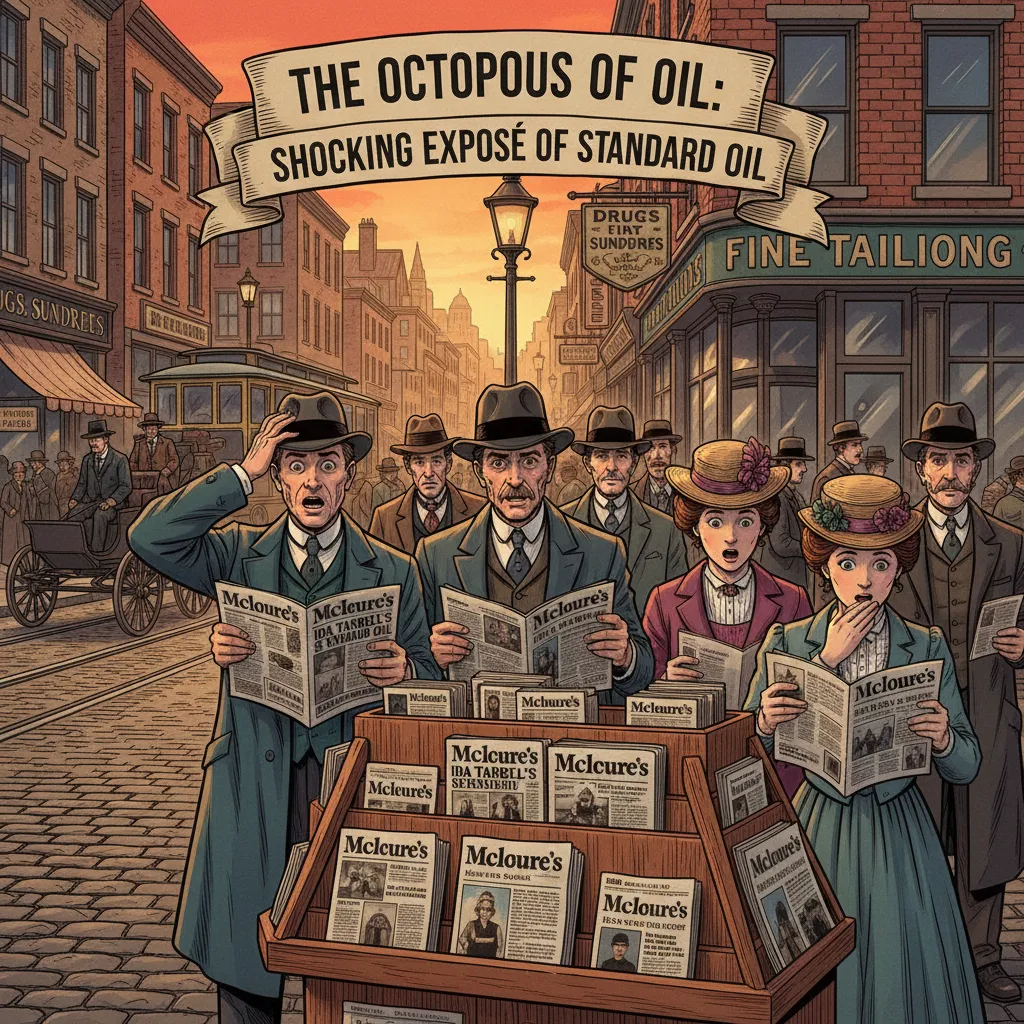
The series detonated. For the first time, ordinary Americans could see exactly how Standard Oil had crushed competition and rigged markets — not through rumor, but through documented, undeniable evidence. The series fueled the progressive movement and directly paved the road to the antitrust hammer that was coming.
Rockefeller never responded publicly. In private, he called her “Miss Tar Barrel” and dismissed her work as bitter, personal revenge. He wasn’t entirely wrong about the personal part. But being right about her motivation didn’t make her facts less true. The damage was catastrophic. Public opinion turned on Standard Oil like a pack of dogs, and the political pressure for action became a tsunami.
The daughter of a man Rockefeller destroyed brought down the empire her father couldn’t touch. If that’s not a revenge story for the ages, nothing is.
The Supreme Court Breakup
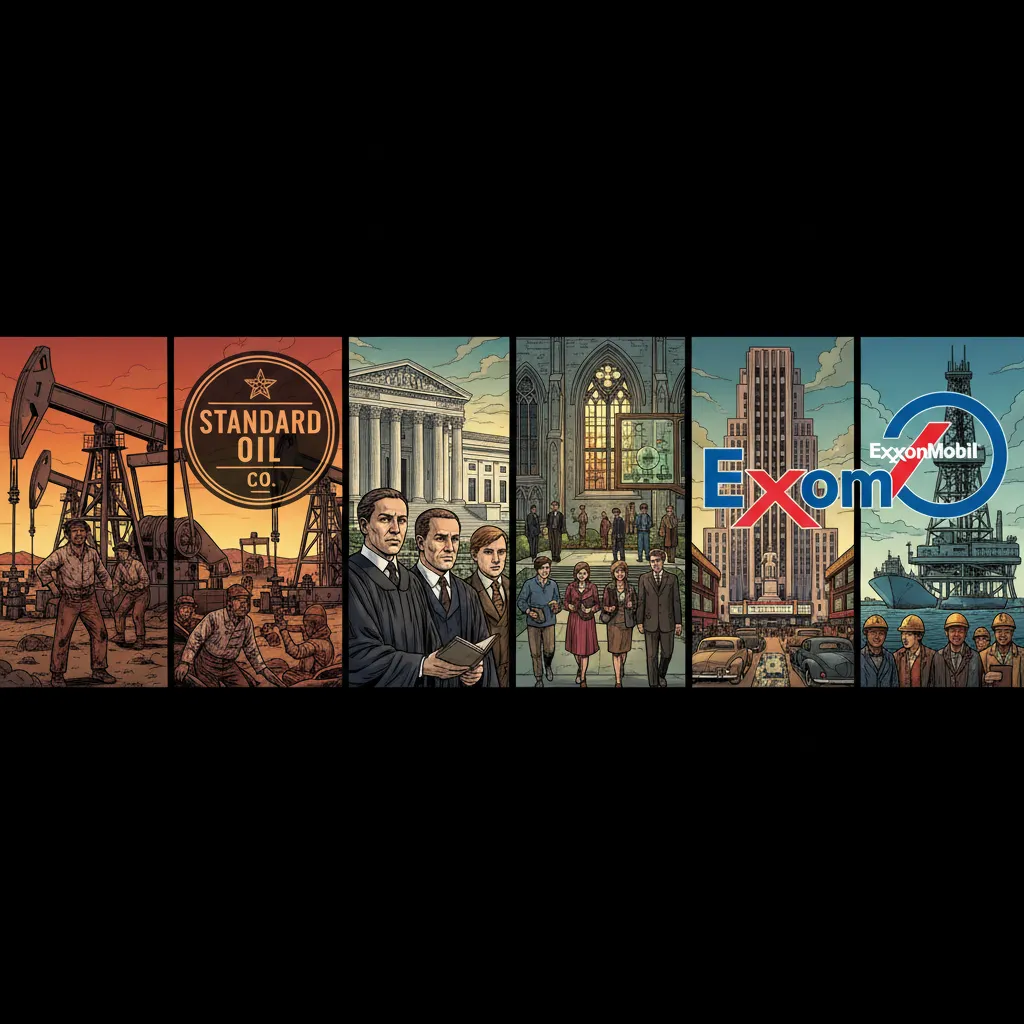
In 1906, the federal government came for Standard Oil under the Sherman Antitrust Act. After five years of litigation, the case reached the Supreme Court. On May 15, 1911, the Court ruled unanimously — unanimously — that Standard Oil was an illegal monopoly and ordered it dissolved into 34 separate companies.
The most dramatic government intervention in private business in American history. It was designed to destroy Rockefeller’s power.
It didn’t. Not even close.
The Breakup That Made Him Richer
Here is the single greatest irony in the history of American capitalism: breaking up Standard Oil made Rockefeller significantly wealthier.
He held massive stock in the parent company. When it was carved into 34 pieces, he received proportional shares in every single one. Freed from the political stink of “illegal monopoly,” the individual companies’ stock prices exploded upward. The sum of the parts was worth vastly more than the whole had been.
Several of those 34 companies became some of the largest corporations in human history. Standard Oil of New Jersey became Exxon. Standard Oil of New York became Mobil. Standard Oil of California became Chevron. Standard Oil of Indiana became Amoco. These companies later merged and re-merged — Exxon and Mobil reunited as ExxonMobil in 1999 — essentially reassembling chunks of the empire the Supreme Court had tried to destroy.
The U.S. government spent years and millions of dollars breaking up Rockefeller’s monopoly, and the net result was making him the richest human being who had ever lived. The man got punished into a bigger fortune. You could not design a better argument for the thesis that John D. Rockefeller simply could not lose.
⛪ Chapter 8: God’s Money — The Invention of Modern Philanthropy (1884–1937)
Rockefeller had been giving money away since his very first paycheck at $3.50 a week. Ledger A proves it — charitable donations from the jump. Tithing wasn’t something he discovered in old age when he got nervous about meeting God. It was baked in from day one. The man was donating to the Baptist church, to poor strangers, and to Sunday schools when he could barely afford food.
But his giving evolved from personal charity into something much bigger and stranger: a systematic effort to solve problems at scale through institutional investment. In doing so, Rockefeller essentially invented modern philanthropy. Every major foundation that exists today — Gates, Ford, all of them — is running a playbook he wrote.
The University of Chicago
In 1889, Rockefeller put up the founding gift for the University of Chicago — ultimately pouring in over $35 million (roughly $1 billion today). He built a world-class research university from scratch on the South Side of Chicago. Within decades, it became one of the premier academic institutions on the planet.
His conditions? The university had to be nonsectarian and open to everyone. And his name couldn’t go on any building. “The good Lord gave me my money,” he said, “and how could I withhold it from the University of Chicago?” A billion dollars, no naming rights. Try finding a billionaire who’d do that today.
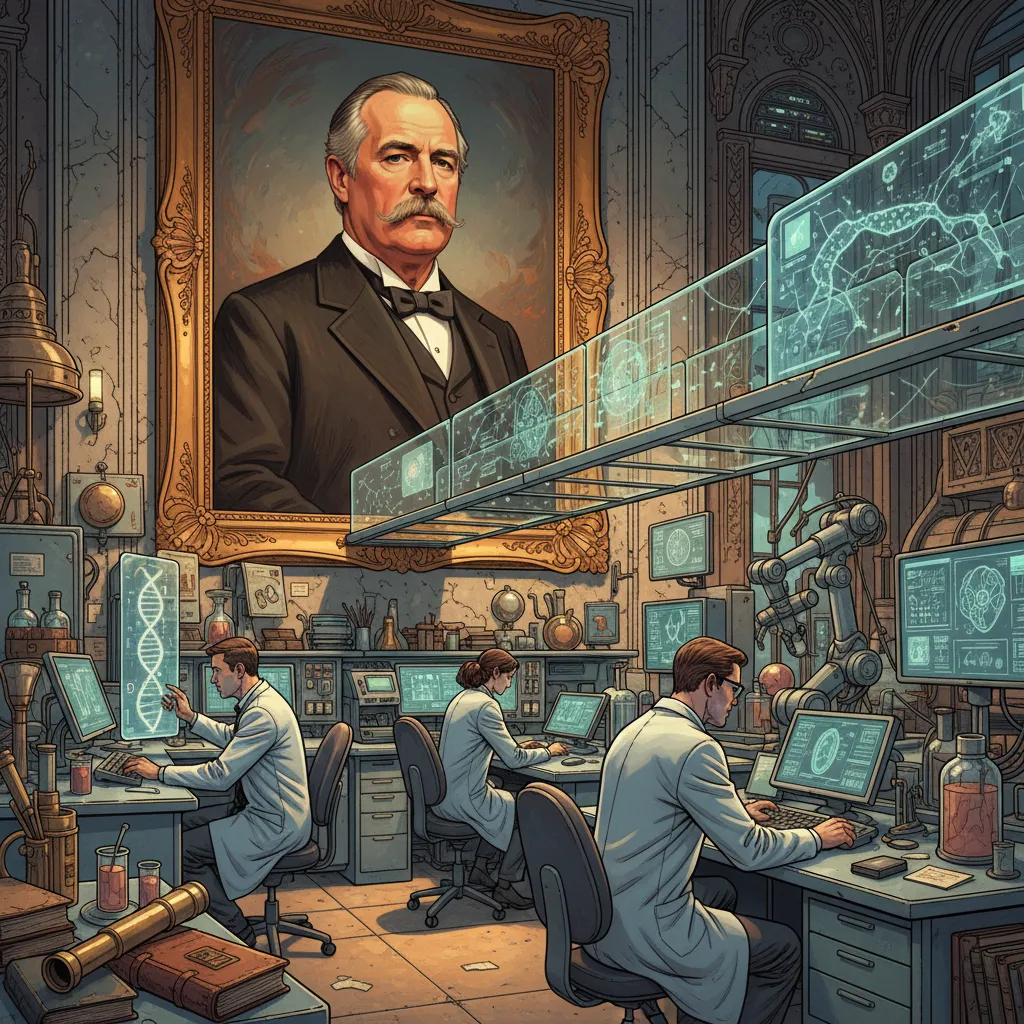
The Rockefeller Institute for Medical Research
In 1901, he founded what’s now Rockefeller University — the first institution in the United States devoted purely to biomedical research.
The institute’s researchers went on to identify the cause of syphilis, develop treatments for meningitis, and do groundbreaking work in virology, immunology, and molecular biology. Scientists affiliated with Rockefeller University have won more than 25 Nobel Prizes. The monopolist built a Nobel Prize factory.
The War on Hookworm
This is the Rockefeller story almost nobody knows, and it might be the most impressive one.
In the early 1900s, hookworm disease was devastating the American South. Millions of people were chronically infected, suffering anemia, exhaustion, and cognitive impairment so severe it contributed to the stereotype of the “lazy Southerner.” Those people weren’t lazy. They were sick. And nobody was doing anything about it.
In 1909, Rockefeller funded the Rockefeller Sanitary Commission with $1 million and launched a systematic campaign of treatment, sanitation improvement, and public health education across the South. Within five years, hookworm rates had plummeted. The campaign didn’t just treat a disease — it transformed public health in an entire region and proved that targeted philanthropic investment could solve problems governments were too slow or too stupid to address.
The Rockefeller Foundation
In 1913, Rockefeller established the Rockefeller Foundation with an initial endowment of $100 million and a mission statement of magnificent ambition: “to promote the well-being of mankind throughout the world.” The foundation funded global public health campaigns, supported agricultural research that helped spark the Green Revolution, and established schools of public health at Johns Hopkins, Harvard, and other universities.
The model — a permanent endowment managed by professional staff, pursuing strategic goals through grants and programs — became the template for every major philanthropic foundation that followed. Before Rockefeller, rich people gave money to churches and put their names on buildings. Rockefeller created institutions designed to solve systemic problems. The difference is the difference between putting a band-aid on a cut and inventing antibiotics.
The Final Accounting
Over his lifetime, Rockefeller gave away approximately $540 million — roughly $11 billion in today’s dollars. About half his total fortune. The institutions he created — the University of Chicago, Rockefeller University, the Rockefeller Foundation, the General Education Board, the Laura Spelman Rockefeller Memorial — are all still operating more than a century later. The man’s charitable infrastructure has outlasted most countries.
Did he see any contradiction between crushing competitors without mercy and then giving the money to cure diseases? He did not. He believed God gave him the talent to make money, and it was his duty to use it for humanity’s benefit. Whether that was genuine faith or the most elaborate rationalization in history is a question nobody can answer. Possibly both. Probably both.
🏌️ Chapter 9: The Long Sunset (1911–1937)

After the Supreme Court broke up Standard Oil in 1911, Rockefeller was 71 years old and richer than ever. He’d been stepping back from management for years, and now he retreated into a private life organized around a single obsession: living to 100. Seriously. That was the goal. He said it out loud. He approached longevity the way he’d approached oil — as an optimization problem.
The Quest for 100
He followed his doctor’s orders with the same fanaticism he’d brought to counting solder drops. Golf every single day, rain or shine. Simple food in small, measured portions. No rich meals. No stress. No newspapers — they upset him. Regular naps. He surrounded himself with people whose sole job was to keep his spirits up and his blood pressure down. He even gave up reading the news because it made him anxious. The man who’d built the most ruthless monopoly in history couldn’t handle reading the paper.
He didn’t quite hit 100. But 97 is a hell of a consolation prize.
The Vanishing Hair and the Rubber Wigs
In his later years, Rockefeller developed alopecia — a condition that stripped away all his body hair, including eyebrows and eyelashes. The resulting look was… striking. Slightly alien. He took to wearing a collection of wigs, some of them fitting so badly they became more famous than the man wearing them.
Photographs of the elderly Rockefeller — gaunt, hairless, sharp-eyed, wiggled — became iconic images of the Gilded Age’s last surviving titan. He looked like a very wealthy turtle in a costume.
Quiet Final Years
In his last years, Rockefeller divided time between his estates, continuing to hand out dimes, attend church, and play golf with the grim determination of a man trying to outlast biology. He watched, with detached interest, as the 34 companies carved from Standard Oil grew into some of the largest corporations on Earth. His monopoly was “destroyed,” and the pieces became even more valuable. He must have found that privately hilarious.
His son, John D. Rockefeller Jr., took the reins of the family’s philanthropic empire and expanded it, building Rockefeller Center in Manhattan and donating the land for the United Nations headquarters. The Rockefeller family would remain one of the most powerful dynasties in American life for generations.
John D. Rockefeller died on May 23, 1937, at his winter home in Ormond Beach, Florida. He was 97 years old — three years short of his century goal. At death, he’d given away roughly half his peak fortune and still left an estate worth about $26 million (around $550 million today). Even after decades of giving away money on an industrial scale, he couldn’t empty the tank.
⚖️ Chapter 10: The Rockefeller Paradox — Legacy and Lessons
So what do you do with John D. Rockefeller? He is simultaneously the poster child for predatory capitalism and the founding father of strategic philanthropy. He crushed competitors with the emotional warmth of a hydraulic press, then turned around and funded institutions that cured diseases and educated millions. He was awful and transformative in roughly equal measure.
The Monopolist’s Defense
Rockefeller never apologized. Not once. His argument — and it wasn’t entirely wrong — was that the oil industry before Standard Oil was a disaster. Prices were wildly unstable. Quality was garbage. Competition produced waste, not efficiency. Standard Oil brought order. It standardized quality. It actually lowered kerosene prices for consumers over time. It killed the boom-and-bust cycle that had ruined thousands of small operators.
There’s real truth in that. But it conveniently omits the coercion, the secret deals, the predatory pricing, and the systematic annihilation of anyone who wouldn’t submit. Rockefeller didn’t just offer a better product. He made it physically impossible to offer an alternative. That’s not competition. That’s conquest.
The Infrastructure Insight
Rockefeller’s most enduring business lesson is devastatingly simple: control the infrastructure, not the product. He didn’t need to own every oil well. He just needed to own every way to get oil from the ground to the customer — the refineries, the pipelines, the railroads, the barrels, the distribution networks.
This insight echoes through every era. AT&T controlled the telephone system. Microsoft controlled the operating system. Google controls search. Amazon controls e-commerce logistics. Apple controls the app store. In every case, the company that owns the platform captures the most value.
Rockefeller figured this out in the 1870s. He was the first platform monopolist. Everyone who came after him — whether they know it or not — is running a version of his playbook.
The Philanthropy Model
His other lasting contribution is the model of institutional philanthropy. Before Rockefeller, rich men gave to churches and slapped their names on buildings. Rockefeller created permanent institutions with professional management, strategic goals, and the resources to pursue systemic change.
The Rockefeller Foundation didn’t just give money to doctors. It built schools of public health. It didn’t just treat hookworm patients. It eradicated hookworm from the American South. It didn’t just fund agricultural research. It helped launch the Green Revolution that fed billions.
This approach — treating charity as strategic investment — is now so universal that it’s easy to forget somebody had to invent it. That somebody was a bookkeeper’s son from nowhere, New York, who kept a ledger of every penny and tithed from his first $3.50 paycheck.
The Unanswerable Question
Villain or hero? The honest answer: both, and neither label covers it. Rockefeller was a man of extraordinary discipline, intelligence, and ruthlessness who operated in an era with essentially zero legal constraints on business conduct. He played the game as it existed and played it better than anyone before or since. The game was rigged — and he rigged it further.
His legacy is the modern world itself. The oil infrastructure that powered the twentieth century. The universities and research institutions that advanced human knowledge. The philanthropic model that channels private wealth toward public good. Whether the good outweighs the harm is a question every generation answers differently.
But here’s what nobody disputes: a kid raised by a con man and a saint, who counted every penny from age sixteen, who looked at a chaotic industry and imposed total order through sheer force of will, who built the greatest fortune in American history and then gave most of it away — that is, by any measure, one hell of a mogul story.
📅 Timeline
| Year | Age | Event |
|---|---|---|
| 1839 | 0 | Born in Richford, New York |
| 1853 | 14 | Family moves to Cleveland, Ohio |
| 1855 | 16 | First job as assistant bookkeeper; begins Ledger A |
| 1859 | 20 | Partners with Maurice Clark in commission business |
| 1863 | 23 | Enters the oil refining business in Cleveland |
| 1865 | 26 | Buys out partners for $72,500; takes control of refinery |
| 1870 | 30 | Incorporates Standard Oil Company of Ohio |
| 1872 | 32 | The Cleveland Massacre — acquires 22 of 26 Cleveland refineries |
| 1877 | 37 | Controls ~90% of U.S. oil refining |
| 1882 | 42 | Creates the Standard Oil Trust — first corporate trust |
| 1889 | 49 | Provides founding gift for the University of Chicago |
| 1896 | 56 | Begins stepping back from day-to-day management |
| 1901 | 61 | Founds Rockefeller Institute for Medical Research |
| 1902 | 62 | Ida Tarbell begins publishing Standard Oil expose |
| 1906 | 66 | Federal antitrust suit filed against Standard Oil |
| 1909 | 69 | Funds the Rockefeller Sanitary Commission (hookworm campaign) |
| 1911 | 71 | Supreme Court orders Standard Oil dissolved into 34 companies |
| 1913 | 73 | Establishes the Rockefeller Foundation ($100M endowment) |
| 1916 | 76 | Personal fortune reaches estimated peak of ~$900 million |
| 1937 | 97 | Dies in Ormond Beach, Florida — three years short of his goal of 100 |
💡 Key Insights
- ▸ Rockefeller didn't just compete — he made competition impossible. He controlled refining, transportation, and distribution simultaneously. His playbook was not to beat rivals in the market but to absorb the market itself.
- ▸ At his peak, Rockefeller's wealth was equivalent to $400 billion in today's dollars — more than Musk, Bezos, and Gates combined. He was arguably the richest private citizen in modern history.
- ▸ His secret weapon wasn't oil drilling. It was efficiency. He squeezed profit from every barrel while competitors wasted resources. Standard Oil found uses for byproducts that other refiners literally dumped in rivers.
- ▸ The Supreme Court broke up Standard Oil in 1911 into 34 companies — and Rockefeller held shares in all of them. The breakup made him richer, not poorer. It was the greatest wealth-creation accident in American legal history.
- ▸ Rockefeller essentially invented modern philanthropy. Before him, rich men gave to churches and pet causes. Rockefeller created institutions — universities, medical research foundations, public health campaigns — designed to solve systemic problems. His model is what Gates, Buffett, and every major philanthropist follows today.