Milton Hershey Sold His Caramel Business and Gave His Chocolate Fortune Away
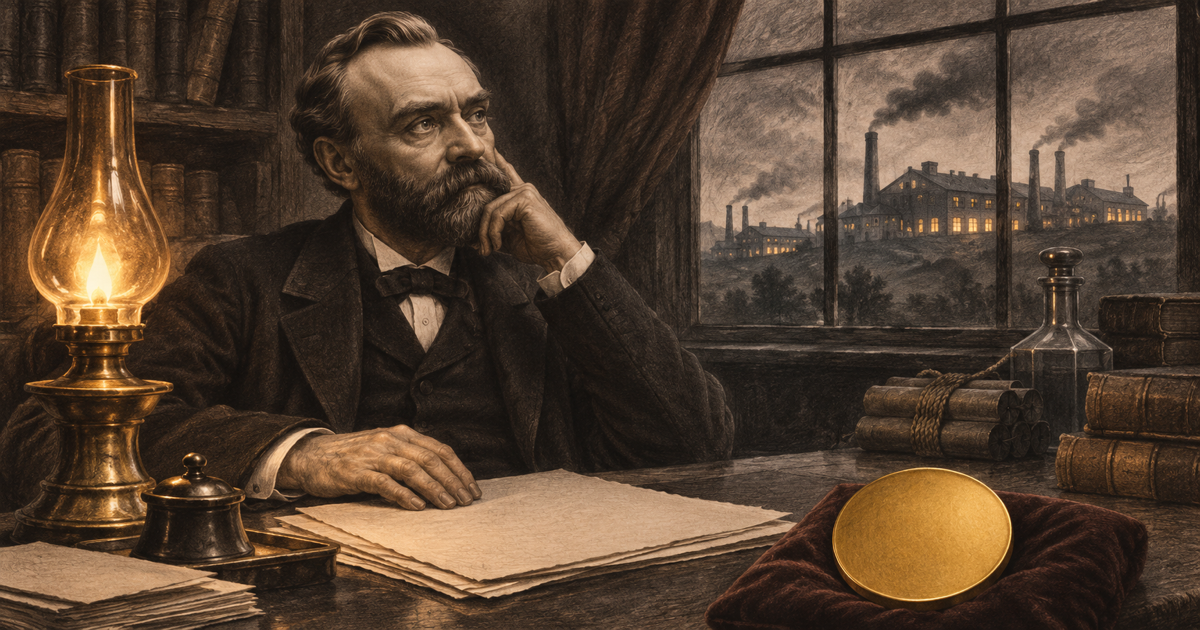
Milton Hershey sold his caramel company for $1 million, kept its chocolate operation, and later put his shares to work financing a school for children.
View all stories about this mogul
On August 10, 1900, Milton Hershey sold the Lancaster Caramel Company for $1 million. He kept the Hershey Chocolate Company and its machinery, then rented space in the factory he had just sold. His future chocolate business survived because it was excluded from the deal. Hershey Community Archives
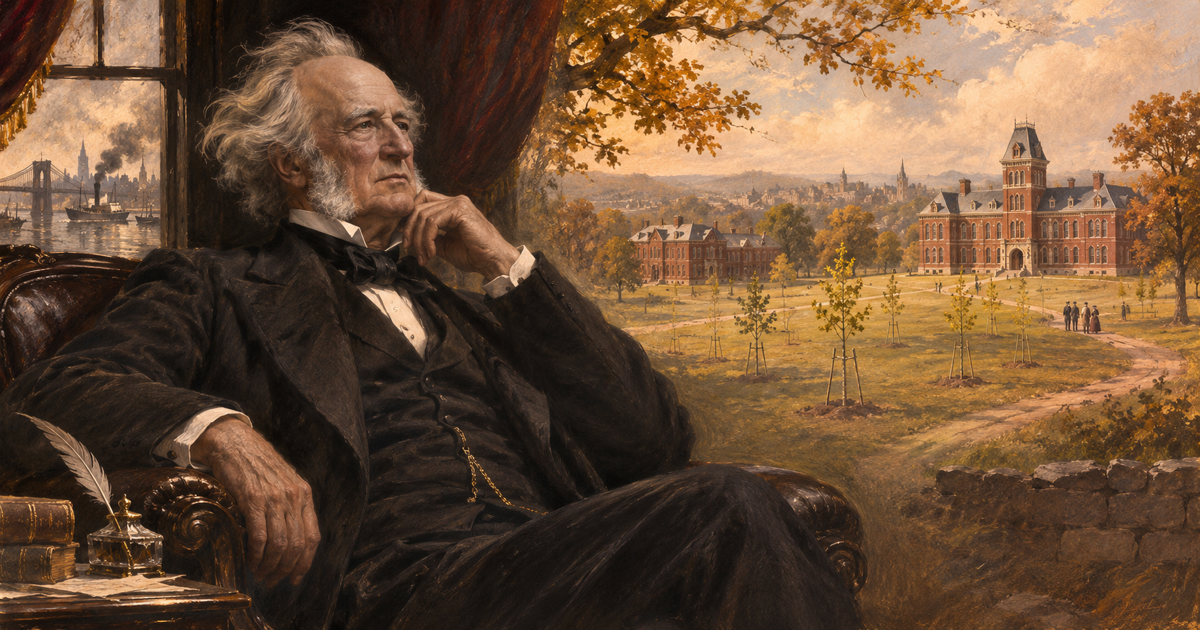
Eighteen years later, Hershey made another decision about ownership: he placed 5,000 shares of his chocolate company in a trust for the school he and his wife, Catherine, had founded. The school’s account dates that transfer to November 13, 1918. Both transactions separated the founder from an asset, but they served different purposes: one concentrated his commercial efforts; the other assigned the resulting wealth a beneficiary. Milton Hershey School
A confectioner’s education in cash shortages
Hershey’s Philadelphia confectionery business failed in 1882; a subsequent New York venture also failed. Between those attempts, employment in Denver taught him to make caramels using fresh milk. Hershey Community Archives biography
The archives describe cash-flow problems in both failed ventures. That detail matters more than a tally of setbacks. A shop can attract customers and still exhaust the money needed for ingredients, wages and rent before receipts arrive. Hershey’s experience offers a specific warning about the distance between selling a product and financing its production.
His eventual success in Lancaster depended on assistance. His mother and aunt helped with production; an associate helped recover his belongings. A British importer’s order prompted a loan for ingredients, personally backed by a bank cashier. Hershey Community Archives biography
A large order presents an awkward problem for an undercapitalized manufacturer. It promises revenue while demanding spending immediately. Without credit, the apparent breakthrough can remain an unfulfilled promise. In Hershey’s case, the lender helped bridge the interval between an order and its payment; a sale alone could not perform that function.
The Hershey Story museum describes him as penniless at 26, after two business failures. Its account follows that financial low point through to the million-dollar caramel sale. The distance between those positions was considerable, but the intervening work was concrete: learn a process, manufacture something customers wanted, obtain financing and deliver it. The Hershey Story
It would be misleading to treat the failed shops as necessary rehearsals for an inevitable fortune. Bankruptcy did not guarantee that Hershey would make a better decision next time. What survived was narrower and more useful: experience with confectionery, an improved caramel method and people willing to help him try again.
The million-dollar sale had a complicated settlement
American Caramel Company wanted Lancaster’s business. Negotiators agreed on $1 million but disputed the payment terms. Hershey’s lawyer, John Snyder, insisted on cash. The archives reconstruct the talks partly through a 1955 interview with their stenographer, John Myers: valuable evidence, but retrospective testimony. Sale history
After securing payment, Hershey agreed to purchase substantial amounts of the buyer’s stocks and bonds. He later instructed Snyder to dispose of the stock prudently. The sale included caramel formulas and the Crystal A trademark; chocolate remained his. Sale history
This distinction changes the financial reading of the transaction. A stated sale price does not, by itself, reveal the seller’s continuing exposure to the buyer. If proceeds are reinvested in the acquiring company, part of the seller’s wealth remains connected to the business being left. Cash at closing and freedom from future risk are separate questions.
The exclusion of chocolate was equally consequential. A purchaser can acquire factories, stock and formulas without acquiring everything the seller has learned or developed. Here, the boundary around the sale preserved an operating business. Hershey could redirect his attention without having to recreate the chocolate operation from the beginning.
A founder considering such a transaction has to answer several different questions: what is being sold, what is retained, when payment arrives and what obligations survive. Hershey’s deal illustrates why each deserves its own answer. The million-dollar figure supplies the memorable headline; the retained assets explain the next chapter.
The transaction also complicates the familiar idea that an entrepreneur must hold a successful company indefinitely. Ownership had already given Hershey a viable business to sell. Selling that business could finance another commercial direction. The relevant decision was where he wanted his resources committed after the agreement, rather than whether a sale represented success or retreat.
Chocolate moved from experiment to industrial product
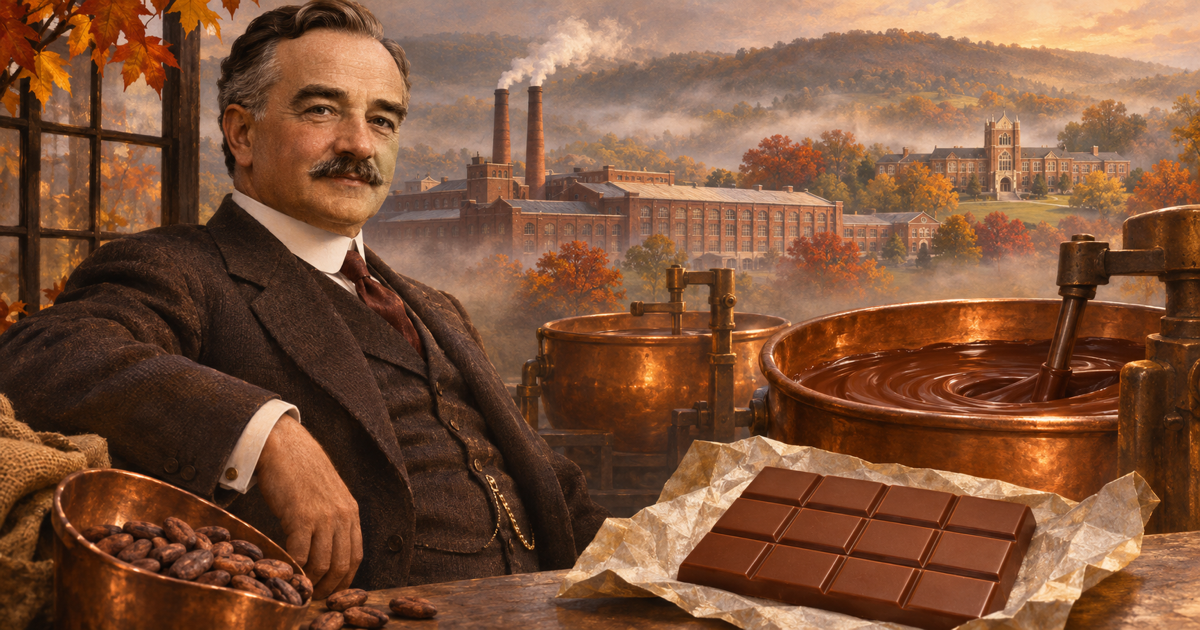
Hershey’s interest in chocolate-making equipment took shape at the 1893 World’s Columbian Exposition in Chicago. He acquired machinery and began experimenting with milk, sugar and cacao. According to The Hershey Story, the objective was milk chocolate that could be produced in volume and sold affordably. This was a manufacturing problem with a commercial purpose. The Hershey Story
The company’s own chronology dates the creation of its chocolate subsidiary to 1894 and the introduction of milk chocolate bars to 1900. Construction of the larger factory followed in 1903; the plant was completed in 1905. Chocolate therefore preceded the caramel sale, while the major expansion in manufacturing capacity followed it. Company history
That sequence is essential. Hershey was committing more resources to something he had already begun to develop. Calling the transaction a sudden leap from caramel into an unknown product obscures the years of equipment purchases and experimentation. The sale changed the scale and concentration of his commitment.
An affordable chocolate bar required more than an appealing recipe. A manufacturer had to reproduce the result across batches and coordinate ingredients, equipment and output. The economic promise of volume depended on production working repeatedly. Equipment could expand capacity, but unused capacity would still tie up money.
The museum places the factory alongside homes, schools, parks, transport and other infrastructure. Hershey’s project consequently extended beyond the machinery inside the building. A manufacturing site needs workers who can reach it and a surrounding community capable of supporting daily life. In this case, the founder took responsibility for much of that setting. The Hershey Story
Those investments created another kind of commitment. A company can change a wrapper or discontinue a confection more easily than it can move a factory and its surrounding infrastructure. The decision to manufacture at scale attached the enterprise to a place, making local conditions part of its commercial future.
Later products broadened the business. The corporate chronology records Kisses in 1907, Mr. Goodbar in 1925 and the company’s New York Stock Exchange listing in 1927. These milestones describe different kinds of development: a new product, another extension of the range and access to public equity ownership. They should not be collapsed into one undifferentiated growth story. Company history
The chocolate business reached into Cuban sugar
In January 1916, Hershey visited Cuba while the First World War was disrupting sugar supply. He acquired plantations and milling interests so that he could produce sugar for his chocolate operation. The archives describe rapid commitments to a mill, a larger mill site and a railway. An ingredient shortage had drawn a confectioner into agriculture, processing and transport. Central Hershey history
The main Central Hershey mill was completed in 1918. An electric railway, completed in October 1922, eventually connected Havana and Matanzas. Housing, a store, health care, recreation and a school accompanied the Cuban operation. Further mill purchases followed during the 1920s. Sugar procurement had become a substantial enterprise of its own. Central Hershey history
Owning a supplier can improve access to an essential input, but the buyer inherits the supplier’s operating problems. A chocolate manufacturer purchasing sugar can negotiate with another business; a manufacturer owning a mill must also arrange for that mill to function. The commercial relationship becomes an internal management responsibility.
The railway makes the distinction visible. Producing sugar is of limited use to a distant factory if it cannot be transported reliably. Once Hershey undertook production, the supporting transport became part of the problem he had chosen to solve. The investment required assets far removed from the shop counter where chocolate was sold.
The archives also record an agricultural school at Central Rosario. Its first pupils were boys whose parents had died in a 1923 accident on the Hershey Cuban Railroad. That detail joins the business and the social project in a particularly difficult way: the transport system supporting the enterprise was also the setting of a disaster that shaped its charitable work. Central Hershey history
It is possible to recognize the purpose of these investments without treating ownership as a complete answer to supply risk. Fields, mills and railways require continuing spending and supervision. Vertical integration changes the risks a business carries and the decisions its managers must make; it does not remove uncertainty from the cost of an ingredient.
A company town still had conflicting interests
The archives record that workers rejected Hershey’s proposed cooperative store through suspicion of its terms. They also describe his tendency to decide matters without consulting residents. Amenities did not guarantee agreement. Hershey Community Archives biography
For employees, a company town combines relationships that elsewhere may be separate. The organization paying a wage can also influence housing, transport and recreation. A useful service may therefore come with dependence on the same institution that controls employment. Workers have reasons to assess both the benefit and the terms on which it is supplied.
The founder and the employee also encounter different versions of a successful investment. A new facility may appear to the owner as a durable improvement in the community. A worker may judge it alongside the size of a weekly paycheck and the ability to question management. These interests can overlap without being identical.
During the Depression, Hershey’s construction campaign employed more than 600 men. Yet factory workers suffered smaller paychecks as hours contracted. The archives identify financial hardship as a contributor to the 1937 sit-down strike. Continued employment did not mean adequate earnings. Hershey Community Archives biography
That record prevents an easy moral accounting in which charitable spending settles every question about an employer. A founder can finance public amenities while employees remain dissatisfied with working conditions or income. Assessing one requires evidence about the amenities; assessing the other requires attention to the employment relationship.
Hershey’s town consequently belongs inside the business history rather than in a separate collection of good deeds. The factory needed labor, the community needed employment and residents had interests of their own. The arrangements were connected, but the founder’s intentions could not substitute for the experiences of everyone living with them.
The school received shares, and the valuation came later
Milton and Catherine founded the Hershey Industrial School for orphaned boys in 1909. Catherine died in 1915. In 1918, Milton transferred his chocolate-company shares into the school’s trust. The company’s chronology records both the founding deed and the later stock transfer, distinguishing the creation of the institution from the decision that enlarged its financial backing. Company history
The often-repeated $60 million figure needs qualification. The school’s account says the gift attracted public attention in 1923, five years after the transfer, and that a dollar value was then arbitrarily assigned to the shares. Its archives identify a Harrisburg Evening News report dated November 8, 1923, followed by coverage in The New York Times. Milton Hershey School
The distinction is material: Hershey transferred equity, rather than delivering a $60 million cash payment. A valuation describes what someone considers an asset worth at a given moment. It does not establish how much cash the owner has available to spend or how much a sale would actually realize.
Giving shares also creates a different financial arrangement from paying for a building once. Equity ties the recipient to the fortunes of an operating business. Successful operations can support the asset’s value and distributions; poor results can weaken them. The charitable purpose acquires an ongoing interest in commercial performance.
That connection gives the earlier manufacturing decisions another significance. Product development, factories and ingredient supply helped create the asset Hershey could eventually transfer. The gift did not stand outside his business career: it assigned a beneficiary to wealth accumulated through it. The school and the chocolate operation remained legally distinct kinds of institution, joined by ownership.
A retrospective account must also keep the stages separate. Selling caramel did not itself give money to the school, which had not yet been founded. Founding the school did not immediately constitute the 1918 stock transfer. Publicity in 1923 did not mark the date of the gift. Each event answered a different practical question.
The sale concerned what Hershey would continue to operate. The factory concerned how much he could produce. The Cuban investments concerned the source of an ingredient. The stock transfer concerned who would benefit from the wealth he owned. Read together, those decisions explain more than a portrait of a generous chocolate maker: they show how changes in ownership can redirect a business fortune’s purpose.
Frequently asked questions
What did Milton Hershey sell in 1900?
He sold the Lancaster Caramel Company for $1 million while retaining the Hershey Chocolate Company and its chocolate-making equipment.
When did Hershey give his shares to the school’s trust?
The school’s account dates the transfer of 5,000 chocolate-company shares to November 13, 1918.
Was the school given $60 million in cash?
No. The gift consisted of shares; the school says the widely reported $60 million valuation was assigned when the transfer received publicity in 1923.
💡 Key Insights
- ▸ Retaining the chocolate operation made the caramel sale a strategic redirection.
- ▸ A sale price alone does not reveal the seller's continuing financial exposure.
- ▸ Owning sugar production added agricultural and transport responsibilities.
- ▸ Hershey's school received company shares, not a $60 million cash payment.
Sources
- Hershey Community Archives: Selling the Lancaster Caramel Company ↗
- Hershey Community Archives: Milton Snavely Hershey, 1857–1945 ↗
- The Hershey Story: Milton Hershey's History ↗
- The Hershey Company: Corporate History ↗
- Hershey Community Archives: Central Hershey, Cuba, 1916–1946 ↗
- Milton Hershey School: Founders Day, Giving the Gift of Stock ↗