Madam C.J. Walker: America's First Self-Made Female Millionaire
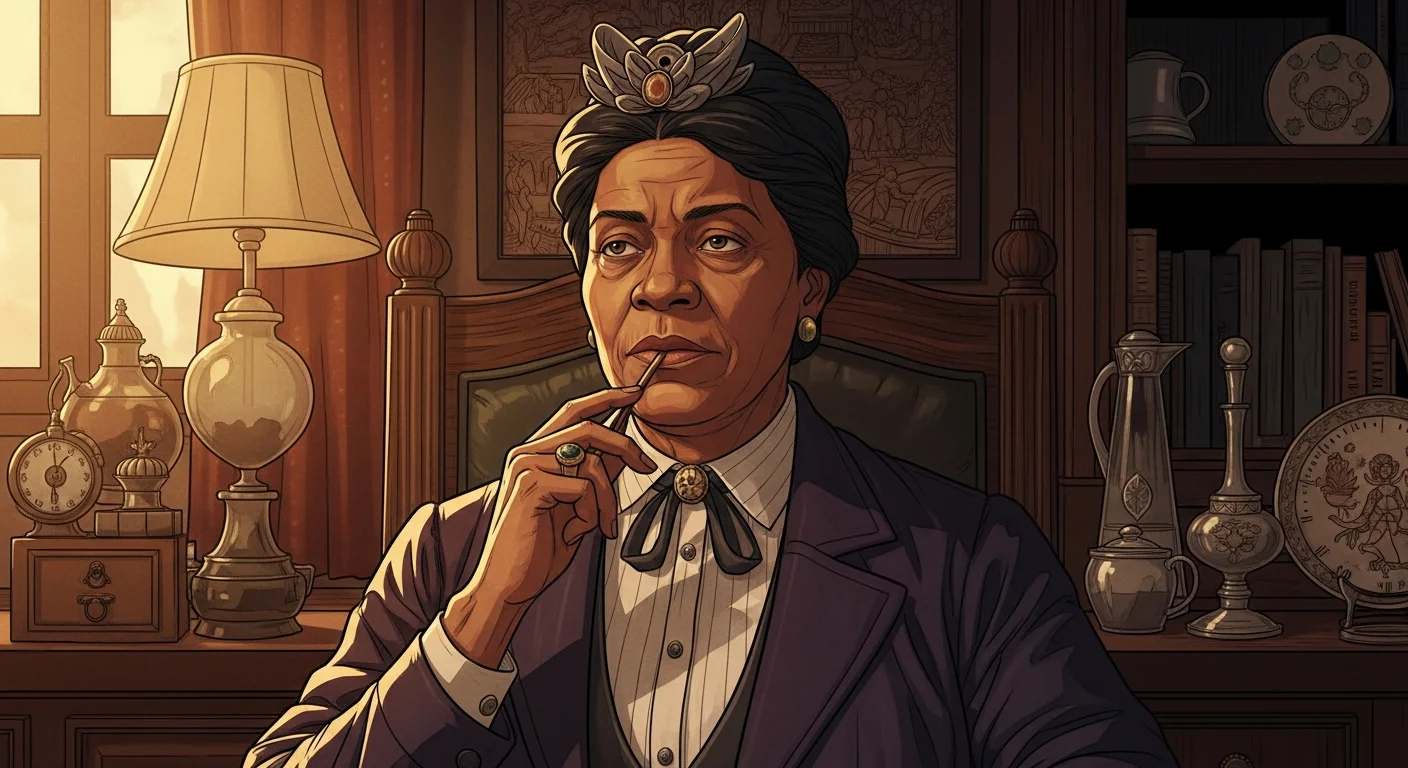
Born to former slaves. Orphaned at seven. Married at fourteen. Widowed at twenty. And then Sarah Breedlove invented a hair care empire, became the first self-made female millionaire in America, and used her fortune to fund the civil rights movement. This is the most extraordinary rags-to-riches story you've never heard.
View all stories about this mogul
⛓️ Chapter 1: Born Free, Born Broke
Sarah Breedlove was born on December 23, 1867, in Delta, Louisiana — a tiny town on the Mississippi River, surrounded by cotton fields that had been worked by enslaved people until two years before her birth.
Her parents — Owen and Minerva Breedlove — were former slaves. Sarah was the first member of her family to be born free. This distinction, while historically momentous, had approximately zero impact on her material circumstances. Freedom, in the Mississippi Delta of 1867, was not accompanied by opportunity, education, or money.
The Breedlove family were sharecroppers — farming land they didn’t own, using equipment they didn’t own, and giving most of their harvest to the landowner in payment for the privilege of working themselves to exhaustion. Sharecropping was, in economic terms, slavery with a different name. The workers were technically free but practically trapped — bound by debt, isolated by geography, and excluded from the political power that might have changed their circumstances.
Sarah’s mother died in 1874, when Sarah was six. Her father died the following year. At seven years old, Sarah Breedlove was an orphan.
“I was left an orphan at seven, with no one to take care of me. I picked cotton. I scrubbed floors. I washed clothes. I was a child doing the work of an adult in a world that didn’t care if I lived or died.”
She moved across the river to Vicksburg, Mississippi, to live with her older sister Louvenia and Louvenia’s husband, who was, by all accounts, cruel. To escape the abuse, Sarah married Moses McWilliams at the age of fourteen. She gave birth to a daughter, A’Lelia, in 1885.
Moses McWilliams died in 1887. Sarah was twenty years old, a widow with a two-year-old daughter, living in the Deep South with no education, no money, and no prospects.
She did the only thing she could: she moved north.
🧹 Chapter 2: The Washerwoman
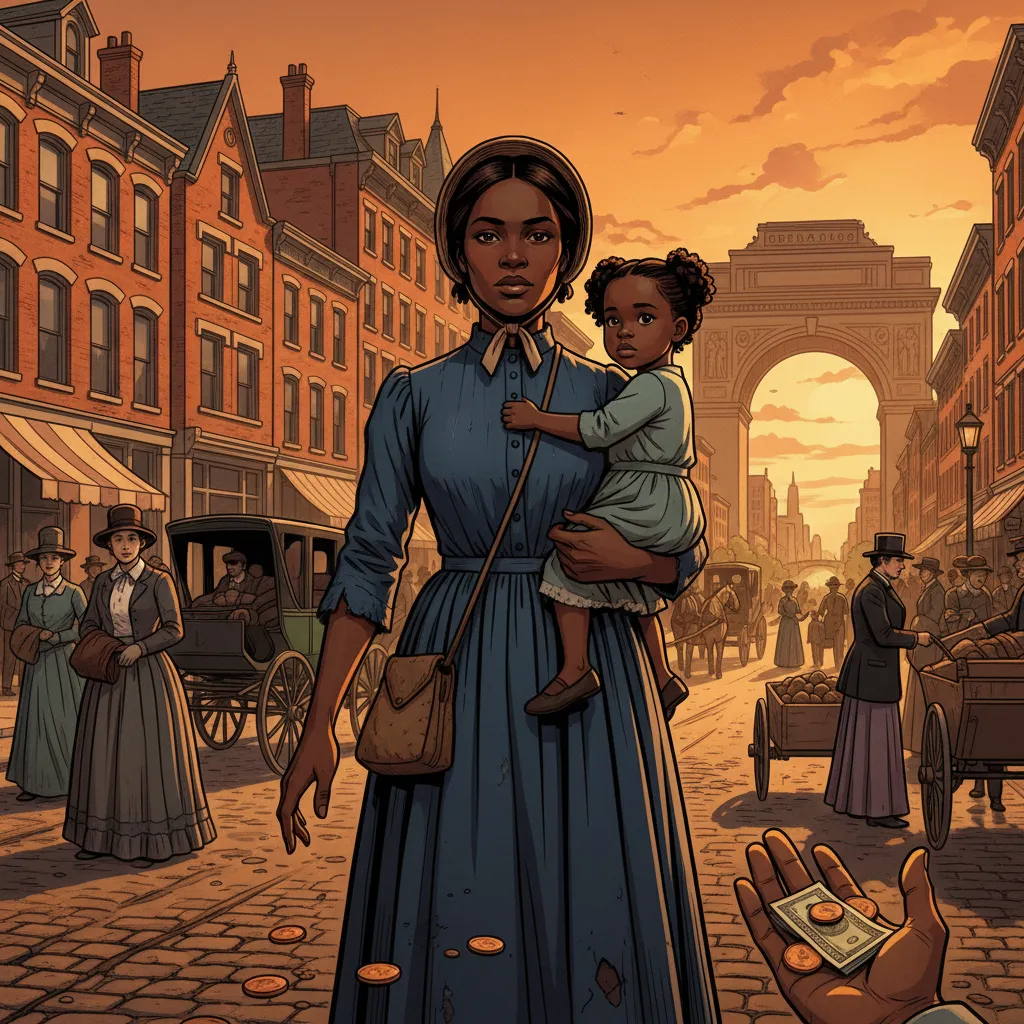
In 1888, Sarah Breedlove arrived in St. Louis, Missouri, with $1.50 in her pocket and her daughter on her hip.
St. Louis had a relatively large Black community and slightly better economic opportunities than the Mississippi Delta — a bar that was not difficult to clear. Sarah found work as a washerwoman, scrubbing clothes by hand for white families. She earned approximately $1.50 per day — barely enough to feed herself and A’Lelia.
She was a washerwoman for the next 18 years.
Eighteen years of boiling water, lye soap, raw hands, aching back, and the suffocating monotony of scrubbing other people’s clothes in other people’s homes. Eighteen years of poverty that was slightly less desperate than the poverty she’d left behind in Mississippi but poverty nonetheless.
During these years, Sarah also began experiencing severe hair and scalp problems. This was not uncommon among Black women of the era — a combination of stress, poor nutrition, harsh hair care products, and environmental factors caused significant hair loss and scalp disease.
Sarah tried every available remedy. Patent medicines. Home recipes. Products marketed specifically to Black women. Nothing worked. Her hair continued to thin. The experience was both physically uncomfortable and socially devastating — in a culture where hair was closely tied to identity, beauty, and dignity, losing it felt like losing a piece of yourself.
“When I first started losing my hair, I tried everything. Nothing helped. And I thought: if I’m having this problem, millions of other women must be having this problem too. And nobody is solving it.”
Sometime around 1904, Sarah began experimenting with her own formulations — combinations of sulfur, petroleum jelly, and other ingredients designed to treat scalp conditions and promote hair growth. She tested them on herself and on friends. The results were promising.
She had found her problem. Now she needed to build the solution.
💡 Chapter 3: The Invention
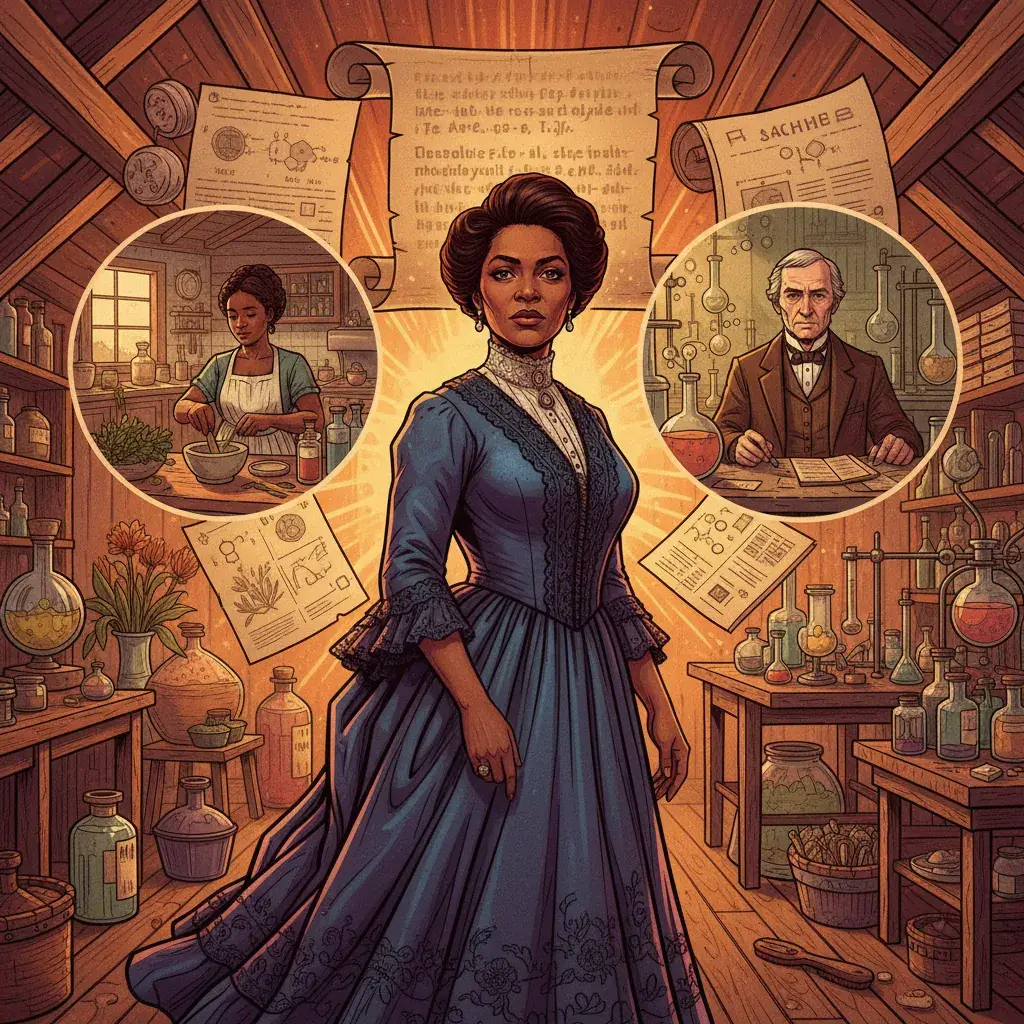
The exact origin of the “Walker formula” is the subject of some historical debate.
In one version — the one Sarah herself promoted — the formula came to her in a dream. She claimed that a large Black man appeared to her while she slept and told her what ingredients to mix together. She ordered the ingredients from Africa, mixed the formula, and her hair began to grow.
The dream narrative was almost certainly marketing mythology. In reality, Sarah developed her products through experimentation, building on existing knowledge of scalp treatment and incorporating ingredients that were commonly available. She may have been influenced by Annie Turnbo Malone, a successful Black hair care entrepreneur in St. Louis for whom Sarah briefly worked as a sales agent.
What is not in dispute is the result: Sarah’s products worked. They addressed real scalp conditions, promoted hair health, and gave Black women a grooming option that had not previously existed.
In 1905, Sarah moved to Denver, Colorado, with $1.50 (that number again) and began selling her hair treatment products door to door. She married Charles Joseph Walker — a newspaper advertising salesman — in 1906 and began marketing herself as “Madam C.J. Walker.”
The name was strategic. “Madam” conveyed sophistication and authority. “C.J. Walker” sounded established, respectable, prosperous. The branding transformed a washerwoman from St. Louis into a cosmetics entrepreneur of apparent distinction.
“I changed my name because I understood that perception is reality. Sarah Breedlove was a washerwoman. Madam C.J. Walker was a businesswoman. The products were the same. The name made the difference.”
Her product line expanded to include a hair grower (Wonderful Hair Grower), a scalp treatment, and a pressing oil. She sold them door to door, at churches, at social gatherings, and through mail order. She advertised in Black newspapers. She gave demonstrations wherever she could find an audience.
The products sold. Not because of aggressive marketing or clever branding alone — but because they genuinely addressed a need that no one else was serving. Black women in early 20th-century America had almost no commercial hair care options. Madam Walker gave them products that worked, sold by women who looked like them and understood their needs.
🏭 Chapter 4: The Walker System
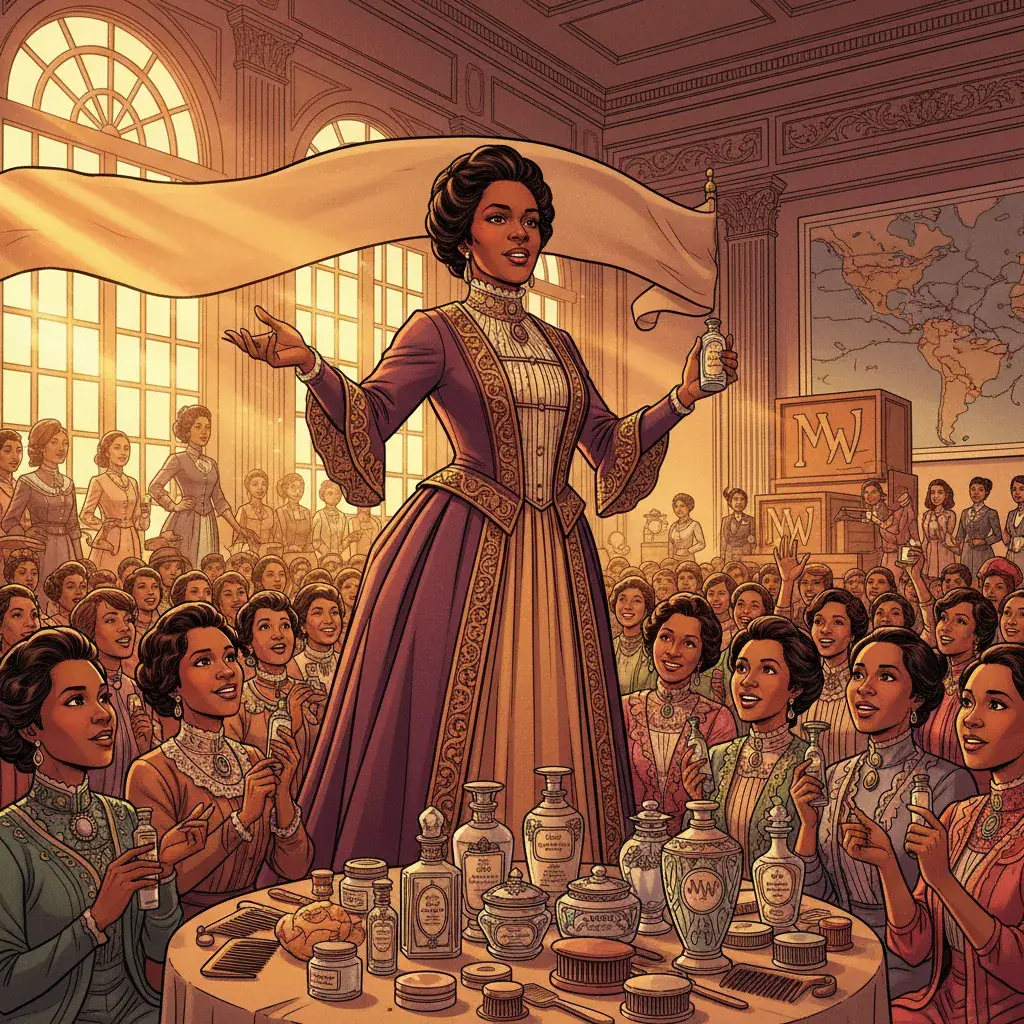
Madam Walker’s business model was revolutionary — not just for its time, but by any standard.
She didn’t just sell products. She created a system. The “Walker System” included hair care products, hair care techniques, and a training program for sales agents who would sell the products and perform the techniques in their communities.
Walker recruited Black women from across the country and trained them as “Walker Agents” — independent saleswomen who purchased products wholesale from Walker’s company and sold them at retail in their neighborhoods. The agents received training not just in hair care but in salesmanship, bookkeeping, and customer service.
At its peak, the Walker system employed over 20,000 agents across the United States, Central America, and the Caribbean.
The economic impact was profound. In an era when the vast majority of Black women worked as domestic servants or agricultural laborers — earning poverty wages with zero prospects for advancement — becoming a Walker Agent offered an alternative. Agents could earn $5-15 per day at a time when domestic servants earned $1-2 per day. They worked for themselves, on their own schedules, building their own customer relationships.
“I am a woman who came from the cotton fields of the South. From there I was promoted to the washtub. From there I was promoted to the cook kitchen. And from there I promoted myself into the business of manufacturing hair goods and preparations. I have built my own factory on my own ground.”
That quote — from a speech Walker gave at the National Negro Business League in 1912 — is one of the most powerful statements of Black entrepreneurial achievement in American history. It was delivered over the objections of Booker T. Washington, who had initially refused to let Walker speak at the conference. She spoke anyway, uninvited, and received a standing ovation.
🏗️ Chapter 5: The Empire Builder
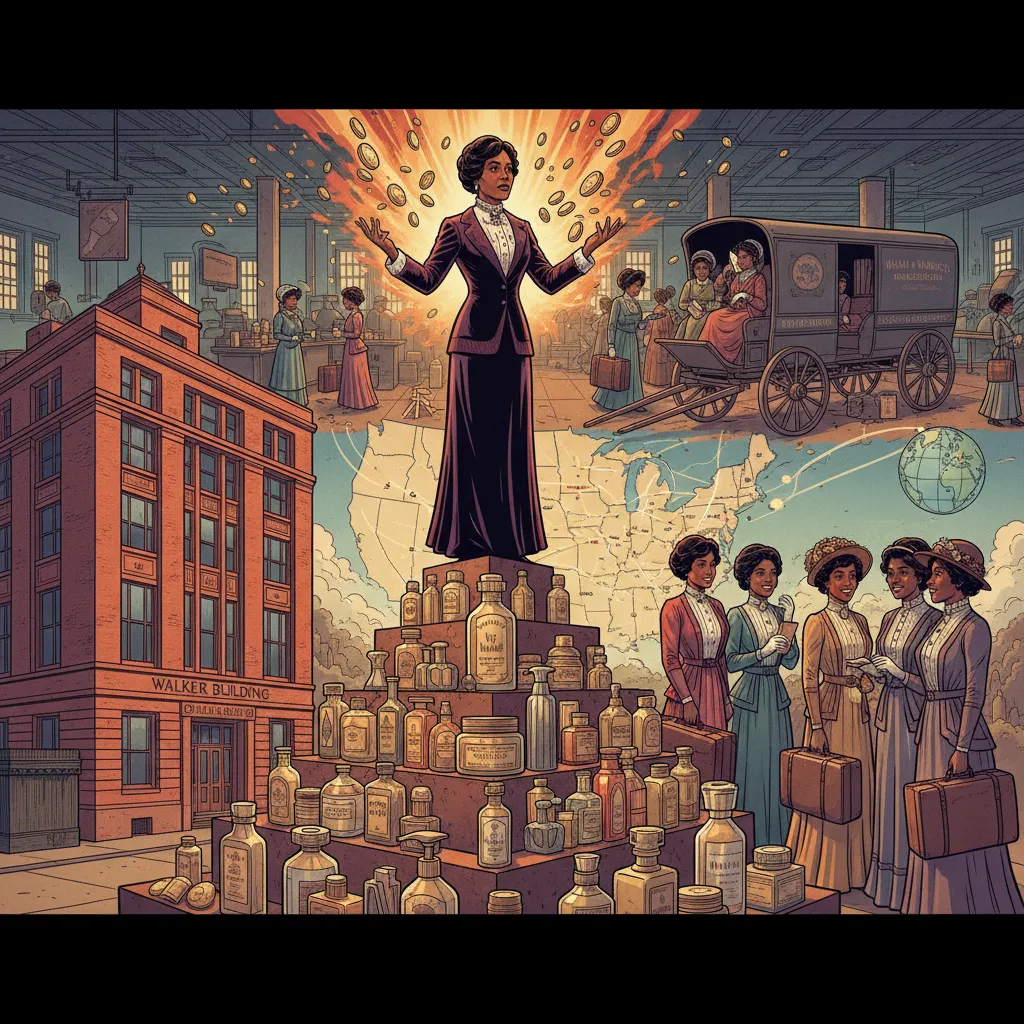
Between 1906 and 1919, Madam Walker built an empire.
She moved her operations from Denver to Pittsburgh (1908) and then to Indianapolis (1910), where she established her headquarters: the Madam C.J. Walker Manufacturing Company. The Indianapolis factory produced the full range of Walker products and served as the training center for new agents.
The move to Indianapolis was strategic. The city was a railroad hub — central enough to distribute products across the country efficiently. It also had a growing Black community and a business-friendly environment.
Walker traveled constantly. She crossed the country by train, giving lectures, demonstrations, and sales presentations in Black communities from New York to Los Angeles. She went to the Caribbean, Central America, and eventually to Europe. Everywhere she went, she recruited agents, sold products, and spread the Walker System.
Her marketing was sophisticated by any era’s standards. She used before-and-after photos (pioneering the technique decades before it became ubiquitous). She published testimonials from satisfied customers. She placed ads in every Black newspaper in the country. She spoke at churches, lodges, and civic organizations.
By 1910, Walker’s annual revenue exceeded $100,000 — equivalent to roughly $3 million today. By 1914, annual revenue was approximately $250,000. By her death in 1919, she had accumulated a personal fortune estimated at over $1 million (approximately $17 million in today’s dollars), making her the wealthiest self-made Black woman in America and, by most accounts, the first self-made female millionaire of any race in American history.
“There is no royal flower-strewn path to success. And if there is, I have not found it, for if I have accomplished anything in life, it is because I have been willing to work hard.”
Walker lived accordingly. She purchased a townhouse in Harlem that became a salon and a social hub for New York’s Black elite. She commissioned a mansion in Irvington-on-Hudson, New York — designed by the first licensed Black architect in the state — that was the most expensive home in the neighborhood. She drove a luxury automobile. She wore the finest clothes.
These were not merely indulgences. They were statements. Every luxury that Walker displayed was proof that a Black woman, born into slavery’s aftermath, could achieve the same standard of living as the wealthiest white families. Her lifestyle was her marketing, her activism, and her revenge, all rolled into one.
✊ Chapter 6: The Activist
Madam Walker did not build her fortune in a vacuum. She built it in the context of some of the most violent racial oppression in American history.
The early 1900s were the era of Jim Crow — state-sanctioned racial segregation that relegated Black Americans to second-class citizenship. Lynching was epidemic: between 1882 and 1968, over 4,700 Black Americans were lynched. Black communities lived under the constant threat of racial violence.
Walker used her wealth and her platform to fight back.
She was a major donor to the NAACP, contributing $5,000 in 1919 (approximately $85,000 in today’s dollars) — one of the largest individual contributions the organization had received at that point. She funded anti-lynching campaigns. She lobbied politicians. She organized her Walker Agents as a political force, encouraging them to vote, petition, and advocate for civil rights.
In 1917, Walker organized a delegation to the White House to petition President Woodrow Wilson to make lynching a federal crime. Wilson declined to meet with the delegation. But the effort drew national attention and contributed to the growing anti-lynching movement.
“I shall expect every one of you to be a credit to the race. I want you to be leaders in every community in which you reside. I want you to use your money not only to clothe and feed yourselves, but to help others.”
Walker’s activism was inseparable from her business. She didn’t just want to make money — she wanted to create economic power for Black women, and she understood that economic power was the foundation of political power. Every Walker Agent was not just a saleswoman but a potential activist — a woman with independent income, professional skills, and a connection to a national network.
The Walker system was, in its quiet way, one of the most effective tools of Black economic empowerment in the early 20th century. It didn’t just sell hair products. It created an economic ecosystem that gave Black women autonomy, dignity, and power.
💔 Chapter 7: The Price
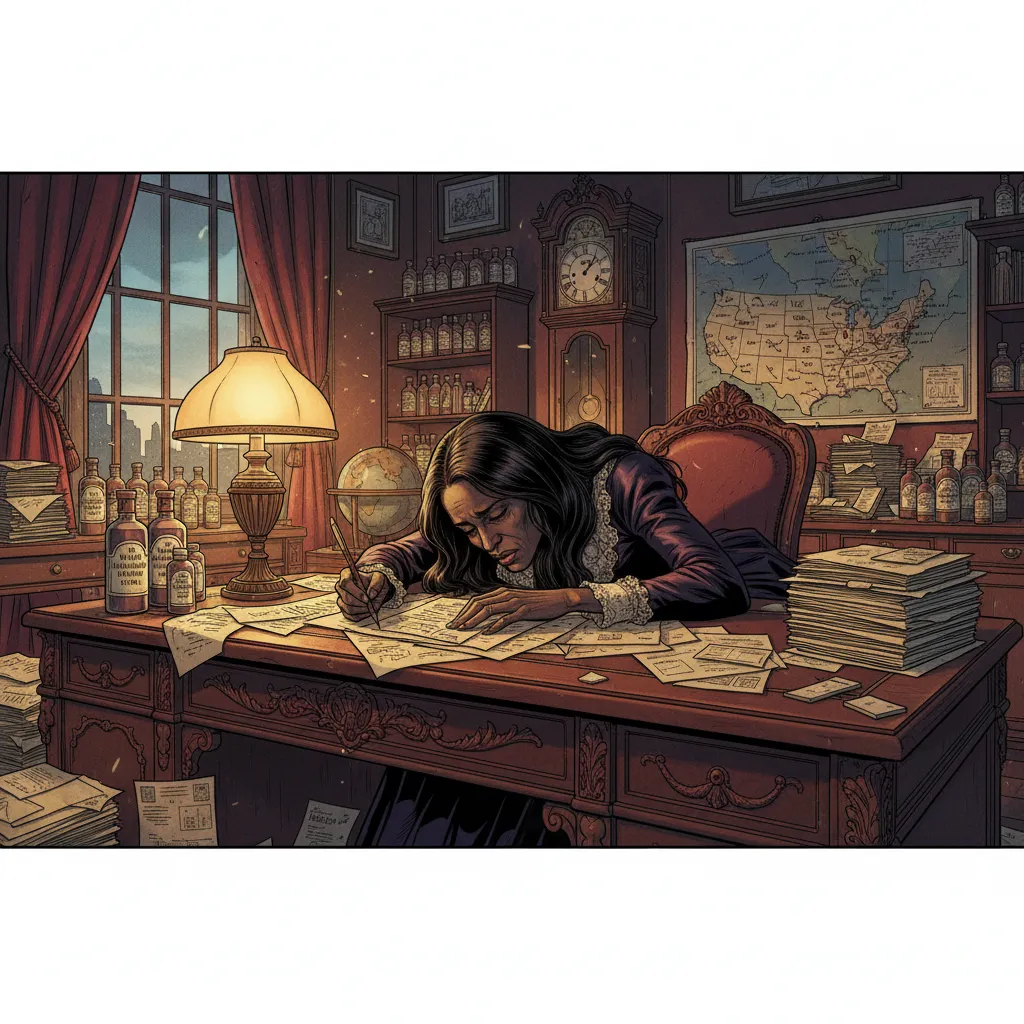
Madam Walker worked herself to death.
That’s not a metaphor. By 1919, Walker was suffering from hypertension — a condition that was likely caused or exacerbated by years of relentless work, stress, and the accumulated toll of a life that had begun in unimaginable hardship.
Her doctors told her to slow down. She refused. There were agents to train, products to develop, speeches to give, donations to make, and a race to uplift. Rest was for people who had the luxury of time. Walker did not believe she had that luxury.
On May 25, 1919, Madam C.J. Walker died of kidney failure related to hypertension at her estate in Irvington-on-Hudson. She was 51 years old.
Her will directed that two-thirds of her estate’s future net profits go to charity. She left bequests to Black schools, orphanages, retirement homes, and YMCAs across the country. She left significant sums to the NAACP and other civil rights organizations.
“She was 51 when she died. She had been free for 51 years — the first generation born after slavery. And in those 51 years, she had gone from cotton fields to a mansion on the Hudson, created an industry, employed 20,000 women, funded the civil rights movement, and become the wealthiest self-made woman in America. Fifty-one years. From nothing to everything.”
Her daughter, A’Lelia Walker, inherited the business and the mansion. A’Lelia became a prominent figure in the Harlem Renaissance — a patron of Black arts and culture who hosted legendary salons in her mother’s townhouse. She died in 1931 at the age of 46.
The Walker company continued to operate after A’Lelia’s death but gradually declined without the founder’s driving force. By the mid-20th century, larger companies with greater resources had entered the Black hair care market, and the Walker brand faded.
But the legacy endured.
🏆 Chapter 8: The Legacy That Cannot Fade
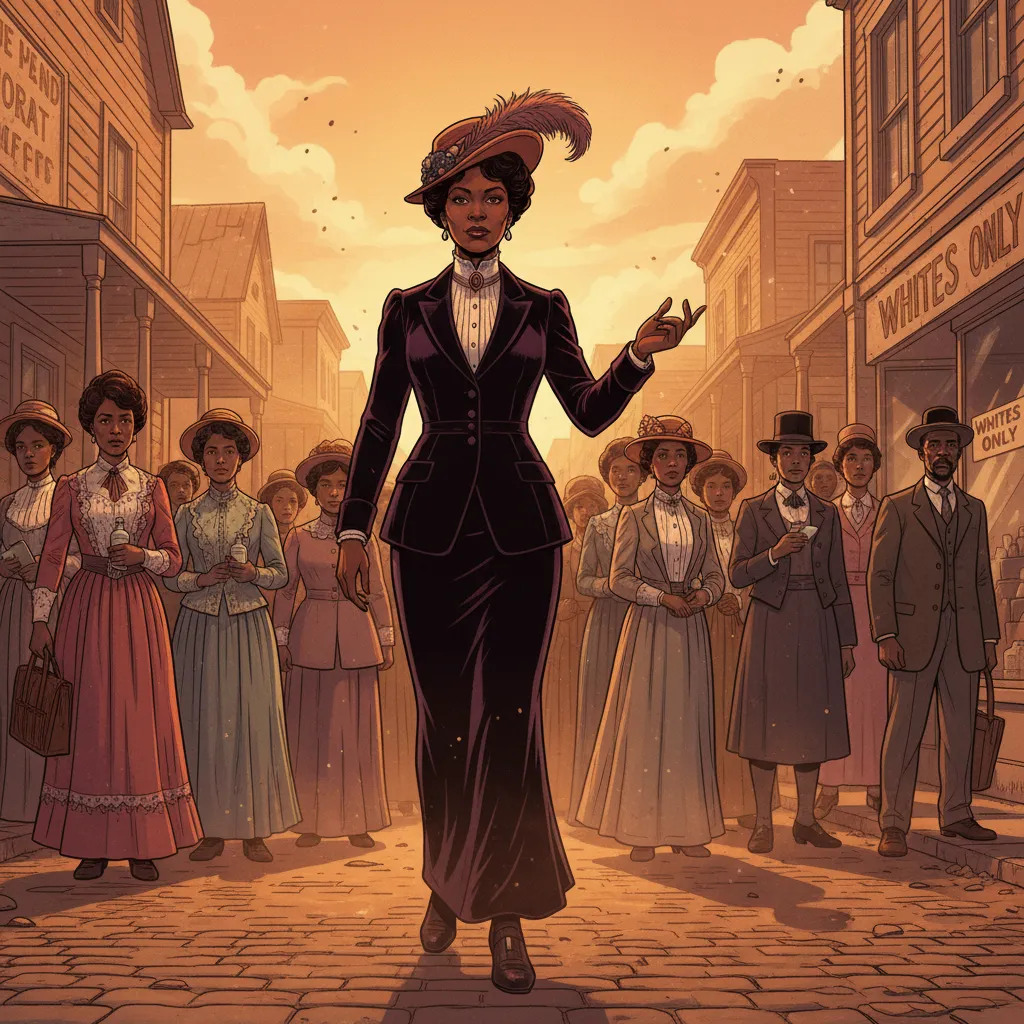
Madam C.J. Walker’s story is not just a business story. It is an American story — one that reveals both the brutality of racial oppression and the extraordinary resilience of the people who endured it.
Consider the full arc of her life: born to former slaves, orphaned at seven, married at fourteen, widowed at twenty, a washerwoman for eighteen years, and then — through sheer force of will, intelligence, and work — the founder of a national business empire, a millionaire, and a civil rights leader.
No Silicon Valley startup story, no Wall Street trading saga, no tech IPO narrative comes close to this in terms of sheer improbability and human achievement.
What entrepreneurs can learn from Madam Walker:
-
Solve your own problem. Walker developed her products because she experienced the problem herself. The most authentic products come from founders who are their own first customers.
-
Build a system, not just a product. The Walker System — products plus training plus distribution through agents — was the business model innovation, not the hair grower itself. Any chemist could mix a scalp treatment. Only Walker could build a distribution network of 20,000 women.
-
Empower your channel. Walker’s agents weren’t just salespeople — they were entrepreneurs in their own right, earning independent income and building professional skills. This alignment of interests between the company and its distribution network created extraordinary loyalty and motivation.
-
Purpose amplifies profit. Walker’s explicit connection of her business to racial empowerment and women’s economic independence gave her brand an emotional resonance that no amount of advertising could replicate. Purpose isn’t a marketing strategy. It’s a force multiplier.
-
Use your success as a platform. Walker didn’t just accumulate wealth. She used her wealth, her visibility, and her network to fight for civil rights, fund education, and create opportunities for others. Her impact extended far beyond the balance sheet.
“I got my start by giving myself a start.”
That was Madam Walker’s most famous quote. Seven words that contain an entire philosophy of self-determination.
She didn’t wait for permission. She didn’t wait for funding. She didn’t wait for the right conditions. She gave herself a start — with $1.50, a formula, and the unshakeable belief that she deserved more than a washtub.
And she was right.
The Madam C.J. Walker Manufacturing Company operated until the mid-20th century. Walker’s former mansion, Villa Lewaro, is a National Historic Landmark. Her legacy is preserved at the Smithsonian National Museum of African American History and Culture and the Indiana Historical Society. In 2020, Netflix released “Self Made,” a miniseries based on Walker’s life, starring Octavia Spencer.
👑 Chapter 9: The Marketing Maestro (1906-1912)
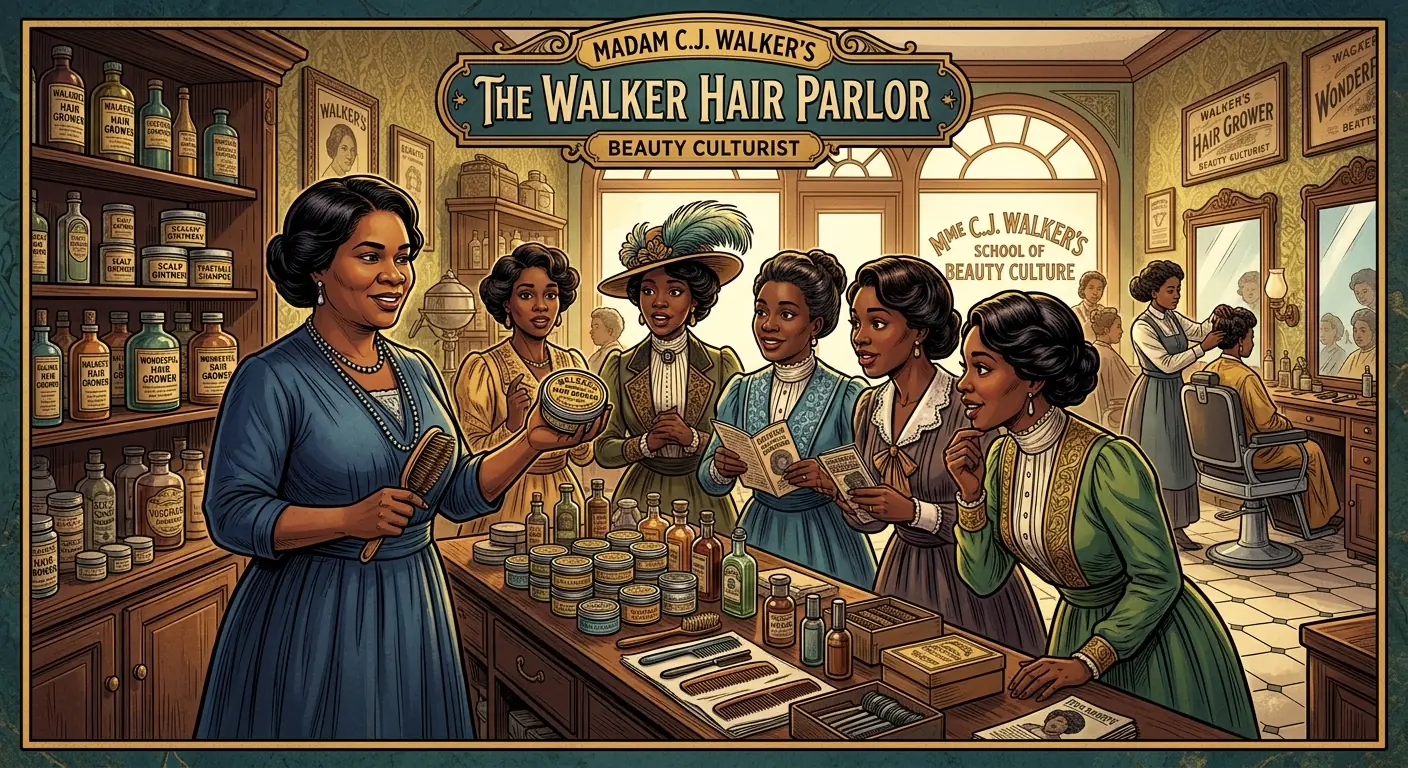
So, Sarah Breedlove, now known as Madam C.J. Walker, had her idea and her product. Great. But let’s be real, a revolutionary hair grower sitting in your kitchen doesn’t make you a millionaire. You need to sell the darn thing. And this, my friends, is where Madam C.J. Walker truly became a marketing genius, decades before Don Draper was even a twinkle in his daddy’s eye. She didn’t just sell products; she sold confidence, dignity, and a path to economic independence.
The Power of the Personal Touch
From the get-go, Madam Walker understood the power of direct sales. Forget fancy department stores (which, let’s be honest, probably wouldn’t have welcomed a Black woman selling products for Black women anyway). She went straight to her customers. Initially, she traveled door-to-door in Denver, then expanded her reach by moving to Pittsburgh in 1908, a city with a burgeoning Black population and excellent transportation links. Here, she began training a sales force of Black women — her legendary “Walker Agents.” These women weren’t just hawking wares; they were missionaries of self-care and empowerment. They learned the “Walker System” firsthand, often hosting “demonstrations” in homes and churches, creating a communal experience around beauty and self-improvement. They were entrepreneurs themselves, earning commissions and building their own financial stability. This wasn’t just a business model; it was a social movement, turning thousands of Black women into financially independent professionals in an era when such opportunities were virtually nonexistent. Imagine being a woman in the early 1900s, struggling to make ends meet, and suddenly being offered a chance to earn your own money, set your own hours, and help your community. It was revolutionary.
Advertising Genius: Beyond the Product
Madam Walker didn’t stop at door-to-door. She was a master of advertising, particularly in Black newspapers and magazines like The Crisis and Opportunity. Her ads weren’t just about frizz control; they were aspirational. They featured testimonials from satisfied customers, often showing “before” and “after” photos (a truly innovative concept for the time). She understood that her customers weren’t just buying a pomade; they were buying a promise – a promise of beauty, health, and a step up in society. She deployed slogans that resonated deeply, like “Greatest Hair and Scalp Preparation in the World” and “The Hair Grower That Never Fails.” She knew her audience implicitly and spoke directly to their needs and desires, often highlighting the social stigma associated with hair loss and poor scalp health in the Black community. Her advertising budget was substantial, a testament to her belief in its power; by 1912, she was reportedly spending thousands of dollars annually on print ads, a significant sum for any business, let alone one owned by a Black woman.
The “Madam” Mystique
And then there was the “Madam” herself. Sarah Breedlove deliberately adopted the moniker “Madam C.J. Walker” when she married Charles Joseph Walker in 1906. “Madam” evoked European sophistication and professionalism, lending an air of gravitas and luxury to her brand. It wasn’t just a name; it was a branding decision, a statement that her products and her business were of the highest caliber, worthy of respect. She dressed impeccably, traveled extensively, and always presented herself as a successful, dignified businesswoman. This personal branding was crucial. She was the face of her company, and her success was a powerful testament to the efficacy of her products and the potential of her agents. She wasn’t just selling a dream; she was living it, and every Black woman who saw her or bought her products knew that a piece of that dream was within their reach. She was basically the Beyoncé of early 20th-century entrepreneurship, just with more hot combs and less elaborate stage costumes.
⚔️ Chapter 10: The Battle of the Brands (1910-1915)
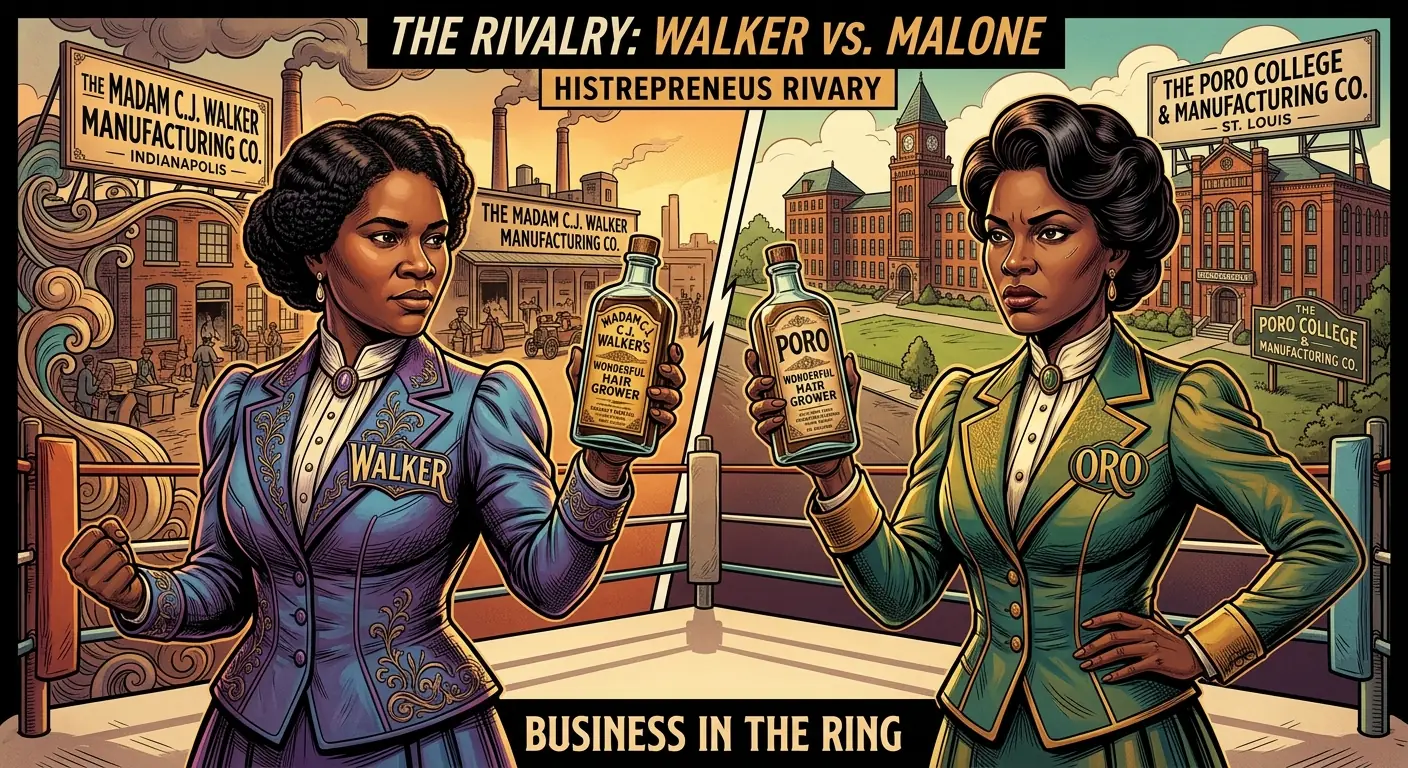
You know, success rarely happens in a vacuum. As Madam C.J. Walker’s star began to ascend, it wasn’t long before she found herself in a crowded arena, facing off against other formidable entrepreneurs in the burgeoning Black hair care industry. This wasn’t some friendly neighborhood bake sale; this was a cutthroat business, and Madam Walker, for all her grace, was a shrewd competitor. The most notable rival? Annie Malone, the formidable founder of the Poro System. Their rivalry was legendary, a true clash of titans that shaped the landscape of Black beauty for decades.
Early Competitors and the Hair Care Boom
Before Walker, and even during her early days, the market for Black hair care products was already bubbling. Black women had long struggled with hair issues, often exacerbated by harsh treatments, poor nutrition, and the sheer lack of suitable products. Many early solutions were homemade concoctions or white-owned patent medicines that were often ineffective or even harmful. Pioneers like Annie Malone, who was active years before Walker, recognized this unmet need. Malone, a chemist and entrepreneur, founded the Poro Company in 1900 in Lovejoy, Illinois, and by 1910 had established her headquarters in St. Louis (where Walker had once been a washerwoman, talk about awkward!). Malone also employed a direct-sales model, training “Poro Agents” to sell her products and administer treatments, much like Walker would later do. It was a gold rush, and everyone wanted a piece of the pie.
The Poro Rivalry: A Clash of Titans
The rivalry between Madam C.J. Walker and Annie Malone was intense, often described as a battle for market dominance and the hearts (and scalps) of Black women. Malone claimed that Walker, who had once worked as a sales agent for Malone’s Poro Company for a brief period in 1905 (a fact Malone never let anyone forget), had essentially stolen her formula and business model. Walker vehemently denied this, stating that her “Wonderful Hair Grower” was developed through divine inspiration and her own experimentation, separate from Malone’s products.
“I could not afford to put up my own preparations until I had had a chance to make some money working for others, so I worked for Mrs. Annie Malone, who had a similar line of goods,” Walker famously stated, acknowledging a brief association but asserting her originality.
This historical ambiguity fueled the fire, leading to a public feud played out in advertisements and through their respective sales forces. Both women were brilliant strategists, but their personalities and approaches differed. Malone was reportedly more reserved, while Walker was the charismatic, self-made success story, always eager to share her journey.
The “Quality” War and Differentiating Brands
In a market saturated with similar products, both women focused on distinguishing their brands. Malone emphasized the scientific development of her products and established the Poro College in St. Louis in 1918, a massive institution that trained thousands of beauticians. Walker, on the other hand, leaned into her personal rags-to-riches narrative and the empowering economic opportunities she offered her agents. She also focused on the “Walker System” as a comprehensive approach to hair and scalp health, not just a single product. While both used similar ingredients (petroleum jelly, sulfur, coconut oil, etc.), the perception of their brands, their marketing, and their personal stories became key differentiators. Walker often highlighted the fact that her products were her solutions to her own hair loss, making them feel more authentic and relatable to her clientele. It wasn’t just about who had the best “grease”; it was about who told the best story, who offered the most hope, and who built the most powerful community around their brand. In the end, both women created empires, but it was Madam C.J. Walker whose name would ultimately become synonymous with self-made success. Sorry, Annie, but history loves a good underdog story, and Walker’s was truly cinematic.
✨ Chapter 11: A’Lelia’s Ascent and the Harlem Renaissance Connection (1913-1919)
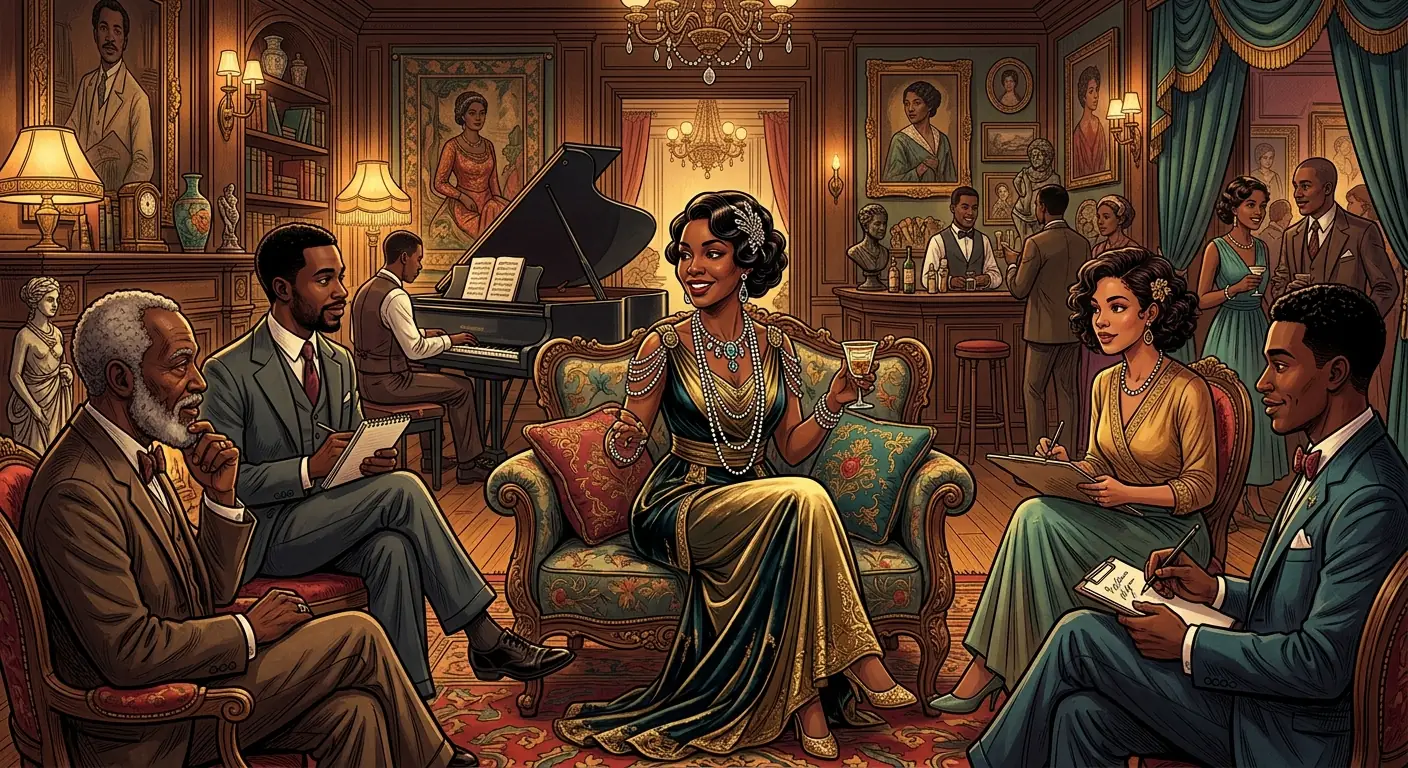
While Madam C.J. Walker was busy building her beauty empire and fighting for civil rights, her only child, A’Lelia Walker, was quietly (and sometimes not so quietly) carving out her own formidable legacy. A’Lelia wasn’t just the heiress apparent; she was a vibrant, flamboyant force of nature who would play a crucial role in extending the Walker brand’s influence into the cultural heart of Black America: the Harlem Renaissance. Think of her as the ultimate socialite with a serious business brain, combining glamour with gravitas.
The Heiress Apparent
Born Lelia McWilliams in 1885, A’Lelia was a bright, creative child who quickly absorbed her mother’s entrepreneurial spirit. From a young age, she was involved in the burgeoning business. After Madam Walker moved to Pittsburgh, A’Lelia stayed behind in St. Louis to manage the mail-order operations, demonstrating a keen understanding of logistics and customer service. By 1913, Madam Walker had appointed A’Lelia as the president of the company’s New York office, a strategic move to tap into the enormous market and cultural vibrancy of Harlem. A’Lelia proved herself more than capable, handling the company’s operations with skill and expanding its reach. She was a natural at networking, possessing a charm and social grace that opened doors. While Madam Walker was the visionary entrepreneur, A’Lelia was the master of cultivation, nurturing relationships that would prove invaluable. She was the ideal foil to her mother’s relentless drive – a blend of business acumen and artistic flair.
Harlem’s Hostess: The Dark Tower
A’Lelia truly came into her own in Harlem. Her mother had purchased a luxurious townhouse on 108-110 West 136th Street in 1913, a grand space that served as both a residence and a base for the New York operations. It was here that A’Lelia’s legendary social gatherings began. She renovated the upper floor, creating a spectacular salon and entertainment space known as “The Dark Tower” (a nod to Countee Cullen’s column in Opportunity magazine). This wasn’t just a party pad; it was a cultural crucible.
Langston Hughes, a frequent guest, famously described A’Lelia’s parties as “magnificent, mad, and merry… a never-ending buffet, an always-flowing bar, and a constant stream of conversation.”
The Dark Tower became the gathering place for the luminaries of the Harlem Renaissance: writers like Hughes and Zora Neale Hurston, artists like Aaron Douglas, musicians, intellectuals, and activists. A’Lelia, with her flamboyant personality and deep pockets, became their patron and their muse. She literally opened her doors and her purse to foster a cultural movement, providing a vital space for creative expression and intellectual exchange at a time when Black artists often struggled for recognition and resources. This patronage wasn’t just altruism; it subtly yet powerfully associated the Madam C.J. Walker brand with sophistication, culture, and the very best of Black achievement. It was brilliant, organic brand placement.
A Mother’s Influence and a Daughter’s Legacy
While their personalities sometimes clashed (Madam Walker was famously frugal and focused, A’Lelia more extravagant and free-spirited), their bond was undeniable. Madam Walker deeply valued A’Lelia’s contributions, especially her ability to connect with the younger generation of Black intellectuals and artists. She saw the importance of investing in culture as much as in commerce. A’Lelia’s role ensured that the Walker legacy wasn’t just about hair care; it was about holistic Black upliftment – economic, social, and cultural. When Madam Walker passed away in 1919, A’Lelia inherited the vast majority of the estate and the presidency of the company, a monumental task. She continued her mother’s philanthropic efforts and maintained the company’s prominence, even as she continued to host her legendary parties, ensuring that the Walker name remained at the forefront of Black excellence, both in business and in the arts. It’s a testament to both women that a company built on hair products became such a pivotal force in one of America’s most significant cultural movements.
🕰️ Chapter 12: The Indianapolis Legacy and the Company’s Enduring Struggle (1919-1950s)
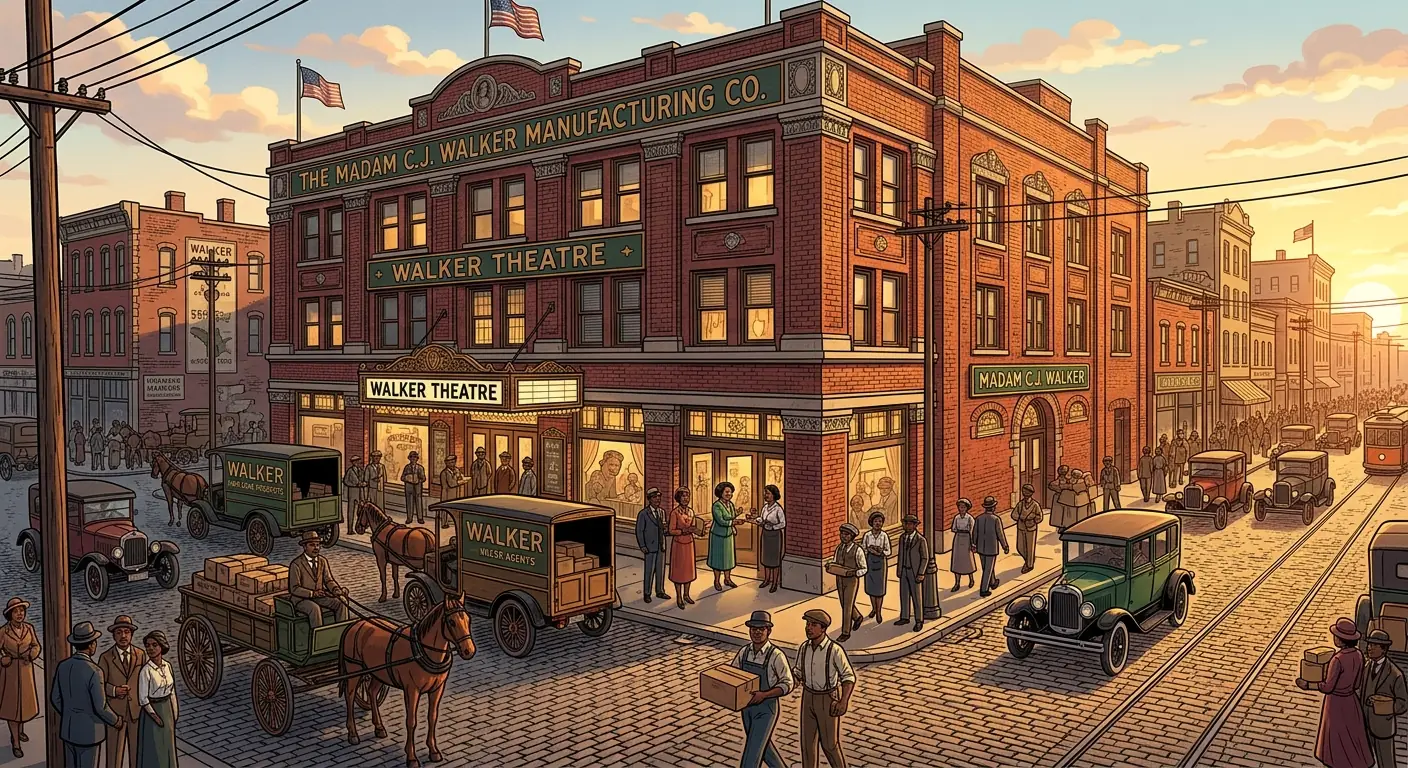
When Madam C.J. Walker passed away on May 25, 1919, at the relatively young age of 51, the world lost a titan. But her company, the Madam C.J. Walker Manufacturing Company, didn’t just vanish. Oh no. It was a well-oiled machine, an institution, and it continued to operate for decades, adapting to new challenges and navigating an ever-changing world. Her legacy wasn’t just in the millions she made, but in the enduring enterprise she built, headquartered right there in Indianapolis.
After the Matriarch: A’Lelia Takes the Helm
As per her will, A’Lelia Walker inherited the presidency of the company. It was a massive inheritance, estimated at over $600,000 (equivalent to roughly $10 million today), and a heavy mantle to bear. While A’Lelia was known for her lavish lifestyle and her role as a patron of the Harlem Renaissance, she was also a shrewd businesswoman who had been deeply involved in the company for years. She understood the intricacies of the “Walker System” and the importance of its sales force. Under her leadership, the company continued to thrive through the Roaring Twenties. The beauty industry for Black women remained robust, and the Walker brand held a powerful position, synonymous with quality and empowerment. A’Lelia ensured the company continued its philanthropic work, upholding her mother’s commitment to civil rights and education. The company’s headquarters in Indianapolis, a magnificent building completed in 1927 (after Madam Walker’s death, but planned by her), became a symbol of Black economic power, housing offices, a beauty school, a theater, and even a ballroom. It was a true community hub.
Surviving the Storms: Depression and War
However, the good times couldn’t last forever. The stock market crash of 1929 and the subsequent Great Depression hit the nation, and indeed the world, hard. Even industries focused on “discretionary” items like beauty products felt the pinch. A’Lelia Walker herself passed away tragically in 1931, leaving the company’s leadership in the hands of her daughter, Mae Walker Perry, and the capable general manager, F.B. Ransom. Ransom, an attorney who had joined the company in 1910, was a steady hand, guiding the company through these turbulent years. He implemented cost-cutting measures, streamlined operations, and emphasized the core product lines that remained essential to customers.
“The company survived because it had a strong foundation laid by Madam C.J. Walker and dedicated leadership that understood its mission,” Ransom once stated, reflecting on the challenging times.
The company also navigated World War II, facing rationing and material shortages, yet it continued to operate, a testament to its resilience and the enduring demand for its products. The Walker Agents, though fewer in number, remained loyal, demonstrating incredible dedication through hard times. The company didn’t just survive; it adapted, proving that the vision of its founder was robust enough to withstand economic cataclysms.
The Next Generation and Shifting Tides
After Mae Walker Perry, the company’s leadership transitioned to A’Lelia Mae Perry Bundles (Madam Walker’s great-granddaughter, and the grandmother of the current official biographer). For decades, the Madam C.J. Walker Manufacturing Company remained a significant presence in the Black beauty market, continuing to produce the original “Walker System” products. However, the post-war era brought new challenges: an increasingly competitive market, evolving beauty standards, and the rise of larger, often white-owned, cosmetics companies that began to target Black consumers. While the company continued to sell its products, its heyday as the undisputed leader gradually faded. Yet, the Indianapolis building, a designated National Historic Landmark since 1991, still stands as a powerful symbol of Madam Walker’s vision, a physical monument to her enduring legacy and the decades of struggle and triumph that followed her passing. It’s a reminder that truly great enterprises outlive their founders, often against incredible odds.
🚀 Chapter 13: Revivals, Rebrands, and Rediscovery (1960s-Present)
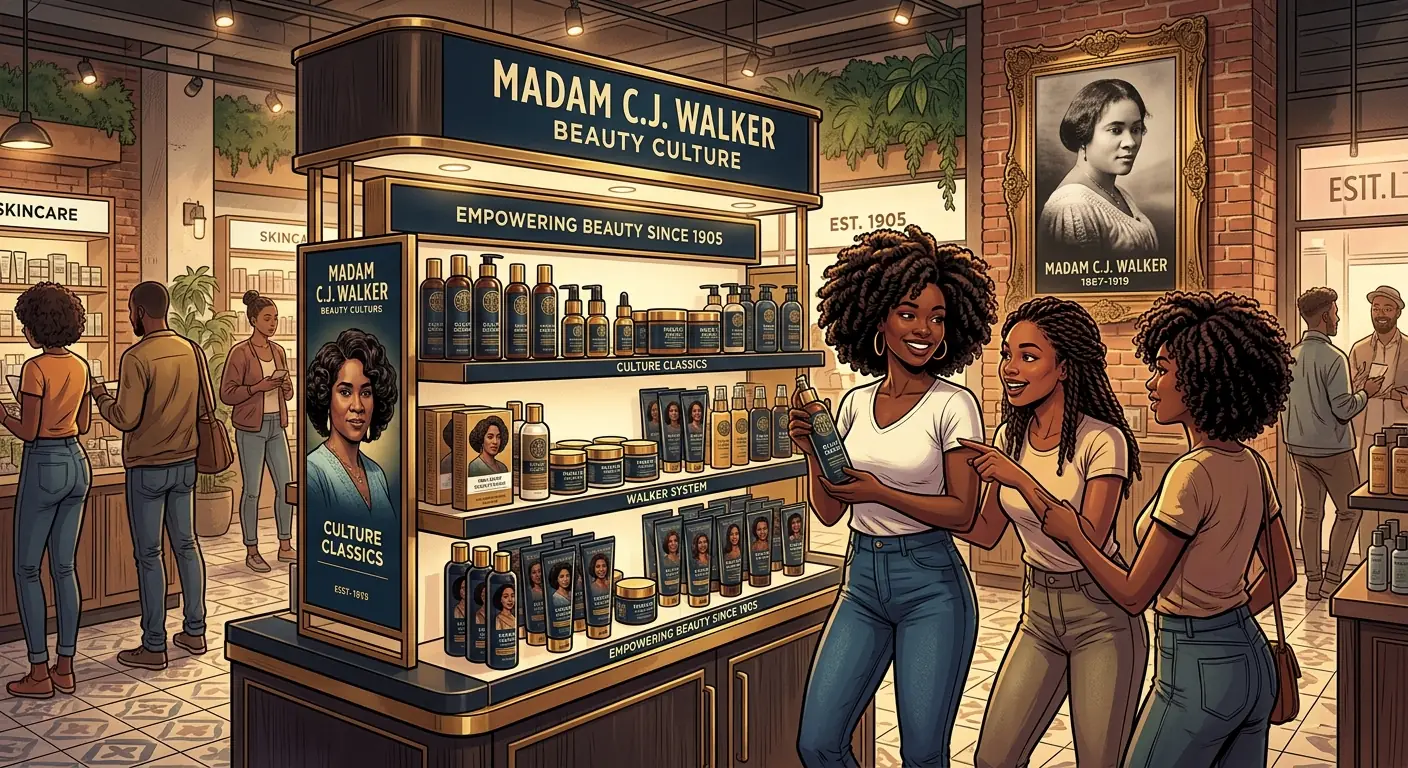
So, the Madam C.J. Walker Manufacturing Company carried on for decades after its founder’s death, adapting and enduring through wars and depressions. But as the 20th century marched on, the landscape of beauty, commerce, and racial dynamics shifted dramatically. How does a legacy brand, born of struggle and innovation over a century ago, stay relevant in an era of globalization, internet influencers, and ever-changing trends? The answer, like Madam Walker herself, is complex: it involves periods of fading, reawakening, and ultimately, a powerful rediscovery that continues to inspire.
The Fading Glow: A Changing Market
By the latter half of the 20th century, the original Madam C.J. Walker Manufacturing Company, while still operating, saw its market share diminish. New competitors, often larger corporations with massive marketing budgets, entered the Black hair care space. Beauty standards evolved, and the “hot comb” and pomade system, while still revered by many, faced competition from new styles and products. The company, still family-owned and run, struggled to keep pace with modern manufacturing, distribution, and advertising. The iconic Indianapolis building, while historically significant, eventually ceased to be the central hub of a bustling manufacturing operation. It’s a common story for pioneering brands: the very success they create often paves the way for a more diverse, and thus more competitive, market. It’s like inventing the wheel, only to find everyone else is driving cars now.
Modern Reawakening: New Partnerships and Products
But a legacy like Madam C.J. Walker’s doesn’t just disappear. Her story, her impact, and her name are too powerful. In the 21st century, there has been a significant reawakening and re-evaluation of her contributions, fueled by renewed interest in Black history, entrepreneurship, and empowerment. In 2016, a major revival of the brand occurred through a licensing agreement with Sundial Brands, a leading manufacturer of multicultural beauty products (known for SheaMoisture and Nubian Heritage). This partnership, formed with the support of Madam Walker’s great-great-granddaughter and official biographer, A’Lelia Bundles, launched a new line called Madam C.J. Walker Beauty Culture.
“This is a story that needed to be told again, in a way that resonates with today’s consumers,” A’Lelia Bundles stated at the launch. “It’s about honoring her legacy while innovating for the future.”
The new product line, sold in major retailers like Sephora, was designed for a new generation of women of color, embracing natural hair movements and modern formulations while still paying homage to Walker’s original spirit of quality and self-care. This strategic rebranding and expansion brought the Madam C.J. Walker name back into mainstream consciousness, introducing her to millions who might not have known her incredible story.
The Enduring Icon: Beyond Beauty Products
Today, Madam C.J. Walker is recognized far beyond the beauty aisle. She is celebrated as a pioneer of Black entrepreneurship, a civil rights activist, and a symbol of what is possible against overwhelming odds. Her story has been immortalized in books, documentaries, and even a Netflix miniseries, “Self Made,” starring Octavia Spencer, which premiered in 2020. While some historical liberties were taken in the dramatization (as is often the case), it brought her name and achievements to a global audience, sparking conversations about Black wealth, women’s empowerment, and the challenges faced by minority entrepreneurs.
Her legacy isn’t just about hair products; it’s about economic independence, social justice, and the power of a vision. She taught us that business could be a vehicle for social change, that self-care was a revolutionary act, and that even from the humblest beginnings, you could build an empire and lift up your entire community. Her journey from orphaned sharecropper to America’s first self-made female millionaire continues to inspire countless individuals to dream bigger, work harder, and never forget where they came from. And frankly, that’s a legacy far more beautiful and enduring than any hair pomade could ever be.
💡 Key Insights
- ▸ Walker's distribution model — training thousands of Black women as sales agents who sold door-to-door in their own communities — was a precursor to modern direct-to-consumer and multi-level marketing strategies. But unlike exploitative MLMs, Walker's system genuinely empowered her agents: it gave Black women in the early 1900s an independent income, professional training, and economic dignity at a time when their employment options were limited to domestic service or agricultural labor.
- ▸ Walker understood that she wasn't selling hair products — she was selling dignity, self-respect, and economic empowerment. Her marketing explicitly connected personal grooming with racial pride and upward mobility. This emotional positioning — tying a consumer product to a larger social identity and aspiration — was decades ahead of its time and anticipates modern brand strategy's emphasis on purpose and identity.