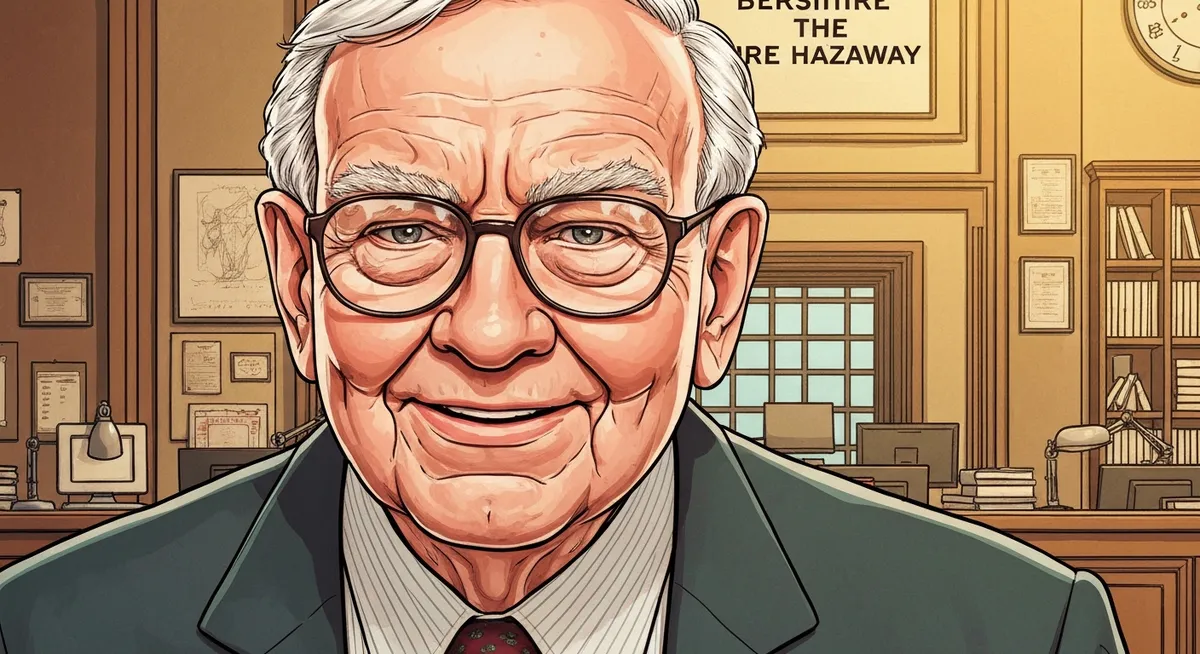
Warren Buffett's Berkshire Succession Plan: Greg Abel and the Empire After Omaha
For decades, Berkshire Hathaway's biggest unanswered question was what happens the day Warren Buffett is no longer in charge. In 2025, that answer arrived in public: Greg Abel. The real story is why Buffett chose him, and what kind of empire Abel inherits.
View all stories about this mogul
For years, Warren Buffett treated the biggest question at Berkshire Hathaway like a patient riddle: what happens when the one man who turned a failing textile mill into an American empire is no longer in charge? Then, in Omaha, in front of a packed arena of shareholders, Buffett finally made the abstract concrete. He said he would recommend Greg Abel as chief executive at year-end. Just like that, the longest-running succession drama in corporate America stopped being theoretical. The surprise was not that Buffett had a successor. The surprise was that the future of Berkshire suddenly felt real.
🎤 Chapter 1: The Announcement That Ended an Era of Speculation (2021–2025)
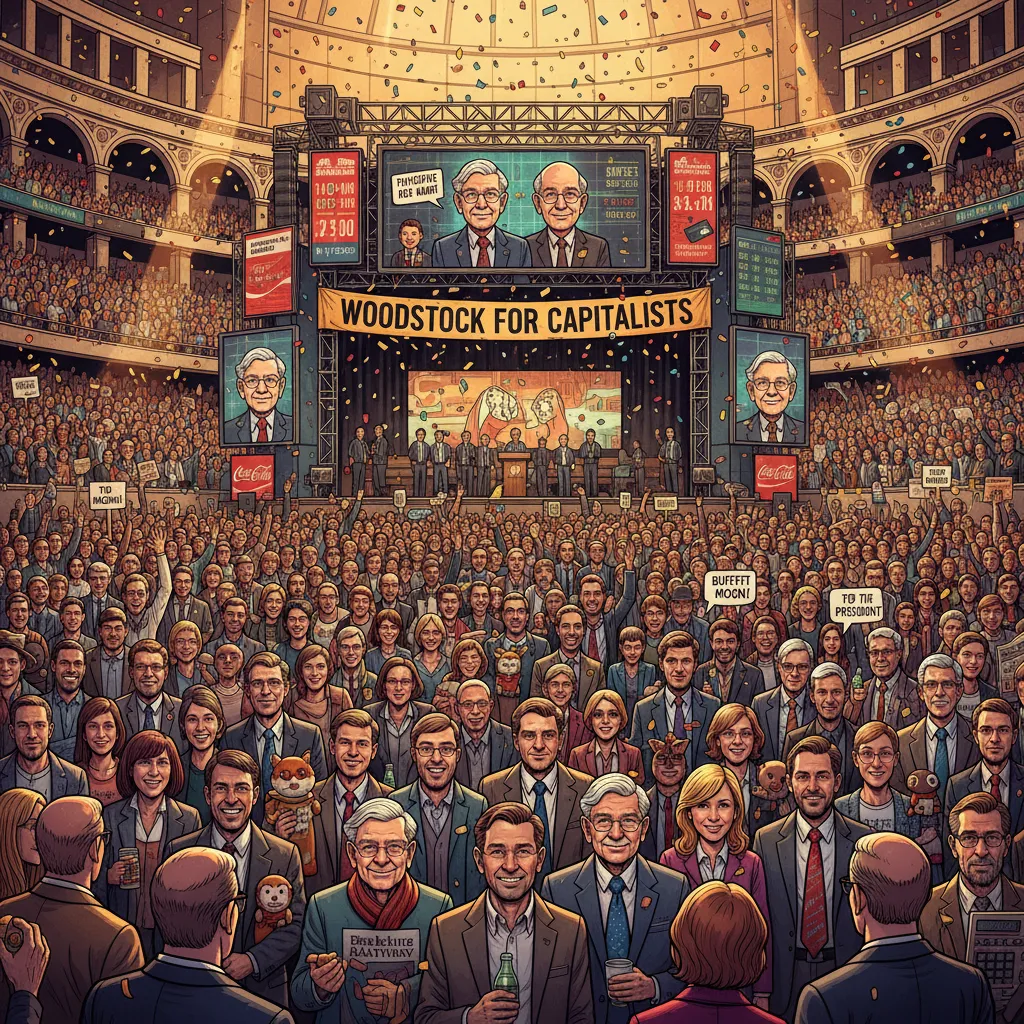
For most giant corporations, succession is a board process. At Berkshire Hathaway, it became almost a genre of American business storytelling. Buffett was not just a CEO. He was the capital allocator, public face, cultural anchor, and annual letter writer for a company investors trusted precisely because he sat at the center of it.
That is why the first public clue mattered so much.
In May 2021, vice chairman Charlie Munger effectively confirmed what many had suspected: if something happened to Buffett, Greg Abel would keep Berkshire’s culture. That brief remark turned years of guessing into a likely answer. Abel, then already overseeing Berkshire’s non-insurance operations, became the clear heir in waiting.
But 2025 was the moment the waiting ended.
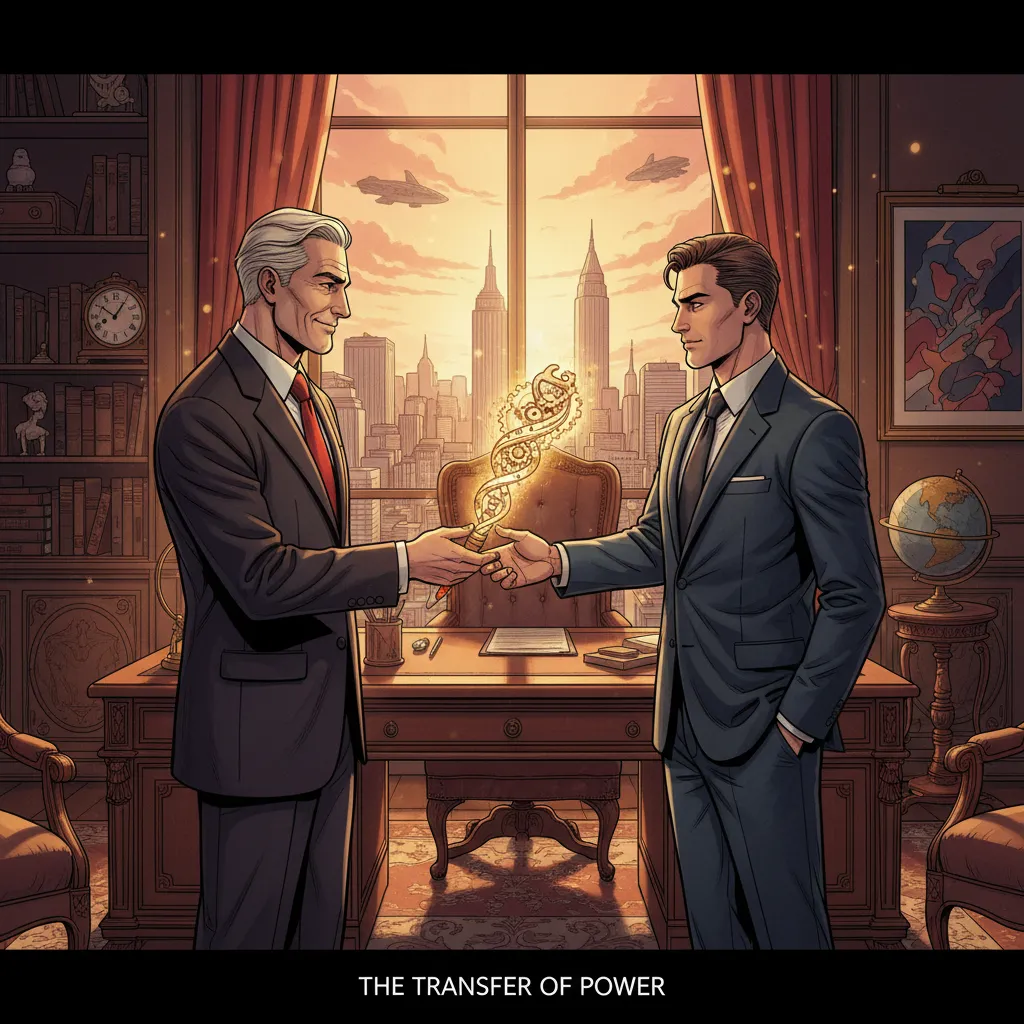
At Berkshire’s annual meeting on May 3, 2025, Buffett shocked shareholders by saying he would recommend to the board that Abel become CEO at the end of the year. According to the Associated Press, only Buffett’s children knew the timing in advance, and Abel himself had no warning that the announcement would arrive that day.
That detail matters because it says something important about Buffett’s style. Even his succession reveal was handled with the drama stripped out. No glossy rollout. No management roadshow. No months of scripted positioning. Just Buffett, onstage, saying the time had come.
For Berkshire shareholders, the statement landed with unusual force because Buffett had spent years saying he had no plans to retire. He was 94. Berkshire was still massive. And yet hearing the handoff described in real time made the future feel less like a distant inevitability and more like a board agenda item with a calendar attached.
⚙️ Chapter 2: Why Greg Abel Was the Logical Choice All Along (1992–2025)
Greg Abel does not look like a myth. That is part of the point.
Born in Edmonton, Alberta, on June 1, 1962, Abel graduated from the University of Alberta in 1984 with a degree in accounting. He began his career at PricewaterhouseCoopers, joined CalEnergy in 1992, and moved deeper into Buffett’s orbit when Berkshire acquired a controlling interest in MidAmerican Energy in 1999.
That path is the opposite of glamorous. It is also almost perfectly Berkshire.
Abel became chief executive of MidAmerican in 2008. In 2014, the company was renamed Berkshire Hathaway Energy. In January 2018, Buffett elevated Abel to vice chairman for Berkshire’s non-insurance operations and added him to the board. By May 2021, Buffett publicly confirmed Abel as his future successor.
This was not the grooming of a celebrity executive. It was the promotion of an operator.
That distinction explains why Abel won the job. Berkshire is famous for Buffett’s investment record, but the company is also a federation of railroads, utilities, manufacturers, retailers, industrial suppliers, and service businesses. It needs a chief executive who understands decentralized management, capital intensity, regulatory complexity, and the discipline required to let good subsidiaries run without headquarters smothering them.
Abel had already been doing much of that work for years.
By the time Buffett made the 2025 announcement, Abel was not being asked to prove he could run a large section of Berkshire. He had already been running one. As AP noted, he had long overseen the non-insurance businesses and was set to take on responsibility for Berkshire’s insurance operations and investment cash as well.
The succession choice, in other words, was not sentimental. It was structural.
🏛️ Chapter 3: The Real Succession Challenge Is Governance, Not Stardom (2025 and after)
The hardest part of replacing Warren Buffett is not finding another Warren Buffett. That person almost certainly does not exist.
The harder challenge is designing a Berkshire that does not require one.
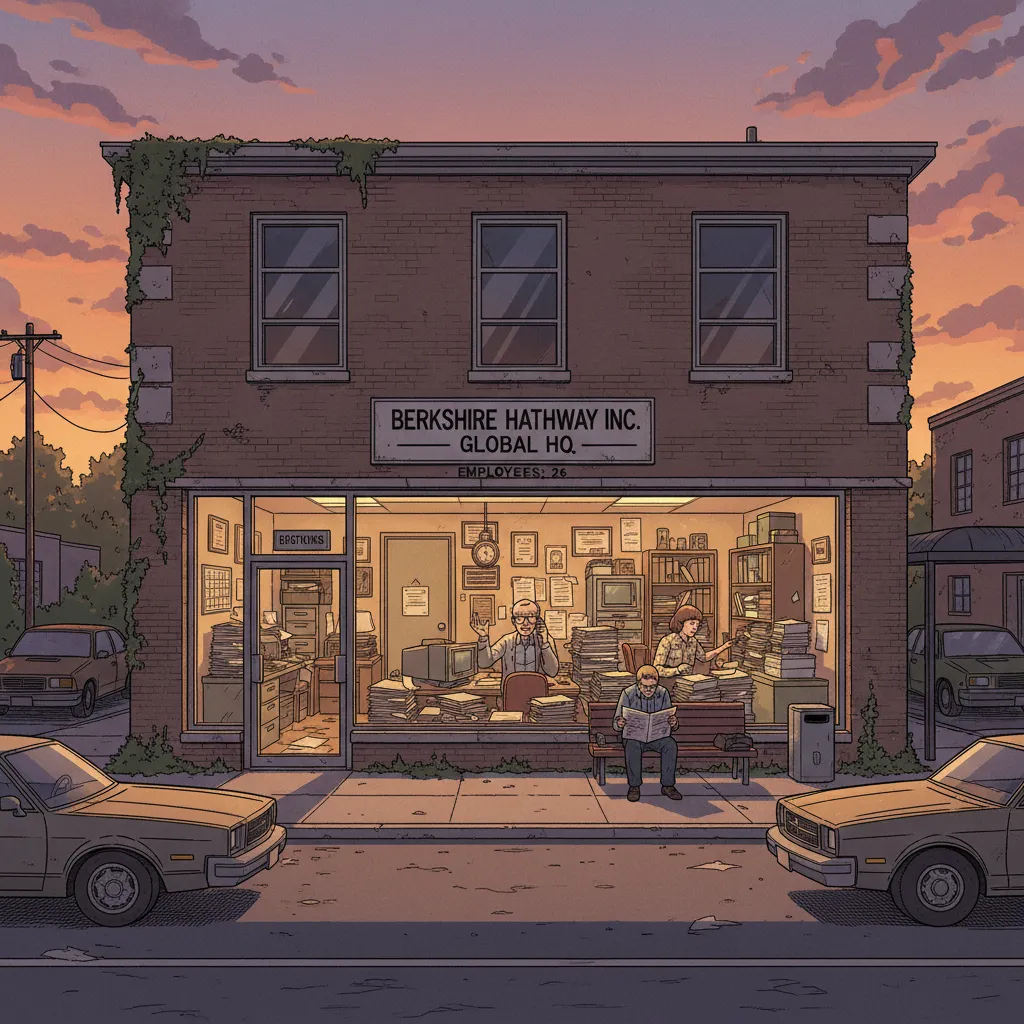
Berkshire’s governance model has always looked simple from the outside and strange from the inside. Headquarters in Omaha stays lean. Subsidiary managers are given wide autonomy. Capital moves centrally, but operations are decentralized. The annual letter doubles as a philosophy document. Trust is treated like an economic asset.
That system worked because Buffett made it believable.
He could promise managers they would not be micromanaged, and they believed him. He could hold enormous cash reserves without investors revolting, and they trusted his judgment. He could refuse the quarterly theater most public-company CEOs perform because Berkshire shareholders were, in many cases, really Buffett shareholders.
After Buffett, the mechanism has to survive without the magician.
Abel’s candidacy made sense precisely because he fit that requirement better than any outsider would. He had already spent years inside Berkshire’s culture. He knew the decentralized model. He had credibility with operating executives. And unlike a flashy external CEO, he did not arrive needing to prove he was the smartest man in every room.
That is essential at Berkshire, because the real governance risk after Buffett is overcorrection. The company could easily be tempted to become more centralized, more bureaucratic, more publicly performative. That would be rational corporate behavior almost anywhere else. At Berkshire, it would be a quiet break from the model that made the place work.
The succession plan is therefore bigger than a nameplate on the CEO’s door. It is an argument that Berkshire can preserve its internal constitution.
🚂 Chapter 4: The Empire Abel Inherits Is Vast, Cash-Rich, and Inconveniently Unique
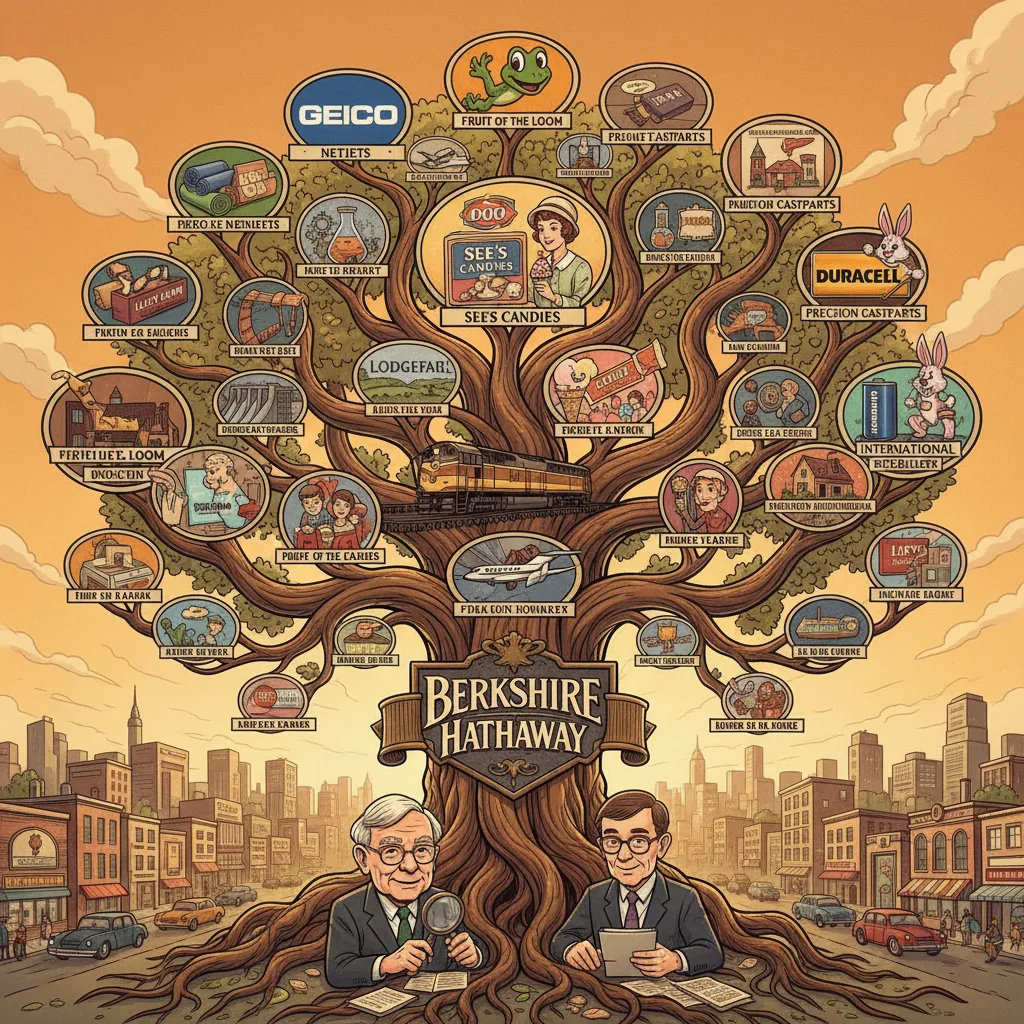
What exactly is Greg Abel taking over?
Not a normal public company.
Berkshire Hathaway began as a textile manufacturer in 1955 and came under Buffett’s control in 1965. By the mid-2020s it had become one of the largest companies in the United States, employing roughly 388,000 people and owning a sprawling collection of businesses across insurance, rail, energy, manufacturing, consumer products, and services. In August 2024, Berkshire became the first non-technology U.S. company to surpass a $1 trillion market value.
That scale creates a peculiar burden for any successor.
The famous pieces of Berkshire are easy to list: GEICO, BNSF Railway, Berkshire Hathaway Energy, and a huge portfolio of public equities accumulated over decades. The less glamorous reality is more revealing. Berkshire also depends on underwriting discipline, balance-sheet conservatism, and the ability to move capital only when the odds are attractive. Buffett built the company on patience, not activity.
That is why Berkshire’s cash position matters so much. By the time Buffett announced the handoff, Berkshire was sitting on a cash hoard comfortably above $300 billion. In another company, investors might demand that money be spent immediately. At Berkshire, the cash itself is part of the strategy: optionality during panics, protection during shocks, and proof that management is willing to look inactive rather than reckless.
Abel inherits all of that.
He also inherits the problem of comparison. Every acquisition, every capital-allocation decision, every bad quarter, every missed opportunity will be judged against a man whose letters and track record have been studied for half a century. That is an impossible standard if the goal is imitation.
It becomes manageable only if the goal is continuity.
🧾 Chapter 5: What Probably Changes — and What Probably Doesn’t

The cleanest way to think about Berkshire after Buffett is this: the personality changes first, the principles later — if they change at all.
The obvious shift is symbolic. No successor will command Buffett’s mix of folklore, trust, and folksy authority. The annual meeting will feel different. The letters will read differently. The aura around Omaha will be thinner.
But the deeper Berkshire habits are less likely to change overnight.
The company still has a board steeped in Buffett’s worldview. It still has managers running businesses with unusual autonomy. It still has a reputation for permanent ownership that makes sellers comfortable. It still has a balance sheet engineered for patience. And it still has a shareholder base unusually tolerant of long stretches in which management does nothing dramatic.
That last trait may be the most important of all.
Buffett’s greatest gift to Abel may not be the title. It may be the investor culture. Berkshire shareholders have been trained, over decades, to think in years instead of quarters and in probabilities instead of headlines. That kind of owner base is rare. It gives a successor room to be disciplined.
None of this guarantees the transition will be smooth. Berkshire after Buffett could become slightly less flexible, slightly more conventional, slightly more like every other giant corporation. Culture erosion usually happens by inches.
But Buffett’s choice of Abel suggests the company understands the risk. The succession plan was never about finding a clone. It was about finding a custodian.
That may be the only realistic way to preserve an empire built by a once-in-a-generation allocator.
📅 Timeline
| Year | Age | Event |
|---|---|---|
| 1962 | 0 | Greg Abel is born in Edmonton, Alberta, on June 1 |
| 1984 | 22 | Abel graduates from the University of Alberta with an accounting degree |
| 1992 | 30 | Abel joins CalEnergy |
| 1999 | 37 | Berkshire acquires a controlling interest in MidAmerican Energy |
| 2008 | 46 | Abel becomes CEO of MidAmerican |
| 2014 | 52 | MidAmerican is renamed Berkshire Hathaway Energy |
| 2018 | 56 | Abel is named Berkshire vice chairman for non-insurance operations and joins the board |
| 2021 | 58 | Buffett publicly confirms Abel as his future successor after Charlie Munger’s annual-meeting remark |
| 2024 | 62 | Berkshire surpasses a $1 trillion market value in August, the first U.S. non-tech company to do so |
| 2025 | 62 | On May 3, Buffett says he will recommend Abel become CEO at year-end |
| 2026 | 63 | Abel begins serving as Berkshire Hathaway’s chief executive |
❓ FAQ
Why did Buffett choose Greg Abel?
Because Abel had already spent years running Berkshire’s non-insurance operations and understood the company’s decentralized culture. He was the internal operator best positioned to preserve the system rather than redesign it.
Did Buffett’s children inherit control of Berkshire?
No. The CEO succession plan centered on Greg Abel, not a family handoff. Berkshire remains a public company governed by its board, managers, and shareholder structure.
What is the biggest risk after Buffett?
The biggest risk is cultural drift. Berkshire works because managers are trusted, capital is allocated patiently, and headquarters stays unusually light. If the company becomes more bureaucratic or more reactive, it could lose part of its edge.
Will Berkshire still invest the same way without Buffett?
Probably not in style, but likely in principle. The company can preserve patience, liquidity, and discipline even if no one replicates Buffett’s exact judgment or public voice.
Why does Berkshire’s cash pile matter so much in the succession story?
Because cash is central to Berkshire’s model. It gives the company resilience during crises and the ability to make large deals when competitors are constrained. A successor who respects that patience is preserving one of Buffett’s core advantages.
💡 Key Insights
- ▸ Buffett's real succession achievement was not naming a person. It was spending years turning Berkshire into a machine that could keep operating without daily intervention from a single legend.
- ▸ Greg Abel was chosen because Berkshire is still, underneath the mystique, an operating company. The next CEO has to manage people, capital discipline, and culture across a sprawling set of subsidiaries — not just pick stocks.
- ▸ The hardest part of replacing Buffett is not duplicating his personality. It is preserving Berkshire's trust architecture: decentralized managers, conservative financing, patient capital, and a reputation that lets the company do deals no one else gets.
- ▸ Berkshire after Buffett will be judged less by whether it finds another oracle and more by whether it remains boring in the ways that matter: liquidity, underwriting discipline, and refusing to chase fashion.
Sources
- Berkshire Hathaway Shareholder Letters ↗
- Warren Buffett shocks shareholders by announcing his intention to retire at the end of the year — AP News ↗
- Greg Abel — Wikipedia ↗
- Berkshire Hathaway — Wikipedia ↗
- Edmonton-born Greg Abel picked as Warren Buffett's successor as Berkshire Hathaway CEO — CBC News ↗
- Berkshire Hathaway 2024 Annual Report ↗