Steve Wozniak: Apple's Forgotten Genius
He designed the Apple I and Apple II — the machines that launched the personal computer revolution. Then his best friend became the most famous CEO in history and Wozniak became a footnote. This is the story of the greatest engineer in Silicon Valley history and why being the genius behind the curtain is the loneliest job in tech.
View all stories about this mogul
🔧 Chapter 1: The Kid Who Spoke Machine
Stephen Gary Wozniak was not normal.
This is not an insult. It is the highest compliment you can pay an engineer. Normal people look at a circuit board and see a green rectangle with metal bits. Wozniak looked at a circuit board and saw poetry. He saw logic. He saw elegance. He saw the language of the universe, expressed in silicon and solder.
Born on August 11, 1950, in San Jose, California, Wozniak grew up in what would later become the heart of Silicon Valley — though in the 1950s, it was still mostly orchards and ranch houses. His father, Jerry Wozniak, was an engineer at Lockheed Martin, working on satellite and missile programs.
Jerry taught his son electronics the way other fathers taught their sons to throw a baseball. By the age of eight, Woz (as everyone called him) was building crystal radios. By ten, he was constructing simple computers from transistors. By thirteen, he had won a science fair with a binary adder-subtractor machine that he’d designed and built from scratch.
This was not a normal thirteen-year-old.
“I loved electronics the way other kids loved sports. It wasn’t a hobby. It wasn’t even a passion. It was the way I understood the world. Everything made sense when it was reduced to logic gates and circuits.”
Wozniak was socially awkward in exactly the way you’d expect a thirteen-year-old who built computers to be socially awkward. He had friends — other electronics nerds, mostly — but he was never part of the popular crowd. He was the kid who spent Friday nights in his room, not at parties. He was the kid whose idea of fun was reading the datasheet for a new integrated circuit.
He was also, even as a teenager, an exceptional prankster. Wozniak loved practical jokes with the same intensity he loved engineering. He built a metronome that sounded like a bomb and left it in a school locker (the bomb squad was called; the principal was not amused). He built a TV jammer that he used to mess with his college dormmates’ televisions. He once called the Pope. Just because he could.
The pranks and the engineering came from the same place: a restless, creative mind that was constantly looking for ways to make things work — or, equally entertainingly, to make things not work.
💡 Chapter 2: The Blue Box
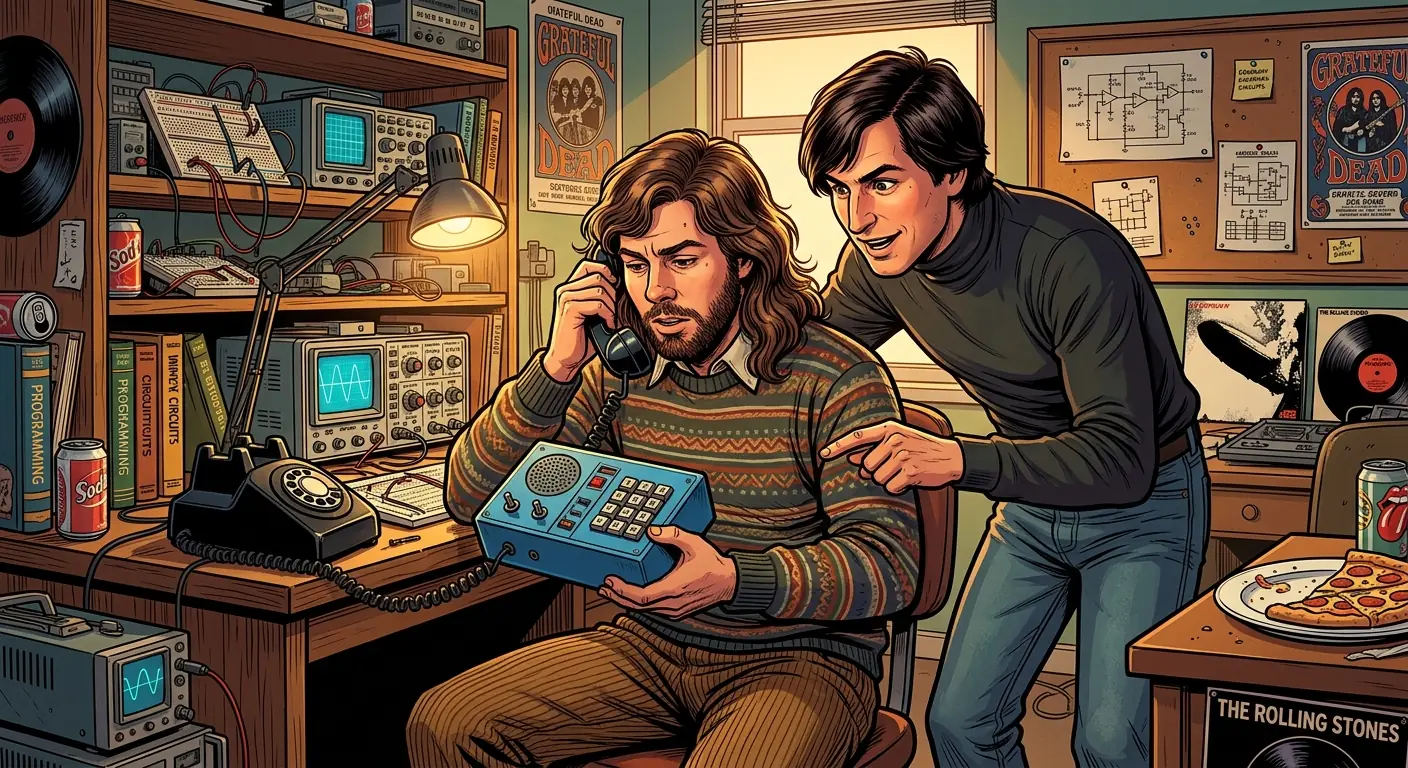
In 1971, Steve Wozniak read an article in Esquire magazine about “phone phreaking” — the practice of hacking the telephone system to make free long-distance calls. The article described how a guy named Captain Crunch had discovered that a plastic whistle included in boxes of Cap’n Crunch cereal produced a tone at exactly 2600 Hz — the frequency that AT&T’s long-distance switching system used as a reset signal.
Wozniak was electrified. Here was a system — the entire AT&T telephone network — that could be hacked with the right frequencies. For an engineer, this was irresistible.
He built a “blue box” — a device that generated the precise tones needed to manipulate AT&T’s switching system and make free phone calls anywhere in the world. The blue box was an engineering masterpiece — digital in an era when most phone phreaking tools were analog, producing tones with crystal-controlled precision.
And this is where the story takes a turn that would change the world. Because Wozniak didn’t just build the blue box. He showed it to his friend.
His friend was a scrawny, intense kid named Steve Jobs.
“I showed Steve the blue box and he immediately saw something I didn’t. I saw a cool piece of engineering. Steve saw a product. He saw something we could sell. That was the fundamental difference between us, and it defined everything that came after.”
Jobs and Wozniak started selling blue boxes to their friends and fellow students at Berkeley. They charged $150 per box. Jobs handled the sales. Wozniak handled the engineering. The division of labor that would define Apple Computer was established in a dorm room over an illegal phone-hacking device.
Years later, Jobs would say: “If we hadn’t made blue boxes, there would have been no Apple.” He was probably right. The blue box taught them that two guys in a garage could build a product that exploited the most sophisticated technology system in the world. If they could hack AT&T, they could do anything.
🖥️ Chapter 3: The Machine That Changed Everything
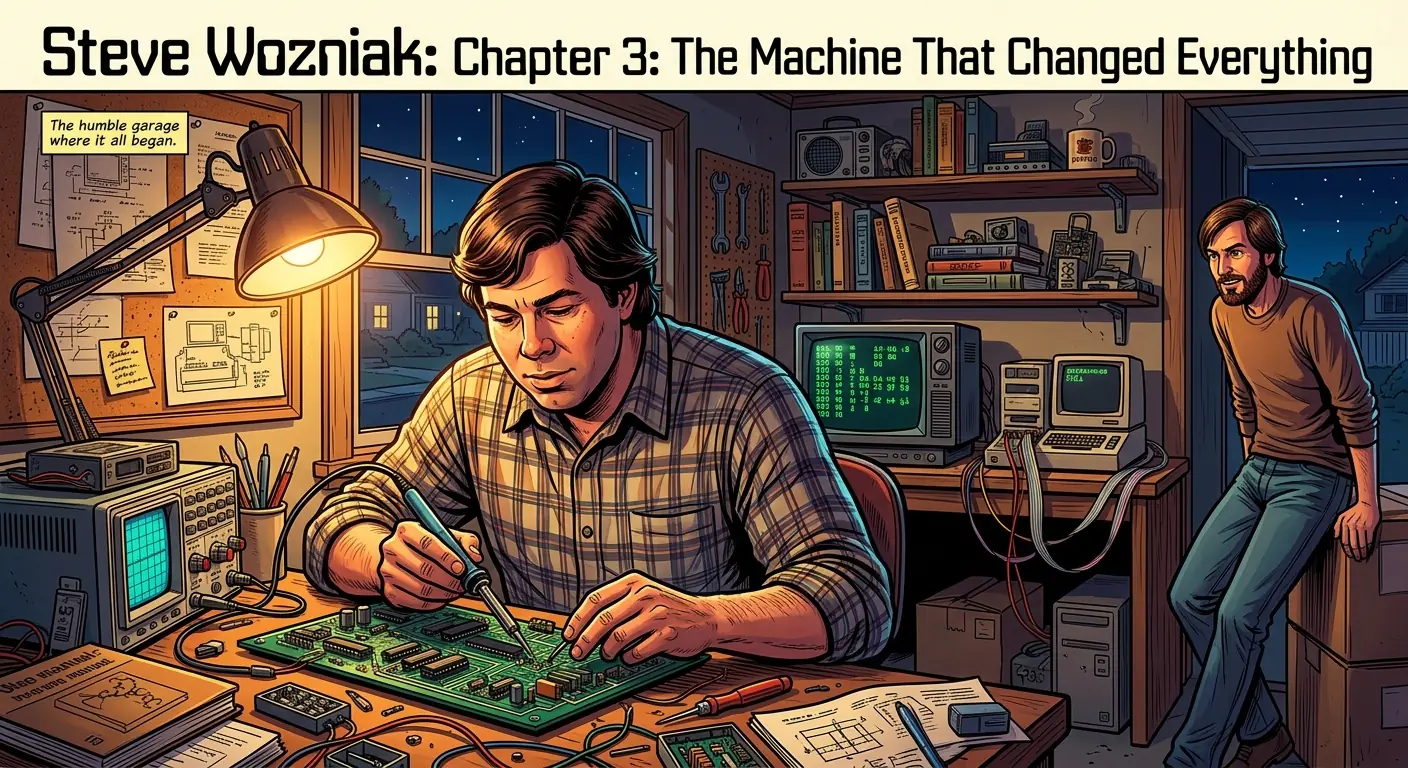
In 1975, Wozniak attended a meeting of the Homebrew Computer Club — a gathering of electronics hobbyists in Menlo Park, California, who were fascinated by the emerging possibility of personal computers.
The state of the art in 1975 was the Altair 8800 — a computer kit that came as a box of parts, required extensive assembly, had no keyboard, no monitor, and no practical use for anyone who wasn’t an electronics hobbyist. It was, in other words, a toy for nerds.
Wozniak looked at the Altair and thought: I can do better.
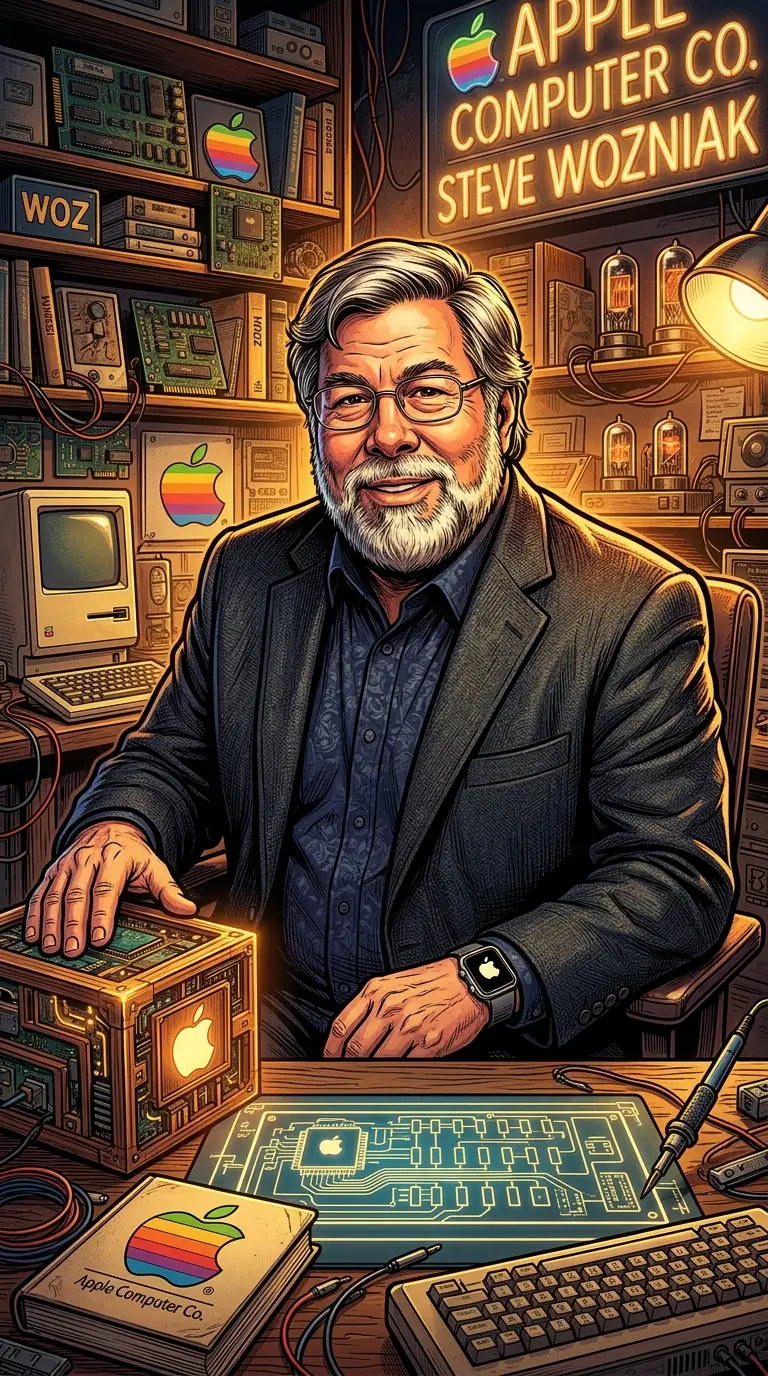
Over the next several months, working alone in his apartment, Wozniak designed and built what would become the Apple I — a single-board computer that was dramatically simpler and more elegant than anything that existed. Where the Altair required dozens of chips to perform basic functions, Wozniak’s design used a fraction of the components. Every chip, every trace, every connection was optimized for maximum efficiency.
The design was a work of engineering art. Other engineers who examined the Apple I’s circuit board were astonished by its elegance. Wozniak had reduced the number of chips needed for a functional computer to a level that seemed almost impossible. He did this not by using better chips but by using existing chips more cleverly — finding ways to make each component do multiple jobs.
“I was trying to impress my friends at the Homebrew Computer Club. That was literally my motivation. I wanted them to look at my design and say, ‘Wow, that’s clever.’ I never thought about selling it. I just wanted to build the most elegant computer I could.”
This is the essential Wozniak. He didn’t build the Apple I to make money. He built it to make other engineers say “wow.” The motivation was craft, not commerce. Beauty, not business.
Steve Jobs saw it differently. Jobs looked at the Apple I and saw not an elegant engineering exercise but a commercial product. People would pay money for this. Not just hobbyists — eventually, ordinary people. The personal computer could be a mass-market product.
On April 1, 1976, Steve Jobs, Steve Wozniak, and Ronald Wayne (who would sell his share for $800 two weeks later — possibly the worst financial decision in human history) founded Apple Computer Company.
🍎 Chapter 4: The Apple II Revolution
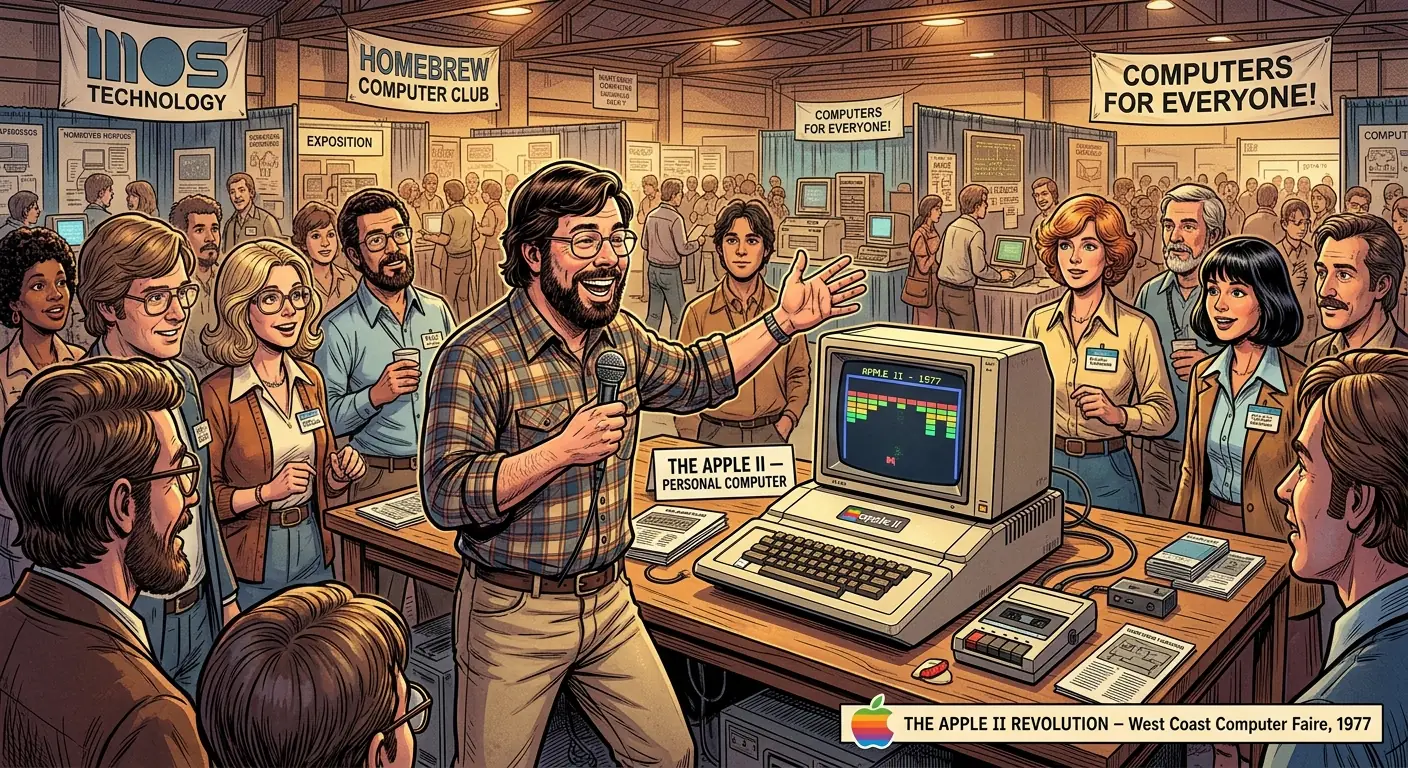
The Apple I was a beginning. The Apple II was a revolution.
Released in June 1977, the Apple II was the machine that created the personal computer industry. Designed entirely by Wozniak, it was the first personal computer that could credibly be called a consumer product — it came in a molded plastic case (designed by Jobs), had a keyboard, could display color graphics, and could be connected to a television set.
But the engineering underneath was pure Wozniak genius.
The Apple II’s color graphics system was one of the most creative pieces of engineering in computing history. Color graphics typically required expensive, dedicated hardware. Wozniak found a way to generate color using a hack based on the NTSC color television standard — exploiting an artifact of how television signals encode color to produce graphics with a fraction of the hardware that should have been required.
The floppy disk drive that Wozniak designed for the Apple II was another masterpiece. The industry standard disk controller required dozens of chips. Wozniak’s design used eight. Eight chips to do what everyone else needed fifty to accomplish. The reduction in complexity meant lower cost, higher reliability, and faster performance.
“The Apple II floppy disk controller was the finest piece of engineering I ever did. Other engineers needed 50 chips. I used 8. Not because I was smarter, but because I was willing to spend more time thinking and less time building. The elegance was worth the extra thought.”
The Apple II was a massive commercial success. It became the standard computer in American schools. It ran VisiCalc — the first spreadsheet program — which made it indispensable to businesses. By the early 1980s, Apple was selling millions of Apple II computers per year and had gone from a garage startup to a billion-dollar company.
Apple went public on December 12, 1980. The IPO raised $100 million and valued the company at $1.8 billion. It created more instant millionaires — approximately 300 — than any previous IPO in history.
Steve Wozniak was now worth over $100 million. He was 30 years old. And he was about to make one of the most unusual financial decisions in Silicon Valley history.
💰 Chapter 5: The Wozniak Plan
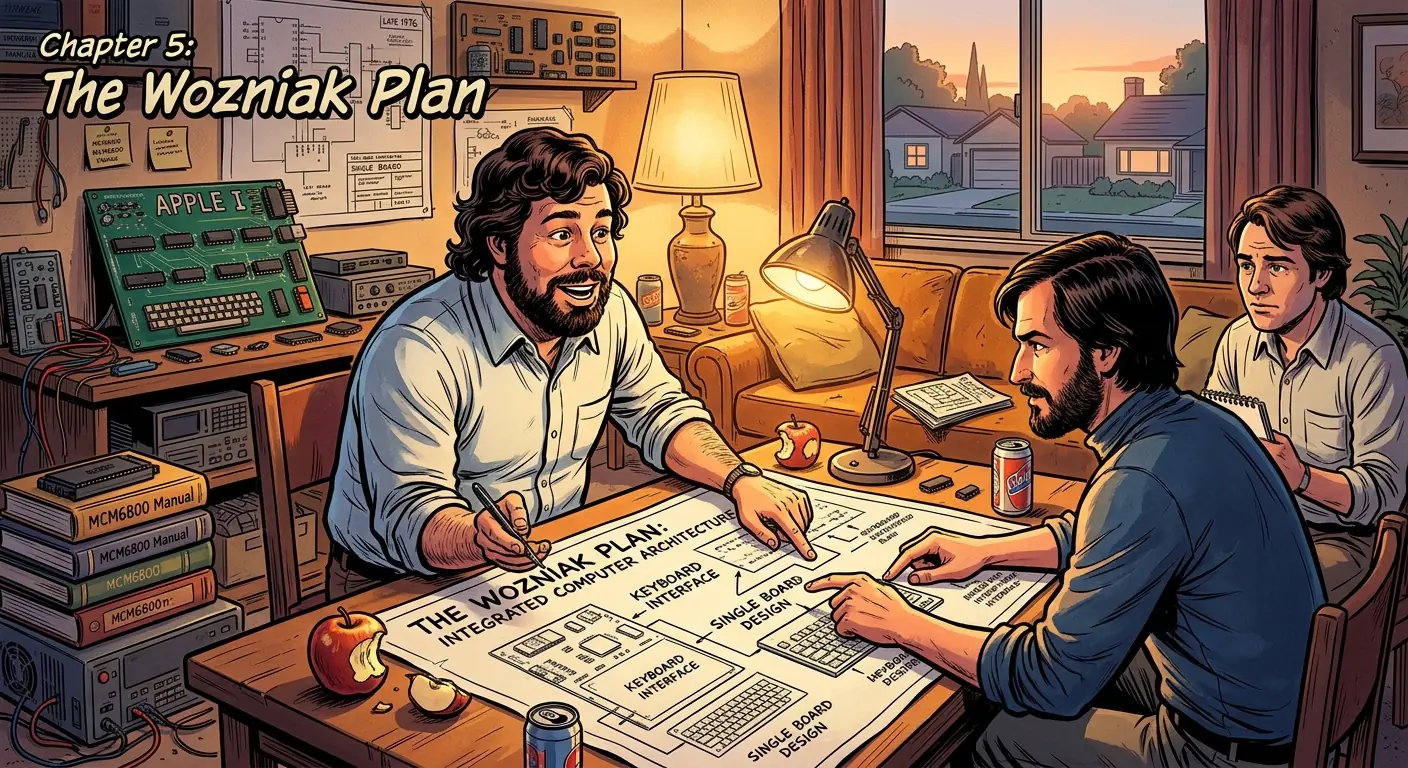
Wozniak noticed something that bothered him. Several early Apple employees — people who had worked long hours building the company from nothing — had not been included in the stock option plan. When Apple went public, they got nothing.
Jobs, who controlled the option allocations, had made deliberate choices about who received stock and who didn’t. Some of the excluded employees had been at Apple from nearly the beginning.
Wozniak thought this was wrong. So he did something about it.
He sold portions of his own Apple stock — at below-market prices — to the employees who had been excluded from the IPO. He called it the “Woz Plan.” By the time he was done, he had distributed approximately $10 million of his own money to employees he felt had been unfairly treated.
“Those people helped build Apple. They worked nights and weekends. They believed in what we were doing. And they got nothing when the company went public. That wasn’t right. I had more money than I could ever spend. They had nothing. The math was simple.”
Jobs, according to multiple sources, was appalled. Not because Wozniak was giving away money — but because Wozniak was implicitly criticizing Jobs’s decisions about stock allocation. The Woz Plan was, whether Wozniak intended it or not, a public rebuke of Jobs’s management.
The incident highlighted the fundamental difference between the two Steves. Jobs was obsessed with control, efficiency, and building the most valuable company possible. Wozniak was obsessed with fairness, elegance, and making sure people were treated well.
These are not compatible obsessions. And the tension between them would eventually tear the partnership apart.
✈️ Chapter 6: The Crash
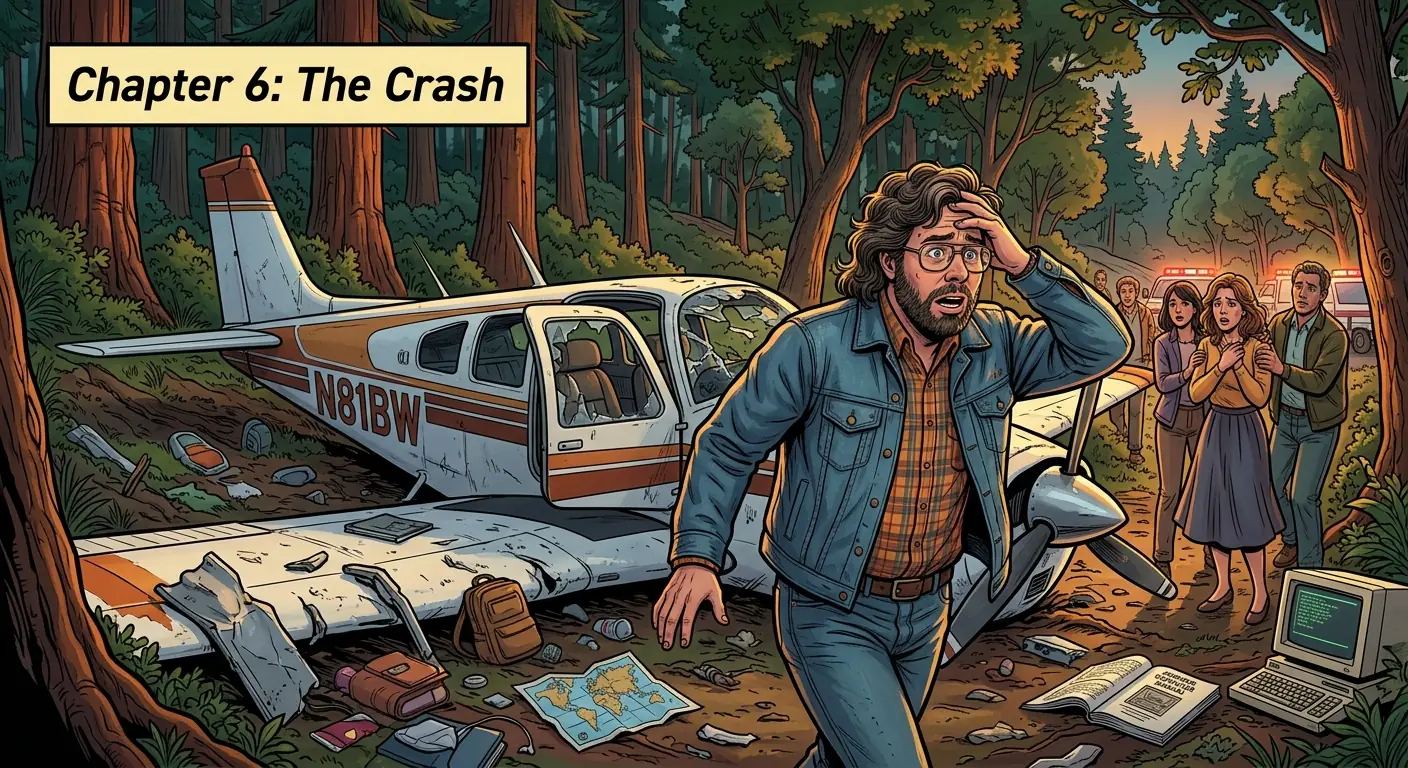
On February 7, 1981, Steve Wozniak crashed his Beechcraft Bonanza airplane shortly after takeoff from Sky Park Airport in Scotts Valley, California. He and his fiancée, Candice Clark, along with her brother and his girlfriend, were all injured.
Wozniak suffered serious head injuries, including a form of amnesia. For five weeks, he couldn’t form new long-term memories. He would have conversations and forget them minutes later. He didn’t remember the crash itself.
The amnesia eventually resolved, but the experience changed Wozniak profoundly. He stepped away from Apple and returned to UC Berkeley to finish his degree (enrolling under the pseudonym “Rocky Raccoon Clark” to avoid attention). He funded two US Festivals — massive music and technology events in 1982 and 1983 — losing an estimated $25 million in the process.
When he returned to Apple in 1983, the company had changed. The Apple II was still selling well, but the focus had shifted to the Macintosh — Jobs’s pet project. The Mac team was the cool team, the future of Apple. The Apple II team — Wozniak’s team — was yesterday’s news.
“When I came back to Apple, I didn’t recognize it. The company I’d built in a garage was now a corporation with politics and factions and egos. Steve [Jobs] was in charge and he was building the Mac and everyone who worked on the Apple II was treated like they didn’t matter. Including me.”
Wozniak felt marginalized. The Apple II, his creation, the product that had made Apple a company, was being treated as a legacy product. The engineers who maintained and improved it were second-class citizens. And Wozniak, the co-founder, the guy who had designed everything from scratch, was increasingly irrelevant.
In February 1985, Wozniak left Apple. He sold most of his remaining stock. He was done.
He was 34 years old. He had co-founded the most important company in the personal computer revolution, designed the machines that launched the industry, and walked away with a fraction of the wealth and none of the fame that would eventually accrue to his partner.
🎸 Chapter 7: Life After Apple
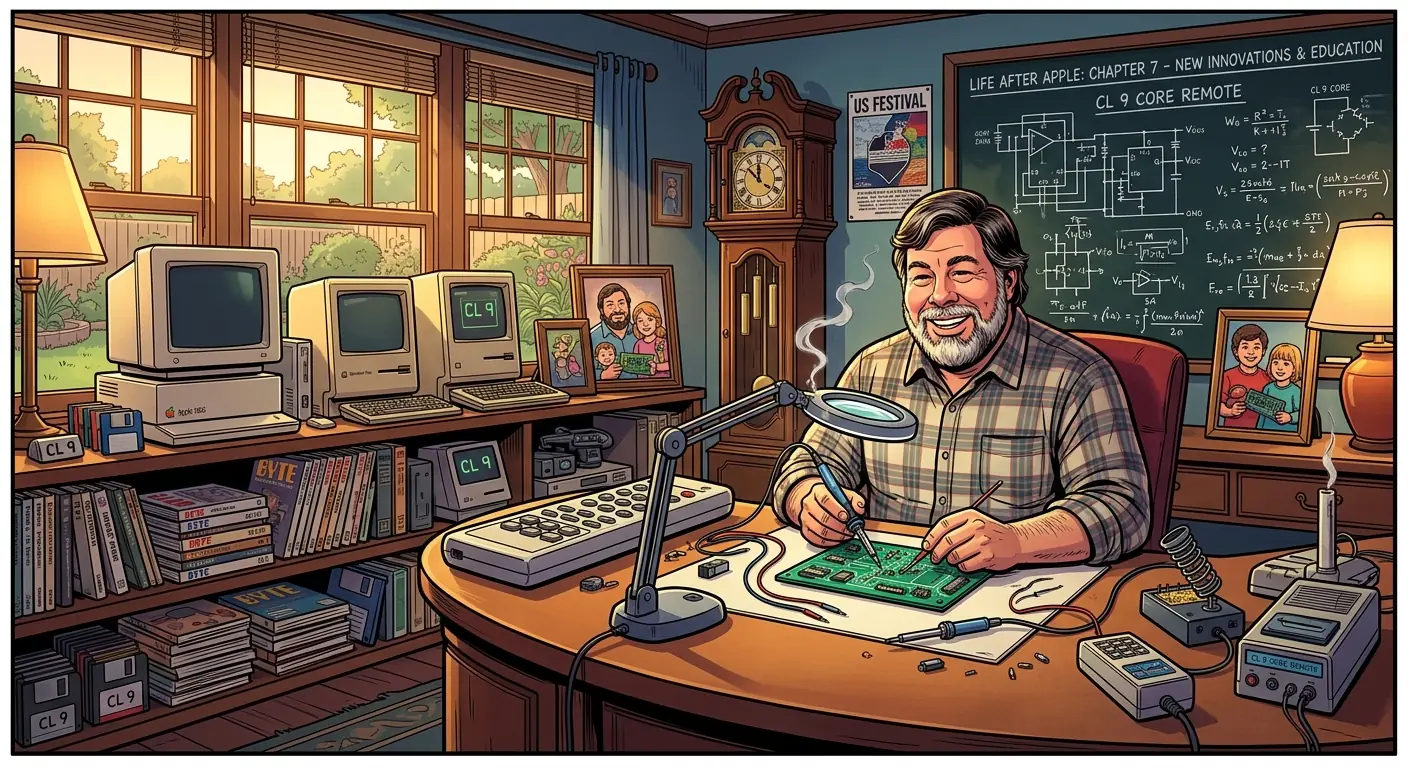
What does a genius engineer do after leaving the company he built?
In Wozniak’s case: a little bit of everything and a lot of nothing — at least by Silicon Valley standards.
He founded CL 9, a company that created the first universal remote control. It was a clever product that reflected Wozniak’s engineering sensibility (why have five remotes when one could do everything?) but was a modest commercial success at best.
He taught elementary school children about computers. For years, Wozniak volunteered at local schools in Los Gatos, California, teaching kids how technology worked. He didn’t do this as a PR stunt or a tax write-off. He did it because he genuinely believed that technology education was important and that he was good at making complicated things understandable.
He got involved in various technology ventures and startups, none of which achieved anything close to Apple’s impact. He served on boards. He gave speeches. He appeared at technology conferences, where he was warmly received as a living legend of the personal computer era.
“People always ask me why I didn’t start another Apple. The answer is: I didn’t want to. I started Apple because I wanted to build computers. I wasn’t trying to build a company. I was trying to build a computer. Steve [Jobs] was the one who wanted to build a company. I just wanted to build things.”
This distinction — between wanting to build things and wanting to build companies — is the key to understanding Wozniak’s entire career. He was an engineer, not an entrepreneur. He was motivated by the elegance of a design, not the size of a market. He measured success in reduced chip counts, not revenue growth.
In the Silicon Valley mythology, this makes him a failure. He had the opportunity to be worth $100 billion and instead settled for being worth a few hundred million. He could have been the CEO of the world’s most valuable company and instead became a speaker and educator.
By Silicon Valley’s metrics, Steve Wozniak underperformed.
By almost any other metric, he lived exactly the life he wanted.
🎭 Chapter 8: In Jobs’s Shadow
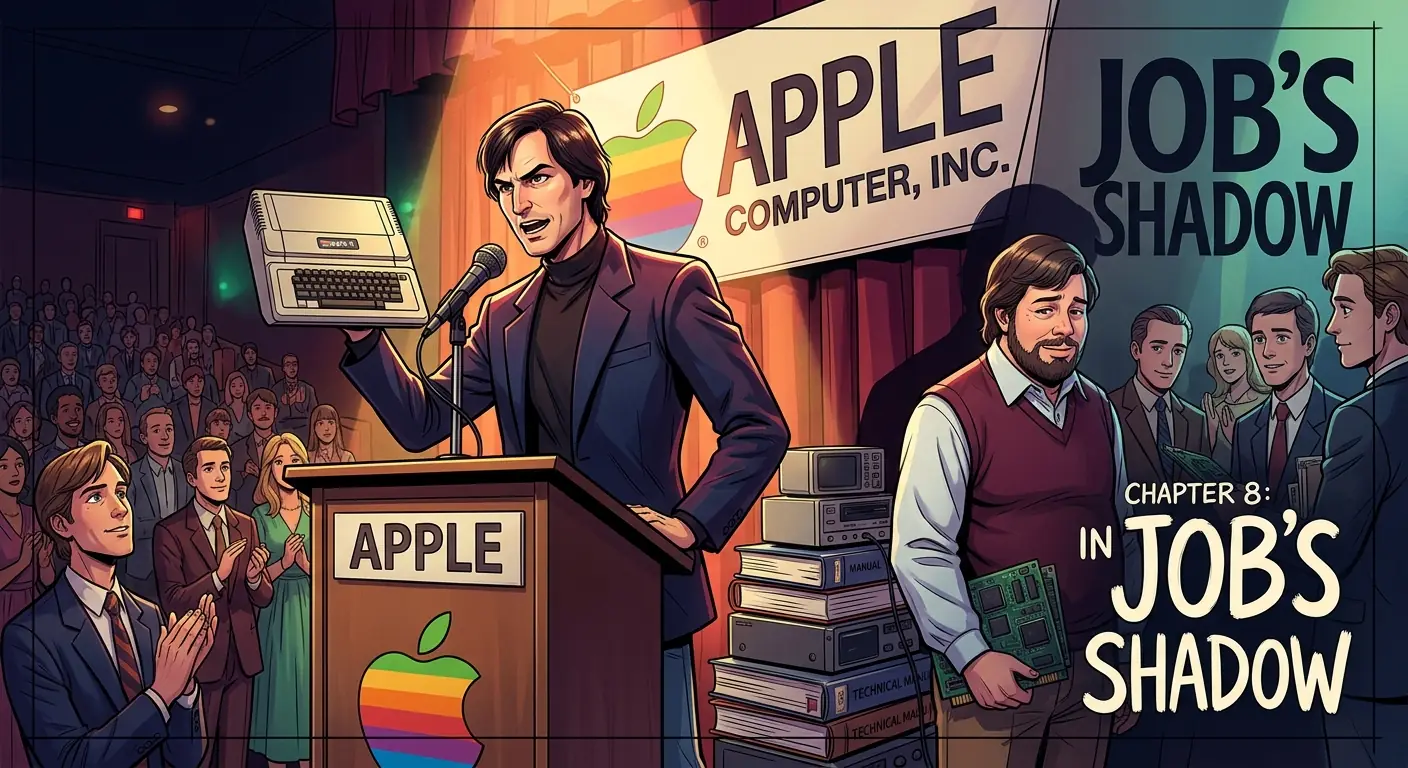
Steve Jobs died on October 5, 2011. The world mourned the loss of one of the greatest entrepreneurs and visionaries of the 20th century. Apple became the most valuable company in the world. Jobs’s legacy was secured as one of the defining figures of the information age.
And Steve Wozniak was still the other Steve.
The dynamic between Jobs and Wozniak is one of the most studied partnerships in business history, and it’s almost universally told from Jobs’s perspective. Jobs is the protagonist. Wozniak is the supporting character who built the first couple of products and then faded away.
This narrative is unfair. Without Wozniak, there is no Apple I. Without the Apple I, there is no Apple II. Without the Apple II, there is no Apple Computer Company. Without Apple Computer Company, Steve Jobs is a charismatic guy who maybe runs a software company or a movie studio but never becomes Steve Jobs.
Wozniak was the foundation. Jobs was the building. You can’t have the building without the foundation. But people take photos of the building, not the foundation.
“Steve and I were a perfect team. He was the vision. I was the execution. He saw the future. I built it. Neither of us could have done what the other did. But somehow, the world decided that vision was more important than execution. I think they’re wrong, but it doesn’t matter.”
The inequity of fame between the two Steves reflects a broader truth about how society values different types of contribution. Visionaries — people who can articulate a compelling future and inspire others to build it — receive disproportionate credit. Builders — people who actually create the technology that makes the vision possible — receive disproportionate obscurity.
This pattern repeats throughout tech history. Bill Gates is remembered, but not Paul Allen’s early technical contributions. Elon Musk is the face of Tesla, but the company’s engineering breakthroughs are the work of thousands of anonymous engineers. Mark Zuckerberg is Facebook, but the platform’s infrastructure was built by engineers whose names you’ll never know.
Wozniak is the patron saint of the builders. The people who make things work but don’t get the credit.
🤖 Chapter 9: The Wozniak Ethic
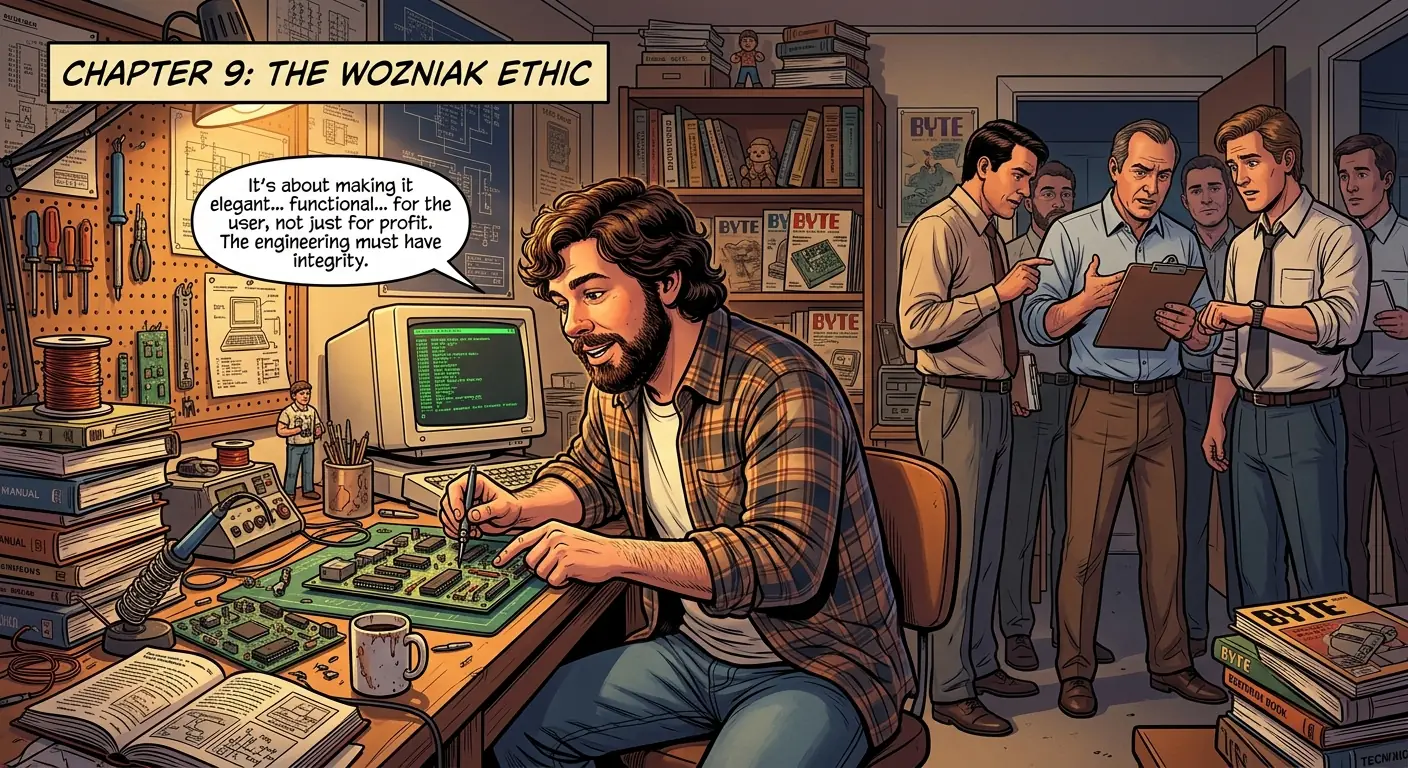
In the decades after leaving Apple, Wozniak became an increasingly vocal advocate for a set of values that were deeply unfashionable in Silicon Valley.
He argued that technology should be open, not proprietary. He criticized Apple’s closed ecosystem — the walled garden of hardware, software, and services that Jobs built and Tim Cook expanded. Wozniak believed that users should be able to modify, repair, and control their own devices. The right-to-repair movement, which gained significant momentum in the 2020s, aligned closely with Wozniak’s lifelong philosophy.
He argued that technology companies had a responsibility to their users, not just their shareholders. He was an early critic of social media’s impact on mental health, of tech companies’ privacy practices, and of the surveillance capitalism business model that powered much of Silicon Valley’s wealth.
He argued that engineering education should be a priority — that teaching kids how technology works, not just how to use it, was essential for a functioning democracy.
“If people don’t understand how technology works, they can’t make informed decisions about it. They become consumers, not citizens. And a democracy of consumers is not a democracy at all.”
These positions made Wozniak beloved by technologists and largely ignored by the business community. He was seen as a nostalgia act — a reminder of a more innocent time when tech was about building cool things rather than maximizing shareholder value.
But Wozniak’s values — openness, transparency, user empowerment, engineering education — have aged far better than the values of the Silicon Valley establishment he criticized. The concerns he raised about privacy, right to repair, and technology education are now mainstream issues. He was, as he often was, ahead of his time.
🏆 Chapter 10: The Genius They Forgot
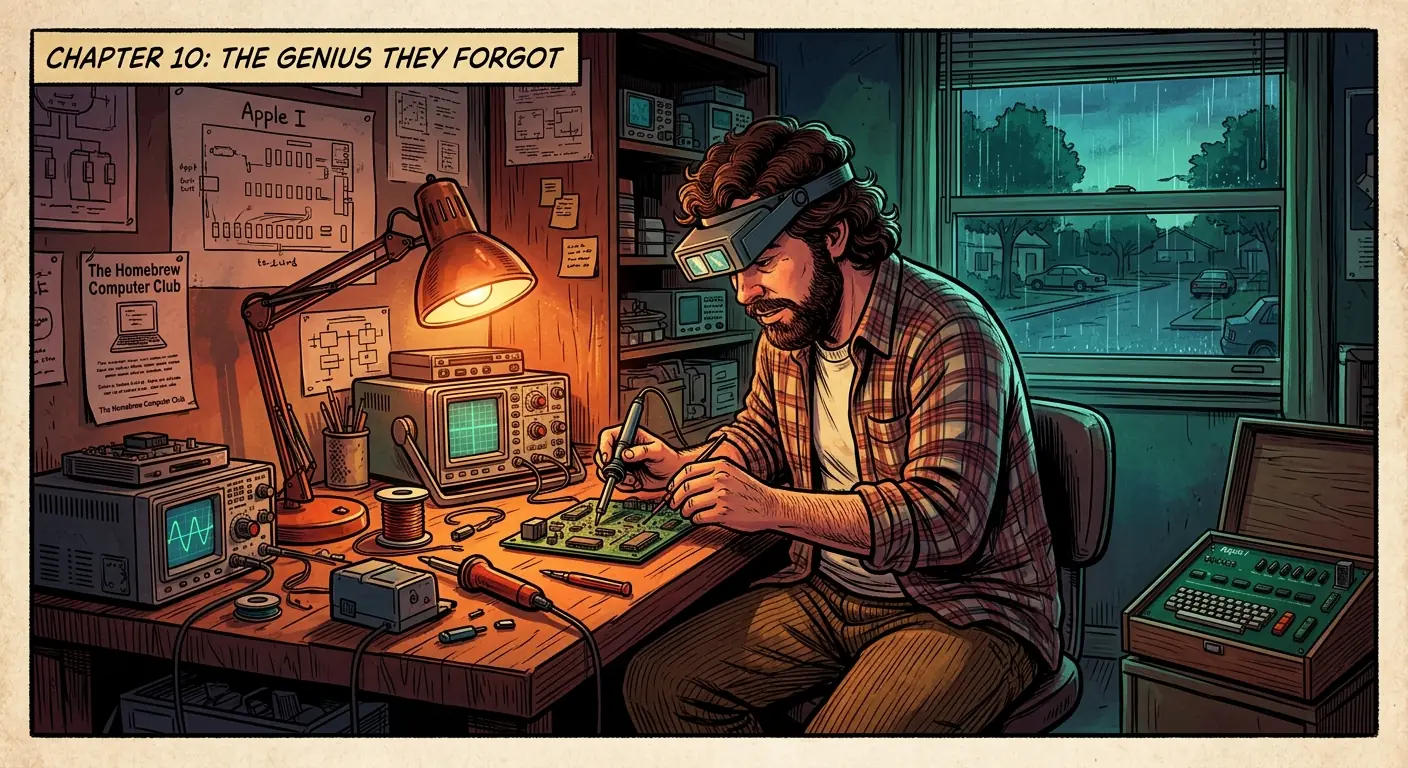
Steve Wozniak turned 75 in 2025. He continued to give speeches, make appearances, and advocate for the values he’d held his entire life. His net worth — estimated at a few hundred million dollars — was a rounding error compared to what it could have been if he’d held his Apple stock.
He didn’t seem to care.
“I have enough money to do whatever I want,” he told an interviewer. “I can travel, I can support causes I care about, I can spend time with my family. What would I do with $100 billion that I can’t do with $100 million? Buy a bigger yacht? I don’t want a yacht.”
This perspective — that enough is enough — is perhaps Wozniak’s most radical contribution to Silicon Valley culture. In an industry that measures human worth in net worth, Wozniak’s contentment with “enough” is a quiet act of rebellion.
What the world should learn from Steve Wozniak:
-
The builder matters as much as the visionary. Every great company needs both a person who can see the future and a person who can build it. Society remembers the visionaries. It should equally remember the builders.
-
Elegance is a form of genius. Wozniak’s engineering wasn’t just functional — it was beautiful. He reduced complexity, eliminated unnecessary components, and found elegant solutions to hard problems. In an age of bloated software and overwrought design, Wozniak’s minimalism is a lost art.
-
Fairness matters. The Woz Plan — giving his own stock to employees who were excluded from the IPO — cost Wozniak millions. It also told the world what kind of person he was. In business, your character is revealed not by how you treat people when it’s easy, but by how you treat people when it costs you something.
-
Enough is enough. Wozniak walked away from Apple because it wasn’t making him happy anymore. He didn’t chase maximum wealth. He chose a life aligned with his values. In a culture of perpetual optimization, choosing sufficiency over maximization is an act of profound wisdom.
-
Teach. Wozniak spent years teaching elementary school kids about computers. This wasn’t resume padding. It was a genuine expression of his belief that technology education matters. The most impactful thing a successful person can do is often the simplest: teach what you know.
“I never wanted to be famous. I never wanted to be rich. I wanted to build the best computer I could build and share it with people who would appreciate it. Everything else — the company, the money, the fame — was an accident. A happy accident, mostly. But an accident.”
Steve Wozniak designed the machines that launched the personal computer revolution. He co-founded the most valuable company in the world. He gave away millions to people he thought deserved it. He taught children. He told jokes. He crashed a plane and lost his memory and came back and kept going.
He is Apple’s forgotten genius. And forgetting him is our loss, not his.
Steve Wozniak remains a technology advocate and public speaker. He is a co-founder of Apple Inc., which has a market capitalization exceeding $3 trillion. Wozniak’s net worth is estimated at approximately $100-200 million. He continues to advocate for right-to-repair, open technology, and engineering education.
📉 Chapter 11: The Unbuilt Dreams (1980-1985)
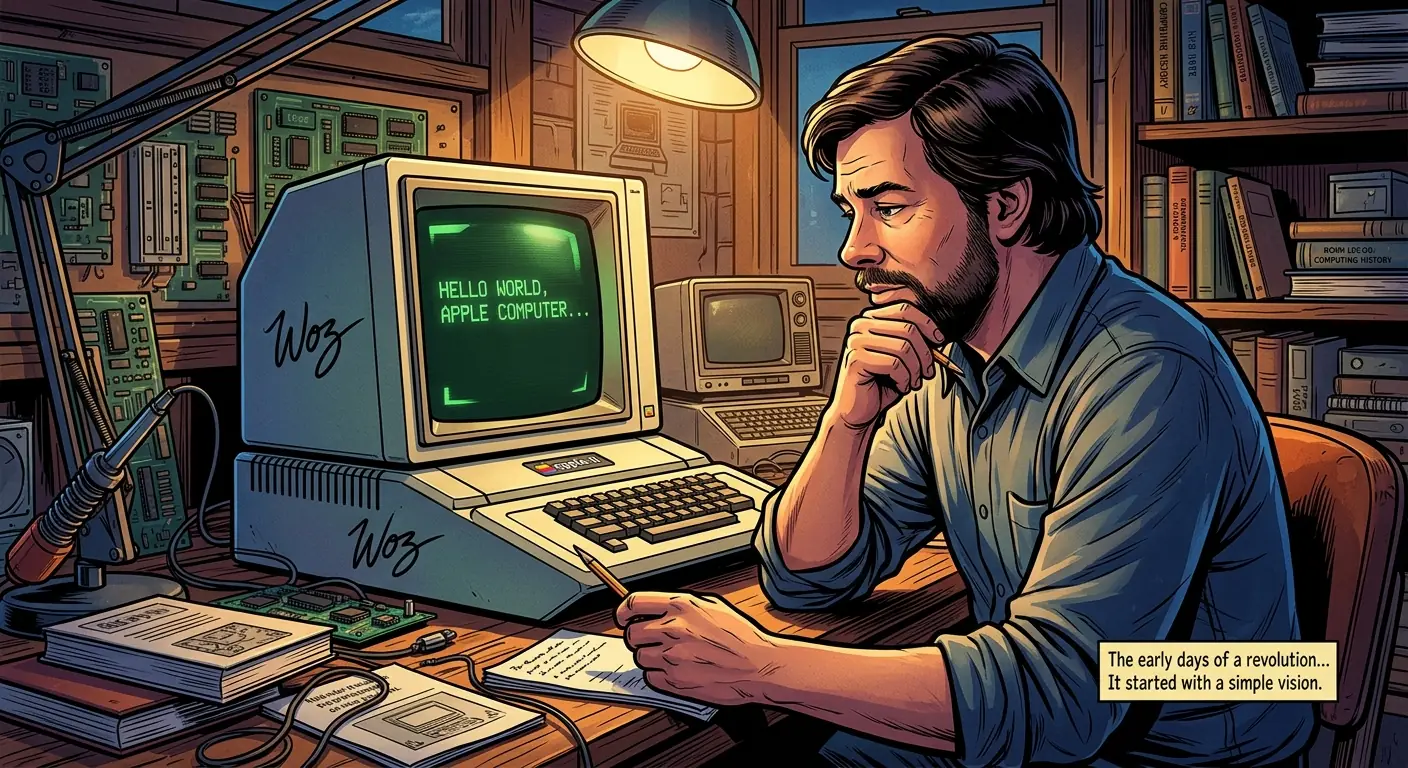
By the dawn of the 1980s, Apple was a rocket ship. The Apple II was a bona fide sensation, and the company was making money faster than a counterfeiter in a printing press. But beneath the shiny veneer of success, a rift was growing between the two Steves, and Wozniak was increasingly finding himself a square peg in a round, corporate hole. His vision, once the bedrock of Apple, was starting to clash with the company’s ambitious, and sometimes wildly misguided, direction.
### The Apple III Debacle
If the Apple II was Wozniak’s masterpiece, the Apple III was, to put it mildly, a train wreck. Launched in 1980, it was meant to be Apple’s answer to the burgeoning business market, a successor to the wildly successful Apple II. The problem? Wozniak had virtually no input. He famously called it “the first computer Apple didn’t totally design from the ground up.” Instead, it was designed by a committee, driven by marketing demands, and engineered under immense pressure. The result was a machine plagued by design flaws, most notoriously the decision to omit a cooling fan to make it “silent” for office environments. This led to chips literally popping out of their sockets from overheating.
Wozniak, ever the pragmatic engineer, saw the writing on the wall. He voiced his concerns, arguing for a more sensible, less rushed approach. But his warnings were largely ignored. The Apple III was a commercial failure, expensive (starting at $4,340 – which was a lot of dough in 1980!), unreliable, and a massive headache for Apple. It was a stark reminder of what happens when engineering purity takes a backseat to corporate ambition and marketing hype. Wozniak, in his typical understated fashion, later remarked, > “The Apple III was a disaster. I saw it coming.” The experience left a bitter taste, highlighting his growing disillusionment with Apple’s increasingly corporate culture.
### Closed Systems and Open Minds
While the Apple III was floundering, another, far more significant battle was brewing: the future of Apple’s architecture. Wozniak was a staunch advocate for open systems. He believed in giving users the power to expand, modify, and understand their machines. The Apple II, with its accessible expansion slots and clear documentation, was a testament to this philosophy. But Steve Jobs, increasingly enamored with the idea of a fully integrated, user-friendly experience (and total control), was pushing for closed systems. This philosophy reached its zenith with the Macintosh.
The Mac, a marvel of user interface design, was revolutionary, but it was also a closed box. You couldn’t easily add expansion cards, and modifying the hardware was discouraged, if not impossible for the average user. Wozniak admired the Mac’s elegance, but he fundamentally disagreed with its restrictive nature. He felt it betrayed the very hacker ethic that had given birth to Apple. This philosophical divide was more than just a technical disagreement; it was a clash of ideals that solidified Wozniak’s growing distance from the company he co-founded. He saw Apple moving away from the “garage” spirit, towards a more controlled, less empowering future.
### A Slow Fade
By the mid-1980s, Wozniak was a wealthy man, but a lonely figure within Apple. After his plane crash in 1981 (which Chapter 6 covers), he took a leave of absence, returning to finish his degree at UC Berkeley under the pseudonym “Rocky Raccoon Clark.” When he returned to Apple, it was clear his role had diminished. He spent his time developing an Apple IIc version of the game Breakout (a game he’d originally coded with Jobs for Atari), a telling detail that he was more interested in personal projects than corporate strategy.
His heart simply wasn’t in it anymore. The fun, the camaraderie, the pure engineering challenge of the early days had been replaced by politics, marketing battles, and a vision that no longer aligned with his own. In February 1985, Wozniak officially resigned from Apple, stating that the company was going in the wrong direction and that he wanted to pursue other interests. He retained his ceremonial title and a small salary, but his active involvement was over. It was a quiet exit for the genius who had built the machine that launched a revolution, a testament to his character: he wasn’t interested in power or control, only in building cool stuff. And Apple, by then, wasn’t letting him build the cool stuff he wanted.
🍎 Chapter 12: The Philanthropist & The Prankster (1985-Present)
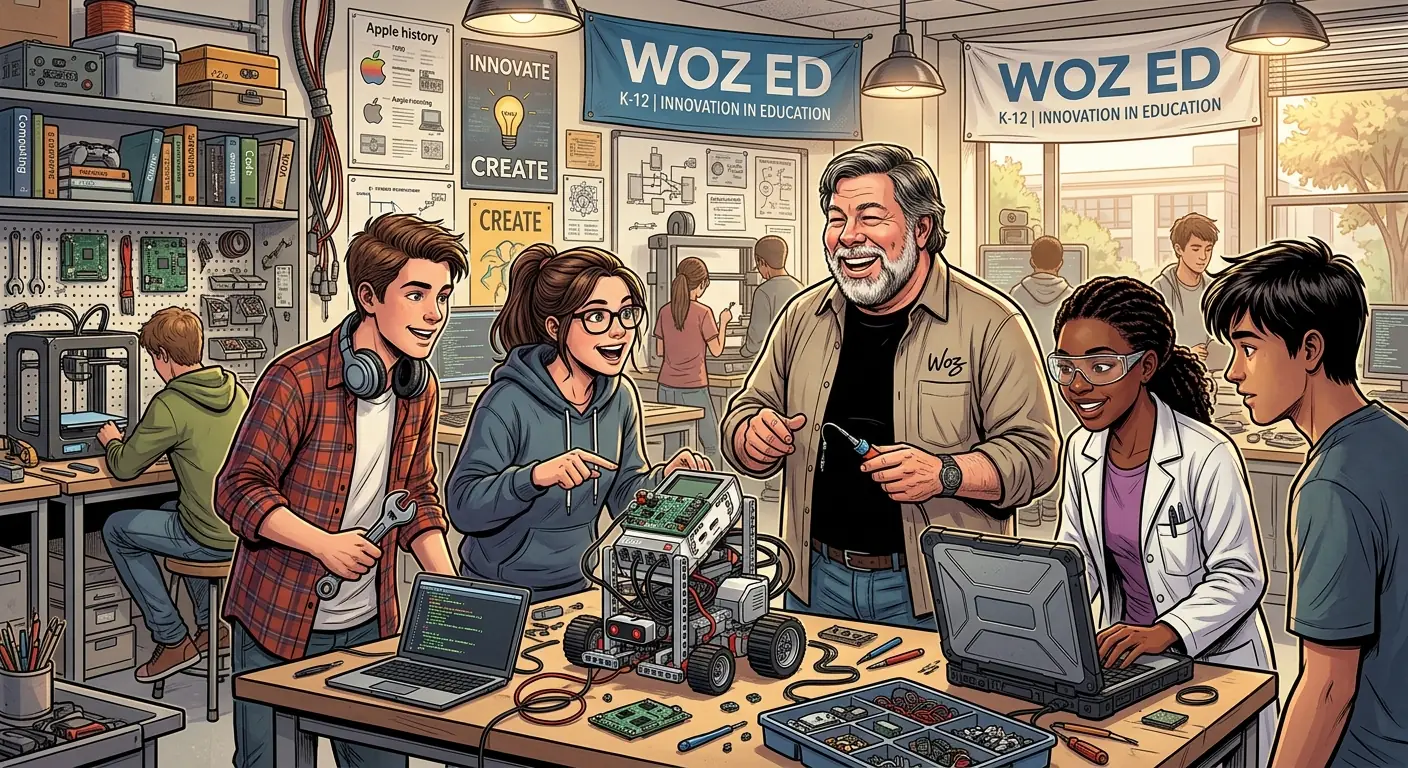
After leaving the day-to-day grind at Apple in 1985, Wozniak didn’t exactly retire to a life of quiet luxury. Oh no, that would be far too normal for Woz. Instead, he simply redirected his boundless energy and considerable fortune towards the things he truly loved: education, fun, and tinkering. He morphed from Silicon Valley pioneer into a kind of benevolent tech elder statesman, a visible reminder that genius doesn’t have to be cutthroat or corporate.
### Education’s Champion
Wozniak’s passion for education is as deep as his love for circuit boards. Immediately after leaving Apple, he poured his time and money into the Los Gatos School District, where he adopted the entire district and essentially became its technological benefactor. He bought computers for classrooms, trained teachers, and personally taught fifth-grade students. Imagine having THE Steve Wozniak as your computer teacher! He wasn’t just throwing money at problems; he was hands-on, often spending 12-hour days at the school, fueled by a genuine belief that technology could empower young minds.
“My goal in life was to make computers available to average people, and I still believe that. Education is the key. Give a kid a computer, and they can change the world.”
Beyond Los Gatos, Wozniak became a founding sponsor of the Tech Museum of Innovation, and he remains a vocal advocate for STEM education. He founded the Electronic Frontier Foundation (EFF) with Mitch Kapor and John Perry Barlow in 1990, advocating for civil liberties in the digital world. His philanthropy isn’t always headline-grabbing; it’s often quiet, focused on tangible impact, and deeply personal. He’s donated millions to various educational initiatives, always with that earnest, almost childlike belief in the power of knowledge and access. It’s a stark contrast to the often-performative philanthropy of other tech billionaires, showcasing Woz’s humility and genuine desire to make a difference.
### The Woz-Bot & Other Adventures
Even after Apple, Wozniak couldn’t stop building. He founded CL 9 in 1985, a company that created the first universal remote control, the CORE (Controller Of Remote Equipment). It was a complex, programmable device ahead of its time, but ultimately, it struggled in the market. Woz later admitted he was more interested in the engineering challenge than the business side (a familiar refrain). He also became deeply involved in music festivals, sponsoring the US Festival in 1982 and 1983, losing millions but creating an iconic cultural event. He even briefly considered becoming a teacher full-time.
His life has been a delightful mosaic of interests: from dancing on Dancing with the Stars in 2009 (he was surprisingly good!) to becoming Chief Scientist at Fusion-io, a data storage company, in 2009, and later at Primary Data in 2014. He’s a fixture at tech conferences, a sought-after speaker, and a constant tinkerer. His home is reportedly a playground of gadgets, robots, and custom-built contraptions. He’s the guy who still wants to understand how everything works, and if he doesn’t like how it works, he’ll try to build a better version. His love for pranks never faded either; he’s known for leaving cryptic messages or setting up elaborate jokes, still finding joy in the unexpected.
### Modern Tech Musings
In recent years, Wozniak has become a fascinating, often critical, voice on modern technology. He’s expressed concerns about the rise of AI, advocating for ethical development and transparency. He’s been critical of social media’s impact on privacy and the spread of misinformation, often questioning the very forces he helped unleash. He’s also offered his unfiltered opinions on Apple, praising its design prowess but sometimes criticizing its closed ecosystem or its shift away from true innovation.
“I worry about a world where people are so connected to their phones that they’re disconnected from each other. We built these tools to empower people, not to enslave them.”
He’s also a big believer in blockchain technology and cryptocurrencies, even investing in some ventures, seeing them as a return to the decentralized, open spirit of early computing. Wozniak continues to embody the “hacker ethic” – not in the malicious sense, but in the spirit of exploration, understanding, and making technology accessible and beneficial for humanity. He’s a living legend, but one who still feels like your smartest, most enthusiastic friend, perpetually excited about what’s next, and unafraid to call out what’s wrong.
🏆 Chapter 13: The Enduring Woz (Legacy & Lessons)
Steve Wozniak might not be the household name that Steve Jobs became, nor did he build a sprawling corporate empire. But his legacy, far from being forgotten, is woven into the very fabric of personal computing and the ethos of open technology. He represents a different kind of success, one measured not in market capitalization or cult-like following, but in the sheer joy of creation and the empowerment of others. He’s the patron saint of the tinkerer, the engineer’s engineer, and his story holds valuable lessons for anyone navigating the complex world of innovation.
### Beyond the Byte: The Open Source Spirit
Wozniak’s most profound and often unsung legacy is his unwavering commitment to open architecture and the hacker ethic. The Apple II, with its easy-to-access expansion slots and readily available technical documentation, was a revolutionary concept. It invited users to open it up, understand it, and even improve it. This wasn’t just a design choice; it was a philosophical statement that profoundly influenced the early personal computer industry. It fostered a vibrant community of developers, hobbyists, and entrepreneurs who built software and hardware peripherals, creating an ecosystem that fueled the Apple II’s longevity and success.
This open approach directly foreshadowed the open-source movement that would emerge decades later. Wozniak believed that technology should be accessible and understandable, not a black box controlled by a select few. His design principles laid the groundwork for a collaborative, community-driven approach to computing that continues to thrive today in Linux, open-source software, and the maker movement. He demonstrated that true innovation often comes from empowering the many, rather than dictating to them. He proved that giving away control could, paradoxically, lead to greater influence and impact.
### The Road Not Taken: What If?
It’s tempting to play the “what if” game with Wozniak’s career. What if he hadn’t left Apple in 1985? What if his vision for open systems had prevailed over Jobs’s closed architecture? Would Apple have developed a more diverse product line, perhaps even embracing PC compatibility or more modular designs? It’s impossible to say, but one could argue that Wozniak’s early departure led to Apple becoming a company driven more by design and marketing than pure engineering ingenuity, at least in the short term.
His absence meant Apple lost its technological compass, the brilliant engineer who could intuit what was possible and simplify the complex. While Jobs’s return in the late 90s undeniably saved Apple with iconic products like the iMac and iPod, one can’t help but wonder what kind of groundbreaking, user-empowering devices Wozniak might have cooked up had he remained at the helm of engineering. He consistently prioritized functionality and user freedom, a path that Apple often strayed from in its pursuit of sleek, integrated (and proprietary) experiences. His “road not taken” represents an alternative history where Apple might have remained closer to its hacker roots.
### A Different Kind of Success
In a world obsessed with billionaires, IPOs, and corporate dominance, Wozniak stands as a refreshing anomaly. He achieved immense wealth and success, but his definition of success was never about accumulation or power. It was about creating, sharing, and having fun. He left Apple when it stopped being fun, when the corporate politics overshadowed the joy of engineering. He gave away millions of his Apple stock to early employees and friends, ensuring others benefited from the company’s success, a move almost unheard of in the cutthroat world of Silicon Valley.
“I wanted to be an engineer all my life. I didn’t want to be a businessman. I wanted to build things that helped people, that made their lives better, and that were elegant and fun.”
Wozniak’s life teaches us that there’s more than one path to greatness. You don’t have to be a ruthless visionary or a marketing genius to change the world. Sometimes, the quiet, brilliant engineer, driven by curiosity and a desire to empower others, leaves the most profound and lasting mark. He reminds us that true innovation isn’t just about building the next big thing; it’s about building things that truly matter, with integrity, generosity, and a healthy dose of pure, unadulterated geeky joy. He’s the enduring spirit of possibility, the genius who truly believed technology belonged to everyone. And for that, Steve Wozniak should never be forgotten.
💡 Key Insights
- ▸ The Wozniak-Jobs partnership illustrates the most common pattern in tech company founding: the builder and the seller. Wozniak was the builder — the technical genius who could create something from nothing. Jobs was the seller — the visionary who could see the market, package the product, and tell the story. Most successful tech companies have both. The tragedy is that history almost always remembers the seller and forgets the builder.
- ▸ Wozniak's decision to give away Apple stock to early employees who had been excluded from the IPO — costing himself millions — reveals a fundamental difference in motivation between wealth-driven and craft-driven founders. Wozniak built computers because he loved building computers, not because he wanted to get rich. This purity of motivation made him a better engineer and a worse businessman. The lesson: know which type of founder you are, and partner with the other type.