Stefan Persson: The Family Behind H&M's Global Fast-Fashion Machine
Stefan Persson did not invent H&M, but he industrialized it, globalized it, and turned a Swedish family retailer into one of the most relentless volume machines in modern fashion.
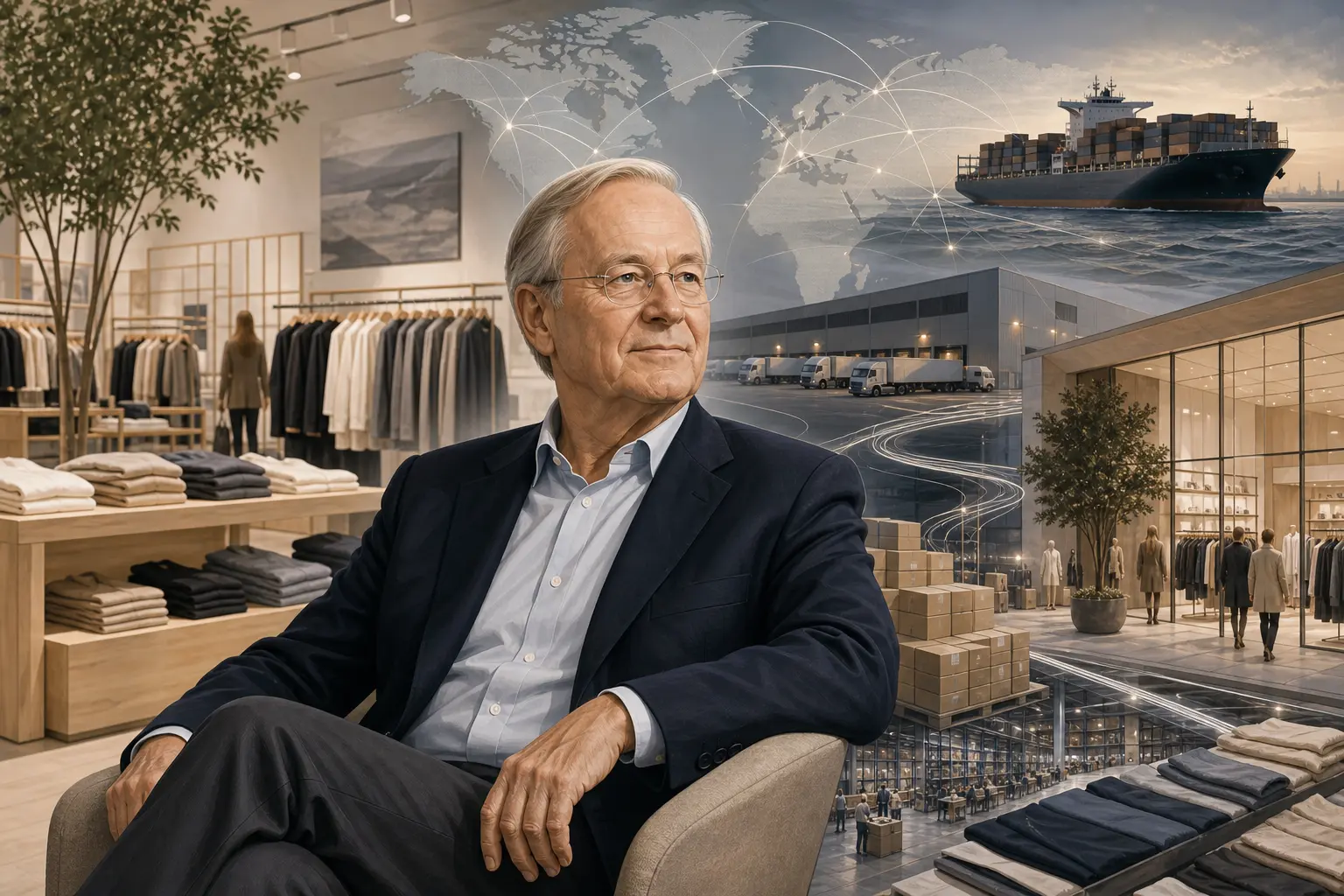
View all stories about this mogul
Stefan Persson built one of the quietest empires in global retail. No black turtleneck mythology. No founder cult. No dramatic product unveilings. Just a family name, a chain of clothing stores, and a brutally efficient idea: if you can make style cheap enough, fast enough, and visible enough, millions of people will keep coming back for more.
That idea became H&M.
Not under the founder’s first burst of inspiration, but under Stefan’s long, disciplined expansion. His father, Erling Persson, lit the match. Stefan turned the flame into an industrial furnace. By the time the world noticed, H&M was no longer just a Swedish retailer. It was a global habit.
This is not a story about fashion genius in the couture sense. It is a story about scale, family control, outsourced production, and the cold elegance of a machine that learned how to sell aspiration at mass-market prices.
Chapter 1: The Inheritance Was an Engine, Not a Cushion

Stefan Persson was born into advantage, but not the lazy kind. He was born into a business that already had momentum and therefore demanded competence. His father, Erling Persson, had founded Hennes in 1947 after studying American retail and realizing something powerful: ordinary people wanted fashionable clothing at prices that did not feel punishing.
That insight sounds obvious now because fast fashion rewired consumer expectations. In postwar Europe, it was not obvious at all. Fashion still carried the aura of expense, scarcity, and class. Hennes attacked that aura with fluorescent pragmatism.
Stefan grew up around the logic of retail before he ever inherited its responsibility. Shelves, turnover, margins, customer flow, buying discipline — these were not abstractions. They were the family language. So when outsiders later described him as a rich heir, they missed the more important point. He did not inherit a pile of money. He inherited an operating system that had to be enlarged without breaking.
And that is where empires usually fail.
Chapter 2: Hennes Became Hennes & Mauritz, and the Blueprint Got Bigger
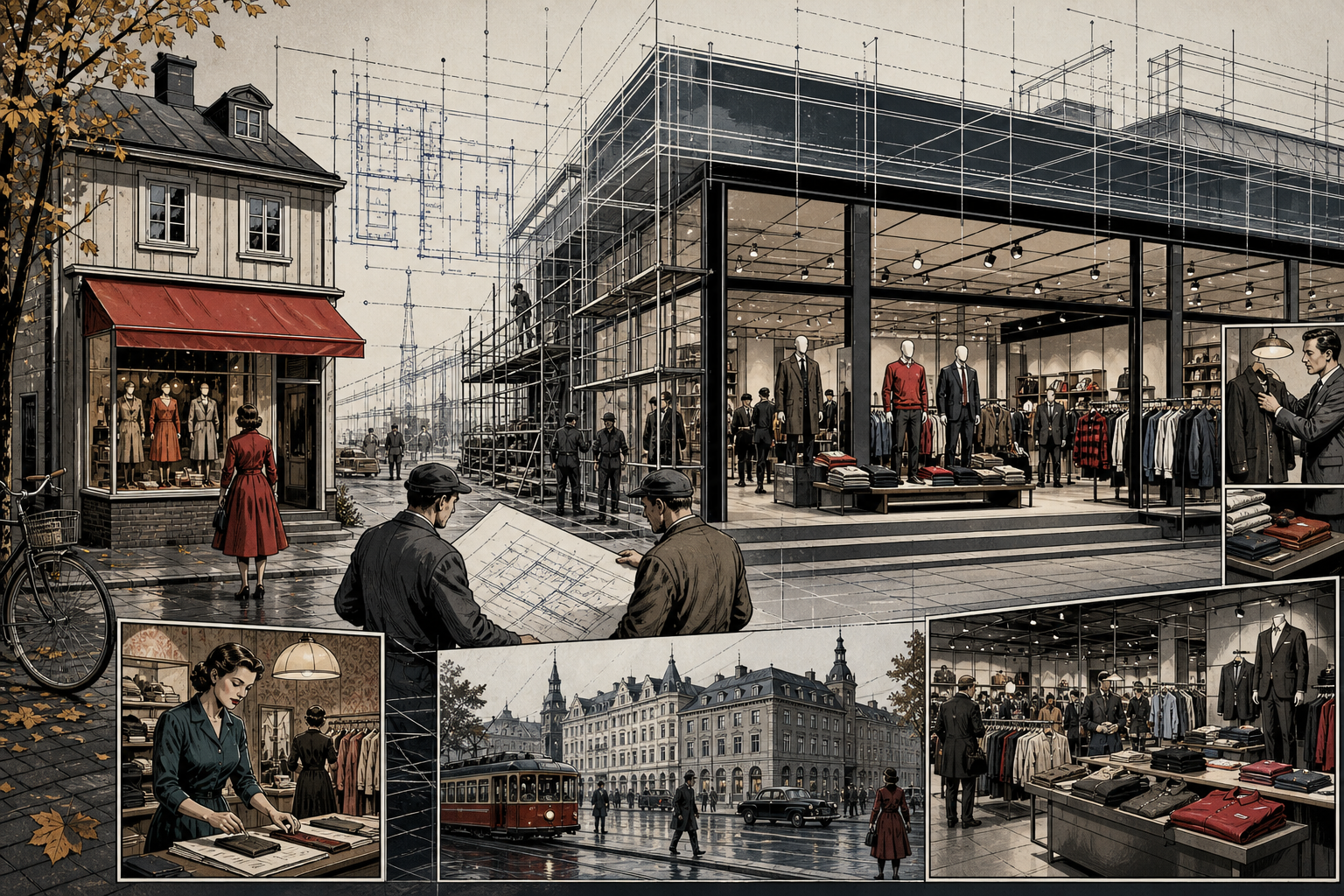
The company that Stefan would later scale did not begin as the broad modern H&M people know today. It began as Hennes, a women’s clothing store. In 1968, Erling Persson acquired Mauritz Widforss, a hunting-and-fishing retailer, and with that acquisition came menswear inventory and a wider future. The company became Hennes & Mauritz.
That renaming mattered because it marked the shift from a single-category concept into something more expansive: a replicable retail format capable of dressing households, not just women. It was a small corporate move with enormous strategic implications.
By the time Stefan entered the business more seriously, the foundation had already been framed. H&M was not trying to become a rarefied luxury label or a deeply artisanal house. It was becoming a broad-access fashion merchant with room to multiply.
The genius of that model was not glamour. It was width. The bigger the audience, the bigger the purchasing power. The bigger the purchasing power, the lower the prices. The lower the prices, the faster the flywheel turned.
Stefan understood that the real product was not a shirt or a skirt. It was momentum.
Chapter 3: Stefan Didn’t Found the Brand. He Professionalized the Weapon
There is a reason scaling operators are often underrated: founder mythology is more photogenic than managerial excellence. Founders get origin stories. Scalors get spreadsheets.
But Stefan Persson’s importance begins exactly there.
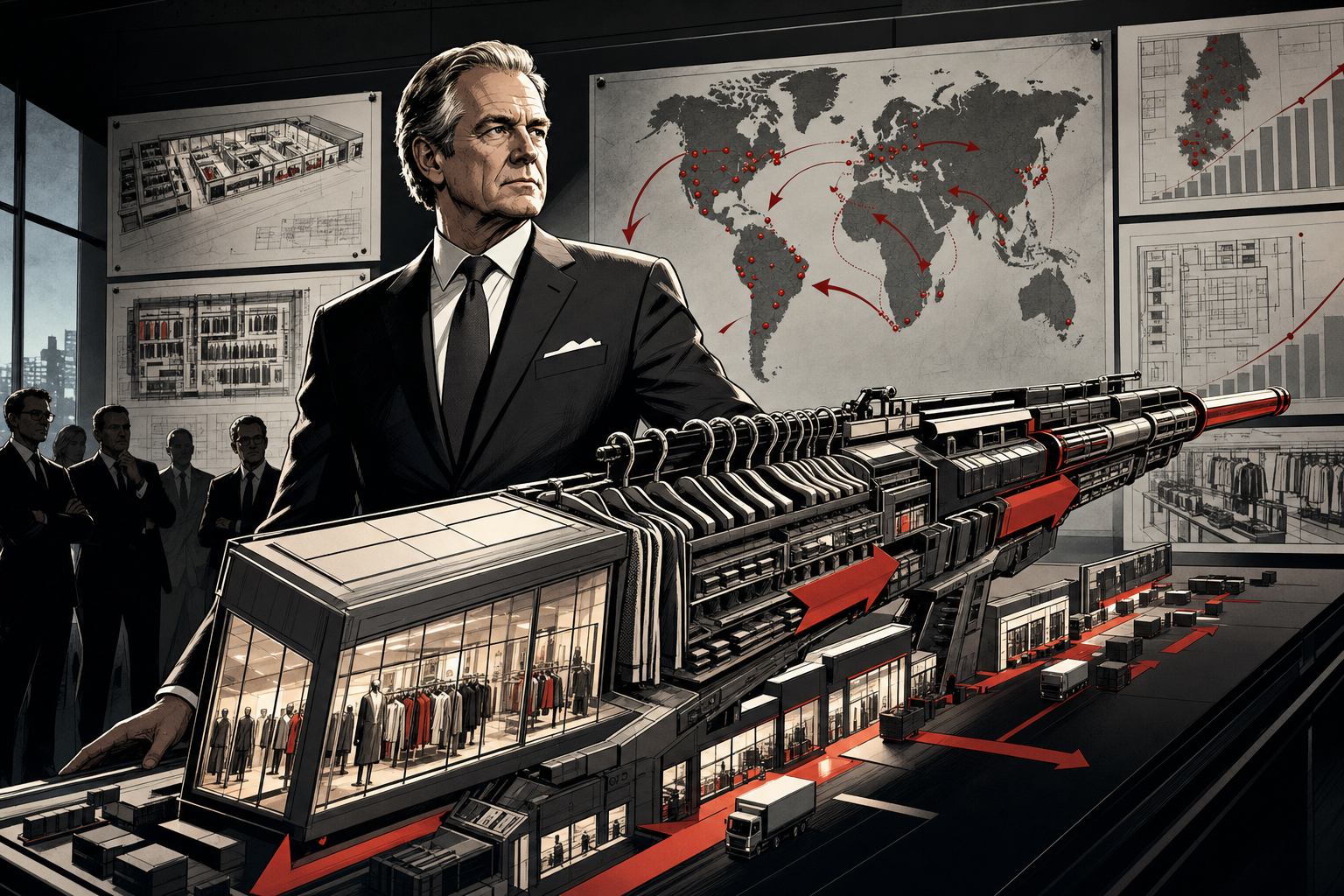
He joined a company with a clear retail proposition and helped harden it into a global weapon. When he became CEO in 1982, the challenge was no longer proving that low-cost fashion could work in Sweden. The challenge was whether it could be industrialized across borders, cultures, and real-estate markets without losing its essential simplicity.
Stefan’s answer was yes — if the company became more disciplined, more systematized, and less sentimental.
He did not need to reinvent H&M’s identity. He needed to remove friction from growth. That meant expanding store networks, deepening supplier relationships, building stronger logistics, and treating affordable fashion not as a local retail success but as an exportable operating model.
A founder creates the blade. An empire-builder learns where to swing it.
Chapter 4: The Real Product Was Cheap Style at Planetary Scale
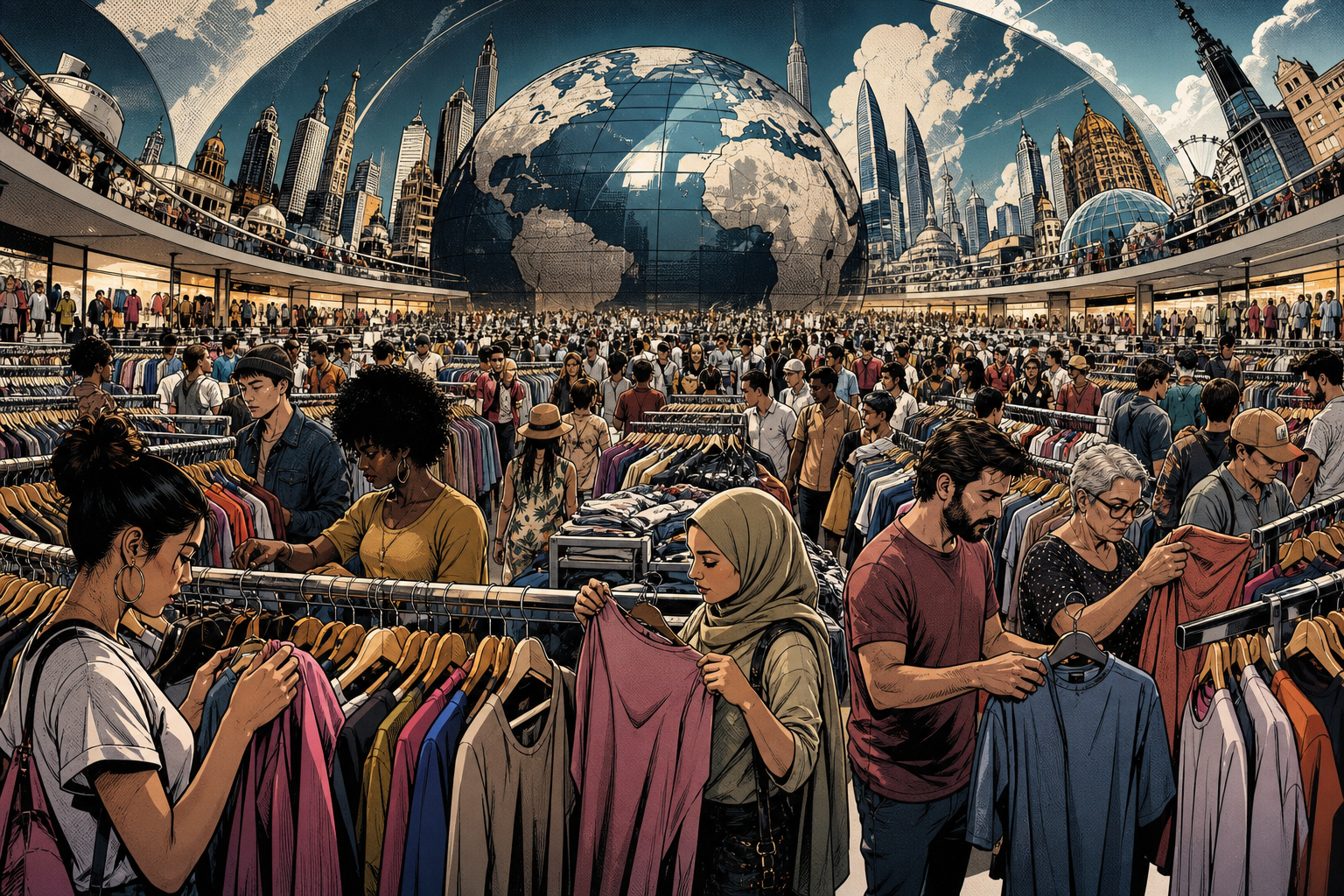
Under Stefan Persson, H&M sharpened a proposition that would define an era: trend-sensitive clothing for people who could not and would not pay luxury prices.
That meant understanding something psychologically potent. Consumers did not need the fantasy of haute couture. They needed the feeling of participation. They wanted to look current without financial self-harm. H&M sold them access.
The company became powerful by combining several forces that reinforced one another:
- large-volume purchasing,
- outsourced manufacturing,
- prominent store locations,
- frequent assortment refresh,
- and a brand simple enough to travel globally.
None of those elements alone was revolutionary. Together, they were devastating.
H&M did not have to be the most original designer in the room. It had to be the fastest large-scale translator of fashion moods into affordable merchandise. If a look started to matter, H&M’s job was to turn it into something shoppers could buy before the mood passed.
That is why the company grew into more than a retailer. It became a mass-distribution system for aspiration.
Chapter 5: Outsourcing Was Not a Footnote. It Was the Core Trick
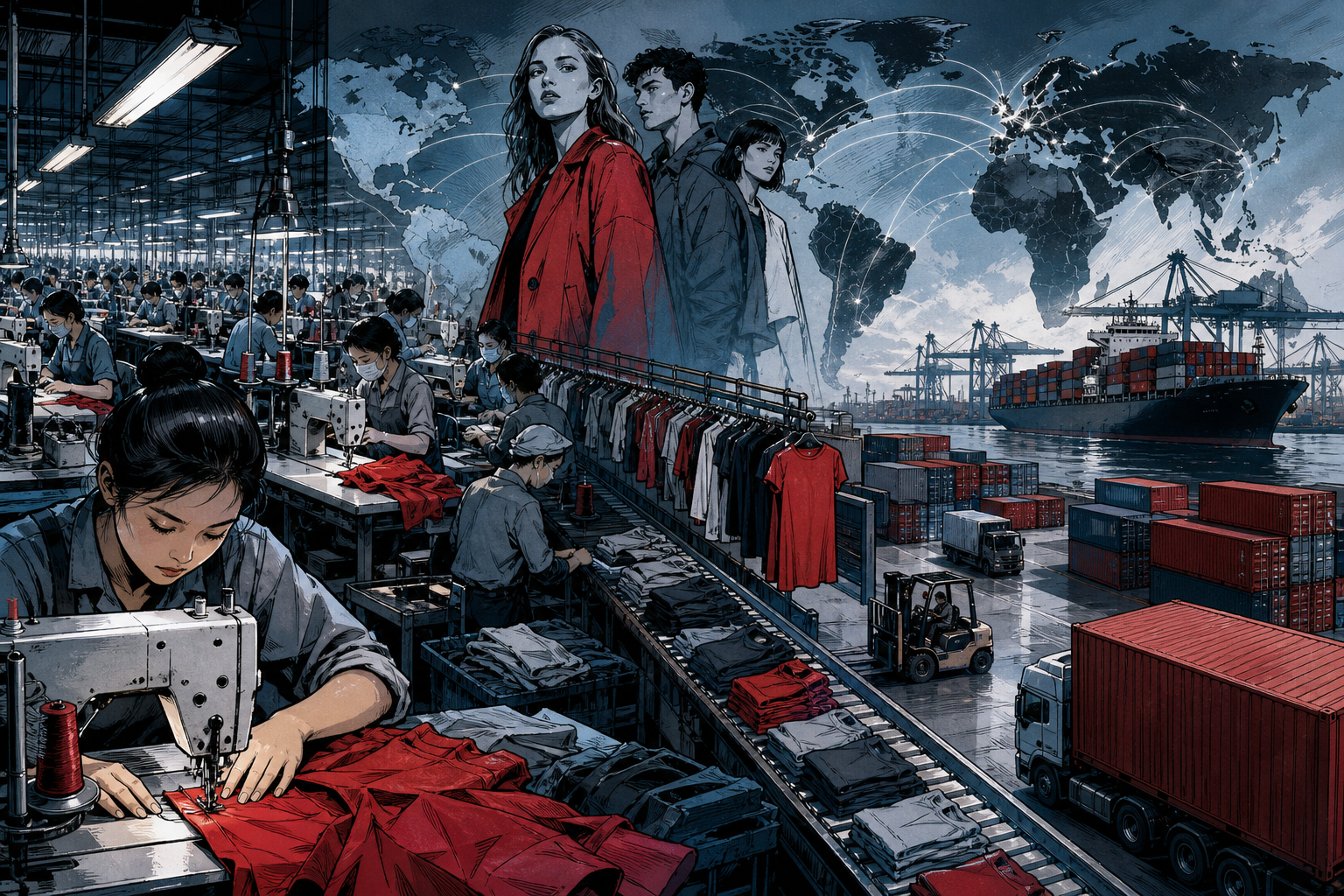
H&M’s power did not come from owning giant factories. It came from not needing to.
The company relied heavily on outsourced production, which gave it a lighter asset model than old-school vertically integrated manufacturers. That choice mattered enormously. It reduced capital intensity, widened sourcing flexibility, and let H&M shift production across a sprawling supplier base instead of locking itself into one industrial skeleton.
This made the business more nimble than many traditional apparel rivals, even if it was not identical to Zara’s famously tighter supply-chain model. Zara became the legend of hyper-reactive control. H&M became the legend of scale economics.
Stefan Persson helped institutionalize that distinction. He did not build the company around artisanal perfection or manufacturing pride. He built it around throughput. The goal was to keep product moving, keep shelves refreshed, and keep customers conditioned to browse again.
In other words, H&M was not selling permanence. It was selling circulation.
That made the machine powerful.
It also planted the seeds of future criticism.
Chapter 6: Europe Was the First Map. The World Was the Real Prize

Expansion under Stefan Persson was not random. It was a campaign.
H&M pushed across Europe and then beyond, carrying with it a retail formula that was unusually exportable. You did not need deep cultural translation to understand the offer. Clean stores. visible basics. affordable trend pieces. accessible pricing. constant novelty. The brand grammar was immediate.
That universality is one of the deepest reasons Stefan mattered. Many retailers dominate their home markets and then discover their identity does not travel well. H&M’s identity traveled precisely because it was not too precious. It was commercial enough to adapt and simple enough to repeat.
As the footprint widened, so did purchasing leverage and brand familiarity. Scale improved bargaining power. Bargaining power improved pricing. Pricing improved traffic. Traffic justified more scale. The cycle fed itself.
By the 2000s and 2010s, H&M was no longer a Scandinavian success story. It was one of the defining retail presences of modern consumer culture — a place where teenage self-reinvention, office basics, impulse buys, and trend-chasing all merged under one fluorescent roof.
The world did not conquer H&M. H&M learned how to replicate itself across the world.
Chapter 7: The Perssons Understood That Control Is a Business Model

Some fortunes are made by building and exiting. The Perssons chose a harder and often more lucrative move: build and keep.
This is what makes Stefan Persson more interesting than the average inherited-billionaire profile. He was not simply a wealthy executive presiding over a famous company. He sat inside a family-control structure that kept real influence concentrated even as H&M operated as a public corporation.
That arrangement bought patience. It bought continuity. It bought insulation from the most neurotic forms of market pressure.
In retail, where quarter-to-quarter noise can make management stupid, family gravity can be a serious advantage. It allows a company to think in store cycles, supplier cycles, and generational cycles rather than only in analyst notes.
Stefan’s fortune grew from exactly that structure. Wealth came not from a single dazzling exit but from sustained ownership in a machine that kept compounding value. Dividends mattered. Equity appreciation mattered. Governance mattered. The ability to remain the center of power mattered most of all.
The Perssons did not just sell clothes. They defended control of the system that sold them.
Chapter 8: Quiet Leadership Can Be More Dangerous Than Charisma

Stefan Persson never looked like the modern startup archetype because he belonged to a different species of mogul. He was quieter, less theatrical, less interested in becoming the story than in owning the machine that produced it.
That understated style fit H&M perfectly. The brand promise was not visionary genius or artistic intensity. It was dependable access to style at acceptable prices. For that kind of empire, showmanship is optional. Operational discipline is everything.
People often underestimate leaders who do not perform themselves loudly in public. That is a mistake. Some of the most formidable commercial dynasties in Europe were built by people who treated publicity as a tax rather than a prize.
Stefan’s reputation fits that lineage. He was seen as methodical, controlled, and deeply tied to the economics beneath the fashion surface. Store productivity, sourcing, merchandising rhythm, brand clarity, expansion pace — those are not glamorous obsessions, but they are the obsessions that build durable fortunes.
Loud founders can dominate headlines.
Quiet operators can dominate categories.
Chapter 9: The Machine Worked Brilliantly — Until the World Started Asking Different Questions
Every empire contains the logic of its own vulnerability.
H&M’s system was magnificent at serving an era of frequent wardrobe refresh, global sourcing, mall traffic, and consumer appetite for cheap trend rotation. But the very strengths that made it formidable also made it exposed.
The model depended on accurate demand forecasting, smooth cross-border production, healthy store economics, and a public willing to accept fast turnover as normal. When digital commerce intensified, when competition accelerated, when markdown pressure rose, and when consumers became more fragmented, the machine faced a harsher terrain.
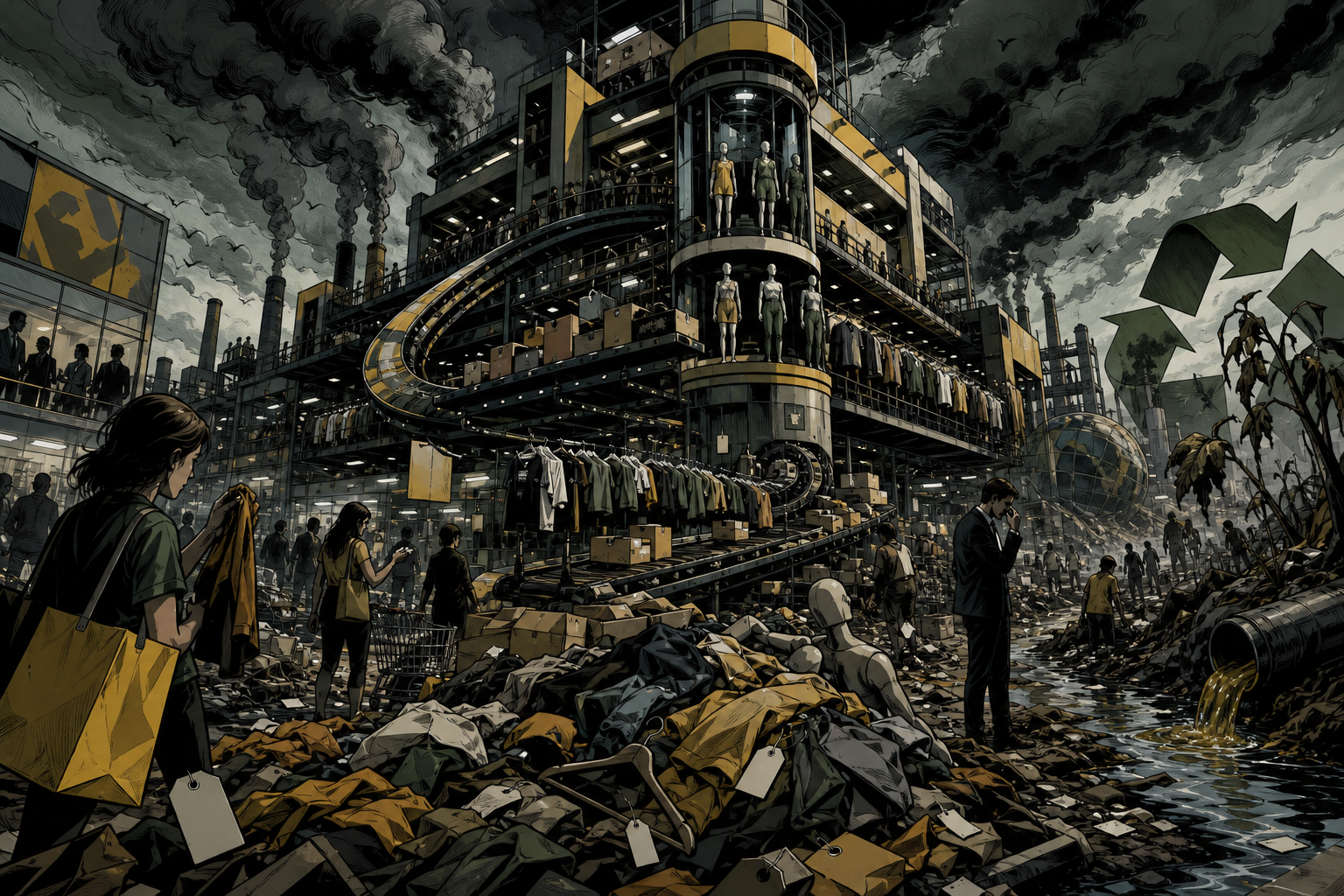
Then came the moral challenge. Fast fashion was no longer judged only on price and style. It was judged on waste, environmental cost, labor conditions, and overproduction. Suddenly the old retail superpower looked, to many critics, like a modern contradiction.
This did not erase H&M’s achievement. It complicated it.
Stefan Persson helped build one of the most efficient apparel systems on earth. He also helped entrench a consumption model that future generations may view with more suspicion than admiration. That is the burden of scale. When you win big enough, history audits the method.
Chapter 10: Billionaire Wealth Came From Patience, Not Drama
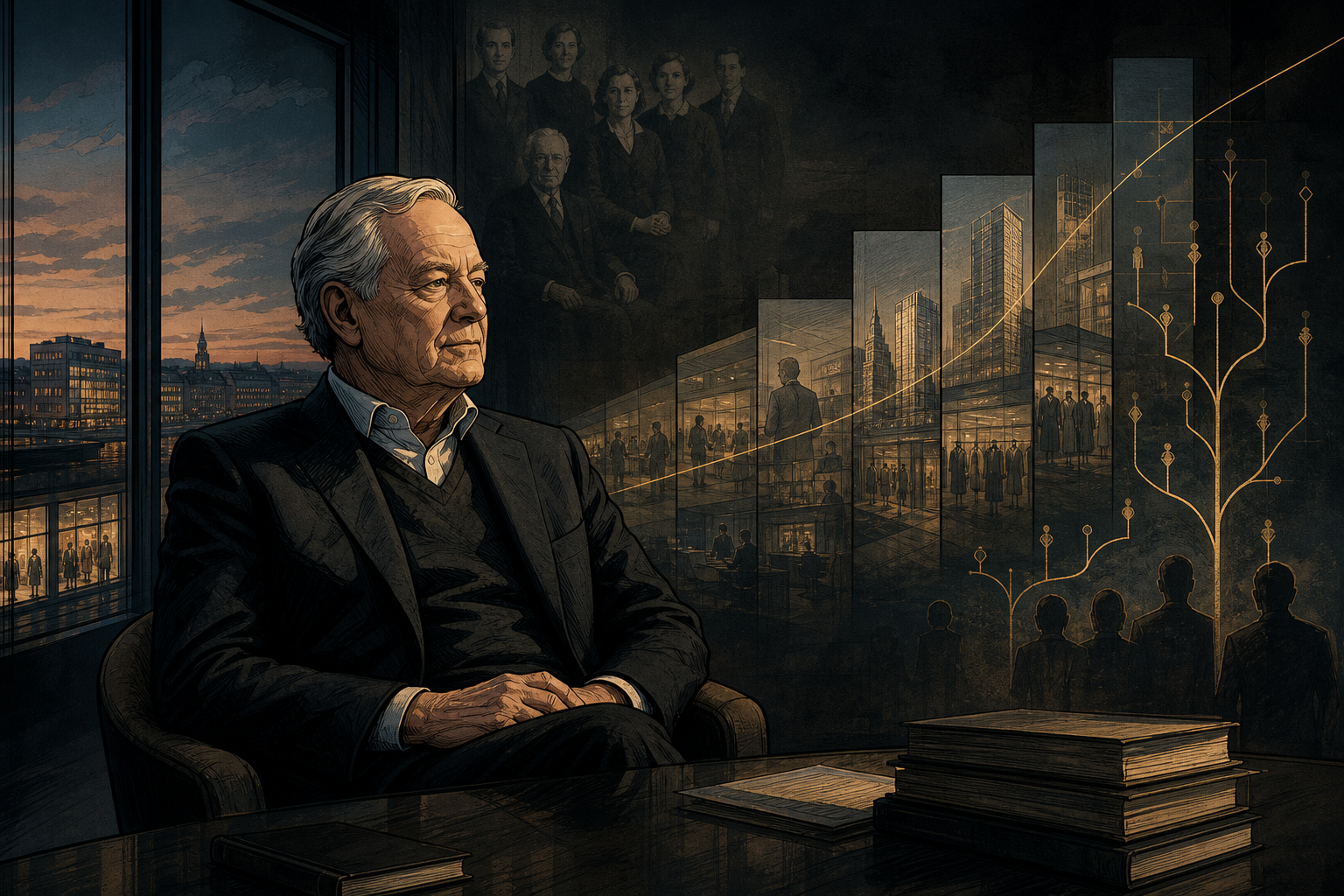
Stefan Persson became one of Europe’s richest men through one of capitalism’s oldest formulas: own a large piece of a very large machine for a very long time.
There was no single Hollywood exit scene. No one-day wealth detonation. No sudden sale that transformed paper into legend. The Persson fortune accumulated the old way — through retained family ownership in a business that kept producing cash, power, and compounding value.
That kind of wealth is less cinematic than Silicon Valley money, but often more durable. It survives trend cycles better because it is rooted in structure rather than in one euphoric event. It gives a family room to maneuver: buy more shares, reinforce control, defend governance, and shape succession.
Reuters reporting in the mid-2020s noted the family’s continued share accumulation, which sent a clear signal. H&M was not just a legacy trophy being slowly harvested. It was still the center of the dynasty.
That is how serious operators behave. They do not cling to symbolic control if the machine is dead. They lean in when they believe the machine still matters.
Chapter 11: Handing Power Forward Was Part of the Design

Stefan Persson eventually stepped back from the CEO role and later the chairmanship, but this was never a story about surrender. It was a story about managed continuity.
In 2020, the chairmanship passed to the next generation, reinforcing what had always been true beneath the surface: H&M was not merely a public company with a famous founder’s surname attached. It was a dynasty trying to remain a dynasty.
That transition mattered because family businesses often decay at the handoff point. The founder’s children can preserve the enterprise. The next generation can professionalize it. Or the whole thing can soften into ceremonial wealth. The Perssons chose to keep tightening their grip on relevance.
Stefan’s long tenure made that possible. He did not treat succession as an embarrassing future problem. He treated it as part of control architecture. The title on the office door could change. The center of gravity was supposed to remain in the family.
For moguls, that may be the deepest form of victory: not just making money, but making the power survive you.
Chapter 12: Stefan Persson’s Legacy Is a Retail Empire That Changed How Normal People Buy Clothes

What did Stefan Persson really build?
Not H&M from scratch. His father did that.
What Stefan built was the modern scale of it — the global velocity, the purchasing power, the operational discipline, the family durability, and the cold confidence of a retail system that taught millions of consumers to expect fashionable turnover at accessible prices.
He helped turn a Swedish chain into one of the central infrastructures of fast fashion. That is a huge commercial accomplishment even if it lacks the romance of founder mythology. In some ways it is more impressive. Founding a business is a creative act. Turning it into a worldwide machine is a test of endurance, judgment, and control.
The Persson story is therefore not really about glamour. It is about industrialized desire. About how retail can package aspiration, accelerate habit, and convert family influence into generational power.
Stefan Persson’s empire wore simple clothes. Beneath them was armor.
💡 Key Insights
- ▸ Stefan Persson's achievement was not founding H&M. It was scaling a family retail idea into a disciplined global volume system while keeping family control unusually durable.
- ▸ H&M's power came from speed, merchandising turnover, and ruthless affordability, but also from a lighter asset model than many traditional retailers because production was heavily outsourced.
- ▸ The Persson story shows that quiet control can be more powerful than charismatic leadership when the real moat is purchasing scale and global distribution.