Bernie Madoff: How Wall Street's Trusted Titan Ran History's Biggest Ponzi Scheme
What happened to Bernie Madoff, and how did a former Nasdaq chairman build the most infamous fraud in modern finance? This fall story traces the rise and fall of Bernie Madoff, how the Ponzi scheme worked, why investors kept trusting him, and what his collapse revealed about prestige, regulation, and the cost of blind belief.
View all stories about this mogul
How did Bernie Madoff build history’s biggest Ponzi scheme? Not with wild promises, flashy innovation, or internet-era hype. He did it with the opposite: calmness, status, and the appearance of old Wall Street trust. For years, Bernard L. Madoff looked like the kind of man rich people could safely hand money to. He had market stature, a reputation for sophistication, and an aura that suggested he belonged inside the financial system’s inner chapel. That image was the product. The returns were the bait. The fraud was the engine.
📌 Key facts: Who was Bernie Madoff?
| Fact | Detail |
|---|---|
| Full name | Bernard L. Madoff |
| Known for | Running the largest known Ponzi scheme in history |
| Public stature | Former chairman of Nasdaq, respected Wall Street figure |
| Fraud exposed | December 2008 |
| Guilty plea | March 12, 2009 |
| Sentence | 150 years in prison on June 29, 2009 |
| Death | Died in federal prison in April 2021 at age 82 |
🏛️ How did Bernie Madoff become so trusted on Wall Street?
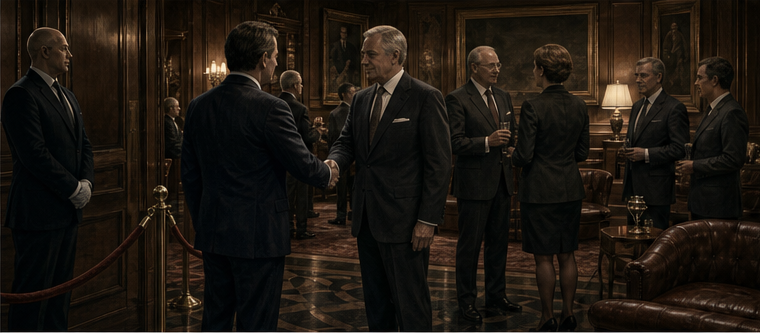
Bernie Madoff did not begin as a cartoon villain. That is what made him dangerous.
He built a legitimate market-making business and became part of the American financial establishment. He served as chairman of Nasdaq. He moved in the right rooms. He knew the language, rhythms, and rituals of institutional finance. To outsiders, he looked established. To insiders, he looked familiar. Familiarity is one of the strongest sedatives in business.
Many fraudsters try to win trust by appearing extraordinary. Madoff went the other direction. He made himself look stable. Reliable. Boring, even. Clients did not buy into him because he acted like a revolutionary. They bought into him because he looked like infrastructure.
That distinction matters.
Infrastructure is what people stop questioning.
By the time he was managing money for wealthy individuals, feeder funds, charities, and family offices, Madoff had wrapped himself in the kind of prestige that lowers skepticism. If a former Nasdaq chairman with deep market plumbing says he has a dependable strategy, many people assume the due diligence has already been done by someone else.
That is one of the oldest mistakes in finance.
🎭 What was the pitch behind the Madoff investment strategy?

The genius of the pitch was that it did not sound insane.
Madoff did not market himself as a moonshot operator. He presented a strategy that appeared disciplined and difficult, not magical. The returns were unusually consistent, but not always so explosive that they screamed fraud to every observer. Instead of promising obvious fantasy, he sold controlled competence.
That helped him attract exactly the wrong kind of confidence: the kind that comes from partial plausibility.
He also benefited from exclusivity. For many investors, access to Madoff felt like admission into a private room. He did not always appear eager for money. That made some people want in even more. Scarcity amplifies prestige. Prestige suppresses doubt.
Then there was the emotional trick: the client often felt chosen.
That feeling is powerful. People protect opportunities that make them feel special. They hesitate to question them too aggressively for fear of looking unsophisticated or, worse, losing access. In that environment, skepticism starts to feel socially expensive.
Madoff understood that dynamic coldly and used it well.
🧮 How did the Bernie Madoff Ponzi scheme actually work?
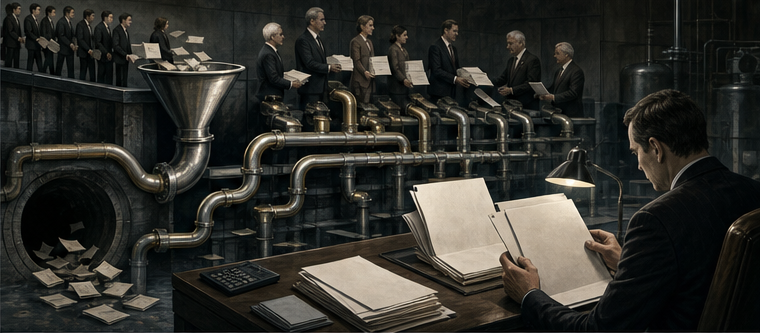
At its core, the answer is brutally simple: there was no legitimate investment engine matching the account statements.
According to the FBI and the SEC, Madoff’s operation used money from newer clients to pay redemption requests from earlier ones while sending out fabricated records that made it appear as though trades had occurred and gains had accumulated. The SEC’s December 11, 2008 complaint alleged a roughly $50 billion fraud. Public reporting later popularized the larger figure of about $65 billion, which reflected fictitious account balances shown to clients rather than actual cash invested.
That distinction matters, because Madoff’s fraud was built as much on fiction management as on money movement.
He did not just steal cash. He manufactured alternate reality through paperwork.
Clients received statements showing steady performance. Those statements reinforced trust. Trust attracted more assets. More assets allowed more withdrawals to be honored. Honored withdrawals made the whole system look real. The fraud fed on its own seeming proof.
Like every Ponzi scheme, it depended on one permanent condition: the need for fresh money and manageable redemption pressure.
As long as enough clients stayed put and enough new capital entered, the machine could keep imitating legitimacy. Once too many people wanted their money back at the same time, the illusion broke.
👔 Why did sophisticated investors, charities, and funds keep believing him?
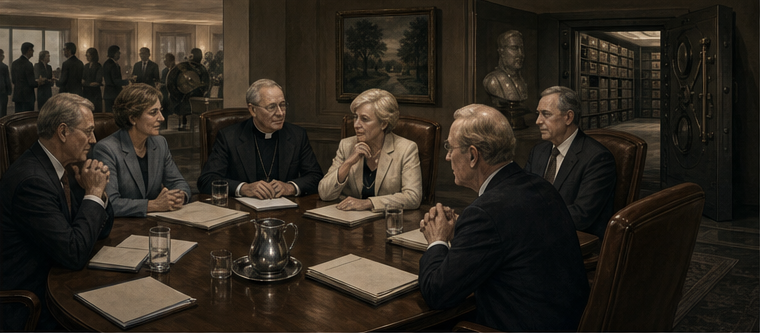
This is the question that makes the Madoff story more than just a crime story. It is a psychology story.
Why did smart people believe?
Because smart people are not immune to status.
Madoff’s investor base included wealthy families, institutions, charities, and funds that should have known better. Some did know enough to be suspicious, and some critics had been warning for years. But the system around Madoff kept rewarding passivity.
There were at least five forces working in his favor:
- Prestige transfer. If other respected people were already in, joining felt safer.
- Exclusivity bias. Limited access made the opportunity feel more valuable.
- Consistency addiction. Investors loved the smooth returns, especially when other markets were volatile.
- Opacity disguised as sophistication. Complexity can make weak oversight feel intellectually justified.
- Outsourced trust. Each party assumed someone else had checked more deeply.
That final point is the killer.
Many catastrophic frauds are not enabled by one giant mistake. They are enabled by a chain of medium-sized assumptions. One bank assumes the auditor checked custody. One investor assumes the fund checked the trade records. One advisor assumes the reputation itself is evidence.
The result is a confidence web with no actual floor under it.
🧱 What role did weak oversight play in the collapse?
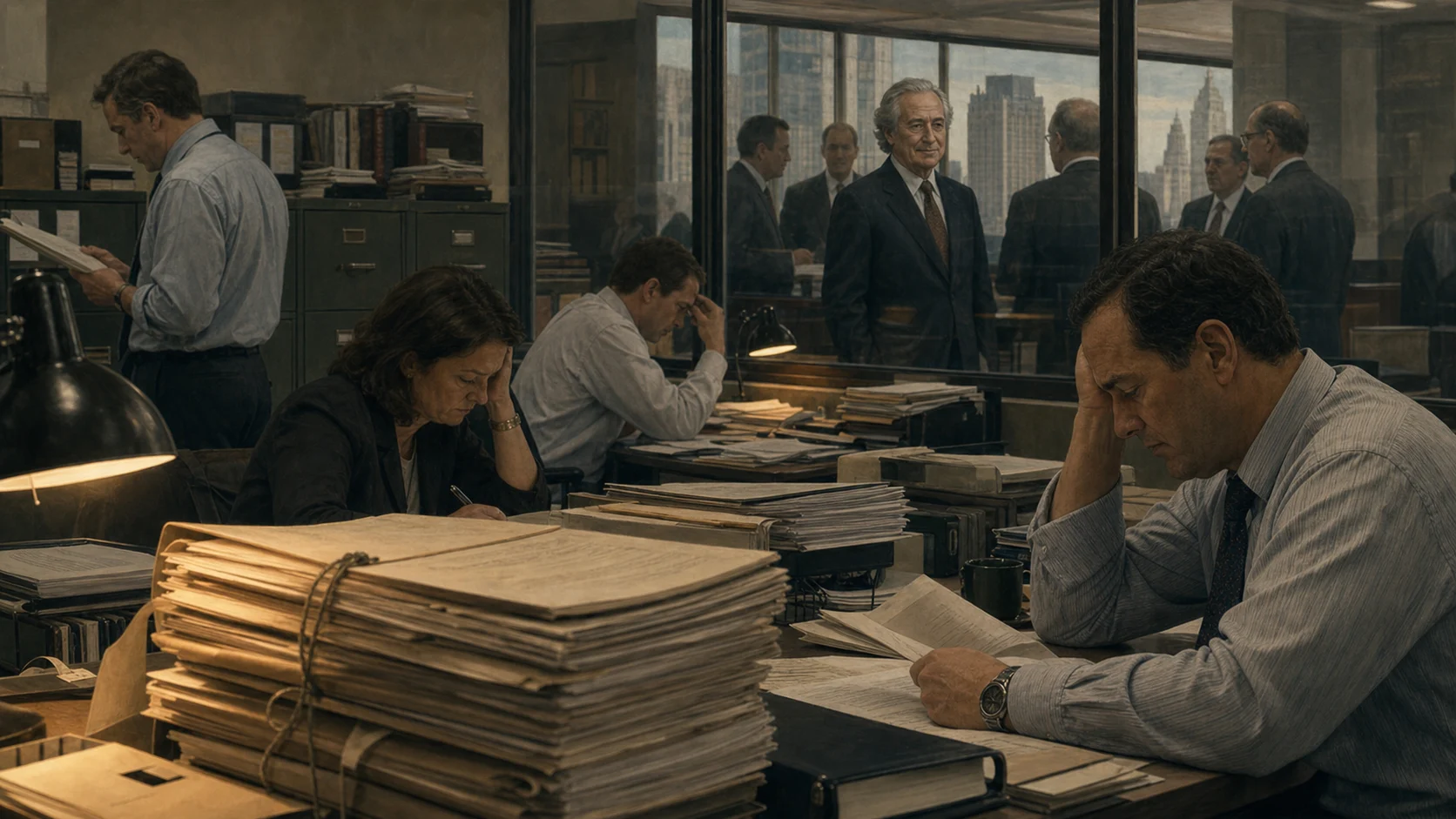
A huge one.
The Madoff scandal became an indictment of more than one man. It became an indictment of gatekeepers.
The SEC had been warned multiple times over the years. Outside skeptics raised concerns about the improbability of Madoff’s steady returns and the opacity of his claimed strategy. Yet the fraud survived until the financial crisis finally forced the math into daylight.
That is why the story still stings. It was not merely that one criminal lied. It was that a respected system failed to stop him even when warning signs existed.
Regulatory failure in cases like this is rarely cinematic. It is usually procedural. Questions are asked but not pursued hard enough. Documents are collected but not connected. Reputational assumptions replace adversarial verification. Institutions see the surface, not the structure.
Madoff benefited from all of it.
And because he was embedded in mainstream finance rather than operating at the fringe, the normal defensive reflex of “this looks too strange” never triggered strongly enough.
He did not look like an outsider attacking the system. He looked like the system, laundering fraud through familiarity.
📉 Why did the scheme finally collapse in 2008?
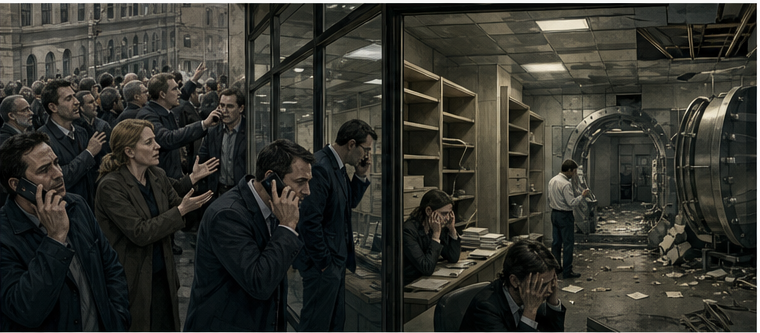
Because the global financial crisis turned a long-running deception into a liquidity test.
Ponzi schemes can survive for astonishingly long periods if redemptions remain manageable. But in a panic, investors want cash. During the 2008 crisis, demand for withdrawals surged. Madoff could not meet it.
That was the moment the fantasy ran into arithmetic.
Once too many clients requested their money at once, there was no real portfolio to sell, no actual gains to realize, and no honest asset base to draw from. There was only the exposed machinery of a fraud that had lasted for years.
The collapse happened fast after that.
In December 2008, Madoff confessed to his sons that the investment advisory business was “one big lie,” and the scheme unraveled. The SEC filed its complaint on December 11, 2008. The myth ended in the same year that markets everywhere were already punishing blind faith and leverage.
The timing felt almost symbolic. One of the biggest trust failures in modern finance died in the middle of a global trust crisis.
⚖️ What happened after Bernie Madoff was caught?
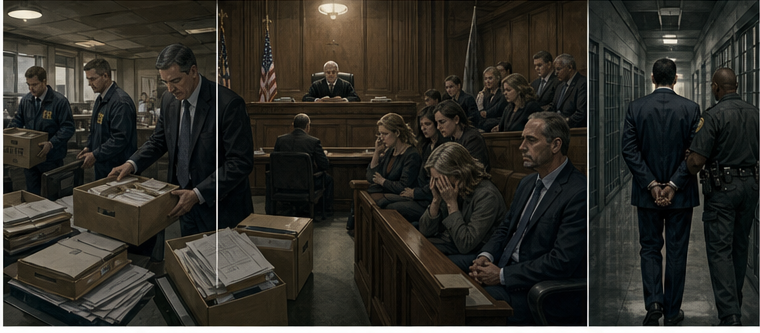
The legal arc moved quickly once the deception was undeniable.
The FBI notes that Madoff pleaded guilty on March 12, 2009. On June 29, 2009, he was sentenced to 150 years in prison. Reuters later described him as the operator of the largest known Ponzi scheme in history when reporting his death in federal prison in April 2021.
But the sentencing was not the end of the story. It was the beginning of the recovery struggle.
Victims wanted answers, restitution, and accountability. Trustees and courts began the long process of clawing back money and distributing recoveries. SIPC’s public case materials show how prolonged and material that effort became. By December 2023, the Madoff trustee’s recovery effort had pushed aggregate customer payouts to nearly $14.43 billion. By later SIPC updates, recoveries moved even higher.
That recovery record is extraordinary by fraud standards.
It is also not the same thing as undoing the damage.
Time lost is not fully recoverable. Trust lost is not fully recoverable. For charities and families that had built plans around account statements that turned out to be fiction, the emotional and institutional harm ran deeper than balance-sheet math.
🧨 Why does the Madoff case still matter now?
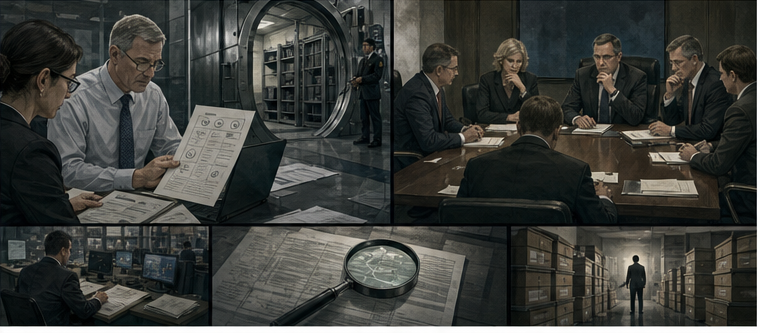
Because the scam template never really dies.
The technology changes. The wrapper changes. The social proof changes. But the mechanics reappear again and again:
- a prestigious operator,
- an exclusive story,
- returns that feel reassuringly smooth,
- weak verification,
- and a crowd that mistakes reputation for evidence.
That pattern shows up in traditional finance, crypto, private funds, startup hype cycles, and family-office circles. The Madoff case remains relevant because it demonstrates that fraud at scale often thrives not at the edge of the system, but near its center.
People imagine massive frauds must look outrageous. Often they look conventional.
That is the real terror in the story.
🗓️ Timeline: The rise and fall of Bernie Madoff
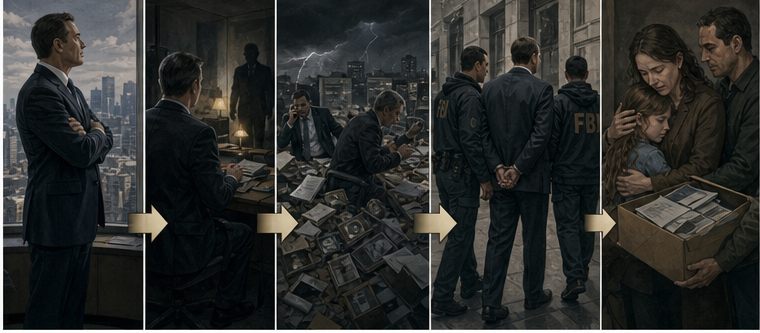
| Year | Event | Why it mattered |
|---|---|---|
| Decades before 2008 | Built a respected market-making firm and Wall Street stature | Created the trust foundation for later fraud |
| Nasdaq era | Served as a Nasdaq chairman | Added establishment legitimacy |
| December 2008 | Scheme exposed after redemption pressure surged | Liquidity broke the illusion |
| December 11, 2008 | SEC filed fraud complaint | Public legal collapse began |
| March 12, 2009 | Madoff pleaded guilty | Admitted the core fraud |
| June 29, 2009 | Sentenced to 150 years in prison | Marked the maximum-accountability phase |
| April 2021 | Died in federal prison at age 82 | Closed his personal chapter, not the recovery story |
| December 2023 | Trustee payouts neared $14.43 billion | Showed the scale of long-run victim recovery |
❓FAQ: What do people search about Bernie Madoff?

What was Bernie Madoff’s Ponzi scheme?
It was a long-running fraud in which investor money from newer clients was used to pay withdrawals for earlier clients while fabricated account statements falsely showed legitimate trading and steady gains.
How much money did Bernie Madoff steal?
Figures vary depending on whether one means actual cash invested or fictitious account balances. The SEC’s 2008 complaint alleged a roughly $50 billion fraud, while later public coverage often cited about $65 billion in fake account values shown to clients.
Why did people trust Bernie Madoff?
Because he had elite Wall Street status, an aura of exclusivity, a record of apparently consistent returns, and a reputation that many investors treated as a substitute for independent verification.
Was Bernie Madoff ever punished?
Yes. He pleaded guilty in March 2009 and was sentenced to 150 years in prison in June 2009.
Did Madoff victims recover any money?
Yes. Through trustee recoveries and distributions, billions were returned. SIPC updates show that aggregate customer payouts reached nearly $14.43 billion by December 2023, with further recovery progress later documented.
🧩 Final take: What is the real lesson of the Bernie Madoff story?
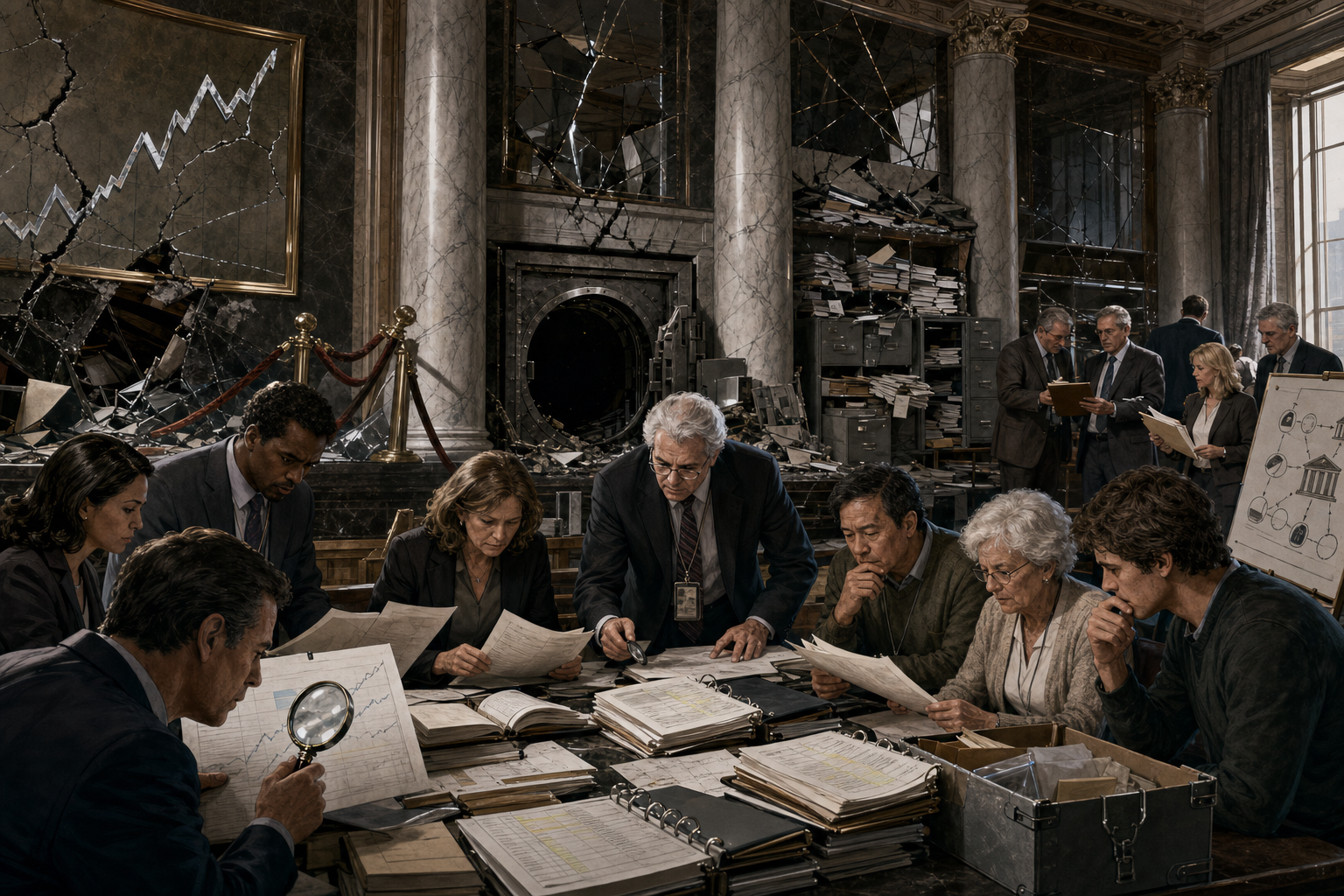
The easiest lesson is “don’t trust frauds.” That is too shallow to be useful.
The better lesson is this: never let status do the work of verification.
Bernie Madoff did not beat the system by inventing a better model. He beat it, for a long time, by understanding human comfort. He knew that many investors would rather believe in a prestigious operator than investigate one. He knew smoothness looks safer than volatility even when it is less honest. He knew exclusivity can silence questions. And he knew the right name inside the right room can buy more time than almost any spreadsheet.
That is why his story remains a permanent warning.
Not because he was uniquely monstrous, but because the conditions that protected him are ordinary enough to return whenever markets start trusting appearances more than evidence.
💡 Key Insights
- ▸ Madoff's greatest asset was not investment genius. It was social proof. He built a fraud so durable because he made people feel selected, not sold to. Scarcity, prestige, and intimacy did more work than spreadsheets.
- ▸ The scandal showed how reputation can override process. Wealthy families, charities, and funds relied on Madoff's status, his former Nasdaq chairmanship, and the calm consistency of returns instead of demanding independent verification of trades and custody.
- ▸ A Ponzi scheme survives on time. Madoff bought time by keeping the strategy opaque, controlling information tightly, and exploiting investors' fear of missing access to an apparently exclusive manager.
Sources
- FBI - Bernie Madoff Case ↗
- SEC - Bernard L. Madoff and Bernard L. Madoff Investment Securities LLC ↗
- Reuters - Bernie Madoff, disgraced Ponzi schemer, dies at 82 ↗
- SIPC - Bernard L. Madoff Investment Securities LLC Case Details ↗
- SIPC - Madoff Trustee Requests Allocation of More Than $66 Million to Customer Fund ↗